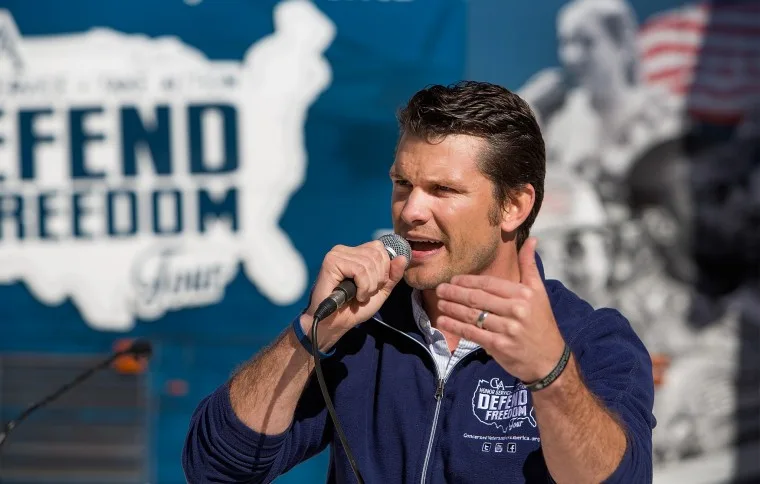
Pete Hegseth, the man who was confirmed as Defense Secretary despite everything, has now ordered military personnel to deploy artificial intelligence and cyber capabilities against what the Pentagon is calling foreign election interference. The order stops short of sending troops to polling places. Trump, asked directly whether he'd rule that out, would not.
What Hegseth Actually Ordered
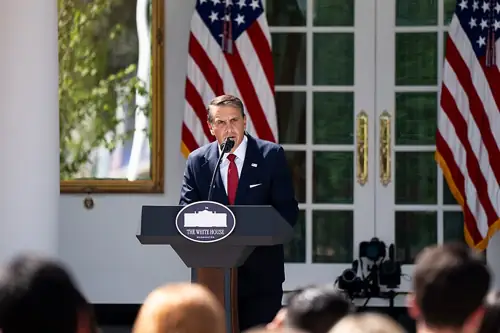
According to Axios, Hegseth signed an order assigning Defense Department personnel to use 'advanced intelligence and cyber capabilities to identify, disrupt, and neutralize foreign interference' in the upcoming elections. Officials told Axios this effort will deploy the most advanced artificial intelligence capabilities the U.S. military has ever used for election-related purposes.
Let that land for a second. The Pentagon is now an active participant in the machinery of American elections. Not in a passive, background-monitoring kind of way. In an 'identify, disrupt, and neutralize' kind of way. Those are words you use about enemy combatants, not about an election cycle.
To be fair, foreign election interference is real. It was real in 2016, real in 2018, real in 2020. Russia, China, and Iran have all run influence operations against U.S. elections in ways that are well-documented by the intelligence community. The question has never been whether the threat exists. The question is always: who do you trust to fight it, and what are the guardrails?
The Part Trump Refused to Answer
Here is where it gets genuinely alarming. Hegseth's order, as Axios reports it, does not direct military personnel to polling locations. That's the good news, and it is doing a lot of heavy lifting as good news goes.
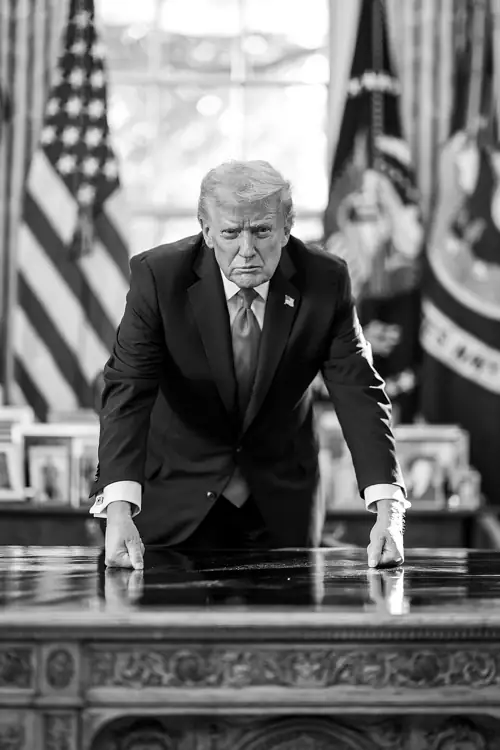
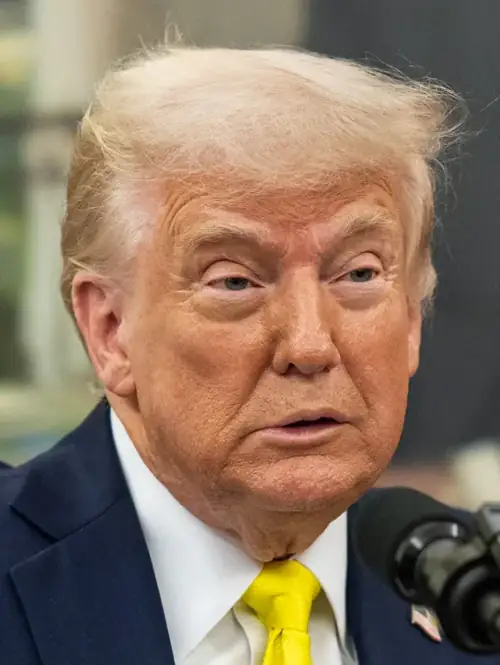
The bad news is that President Trump, when asked directly whether he would rule out sending troops to the polls, declined to do so. That's not a misread. That's not spin. The President of the United States was given a straightforward yes-or-no question about whether he would deploy soldiers to American polling places and he said, in effect, maybe.
That's not a normal answer. In the entire history of American democracy, 'I won't rule out soldiers at polling places' has not been a thing presidents say. It has been, historically, a thing that triggers international sanctions when other countries' leaders say it.
Why Democrats and Administration Officials Are Both Worried
Axios reports that the order has heightened concern not just from Democrats but from within the administration itself. Read that again: people inside this administration are worried about what Hegseth just set in motion. That's not nothing. These are not people who alarm easily or who have demonstrated any particular commitment to democratic norms over the past two years.
The concern, as best it can be reconstructed from what's been reported, is the obvious one. You are handing the Defense Department a broad mandate to intervene in elections using the most powerful surveillance and cyber tools the U.S. government possesses. You are doing this under a defense secretary whose confirmation was itself a political loyalty test. And the commander in chief overseeing all of it just told the country he hasn't decided whether soldiers at polling stations are off the table.
This is the exact sequence of events that political scientists write about in the chapters of textbooks titled 'How It Happens.'
The AI Angle Nobody Should Ignore
The artificial intelligence component of this deserves its own moment of attention. Officials told Axios this will be the most advanced AI deployment for election-related purposes in U.S. history. That sounds cutting-edge and reassuring until you think about what it actually means in practice.
Advanced AI tools used to 'identify' threats can produce false positives. They can flag domestic activity as foreign interference. They can be pointed at things that aren't foreign interference at all, and the algorithm won't know the difference if the humans running it decide not to know the difference. The history of government surveillance programs is not a history of those programs staying neatly within their original boundaries.
There are no public details about what oversight mechanisms exist for this program. There is no indication Congress was briefed before Axios broke the story. There is a lot of very powerful technology being handed to people who work for a president who just refused to rule out troops at polling places.
The Historical Comparison That Should Sober Everyone Up
The U.S. government has a specific legal framework that's supposed to prevent the military from being used domestically against American civilians. It's called the Posse Comitatus Act. It dates to 1878. It exists precisely because, after the Civil War and Reconstruction, Americans had seen what happens when you mix soldiers and elections and decided they never wanted to see it again.
Hegseth's order, as described by Axios, doesn't obviously violate Posse Comitatus because it's framed around foreign threats and cyber operations rather than domestic policing. Lawyers will argue about the lines. But the spirit of that law, the reason it was written, was to answer exactly the kind of question Trump just left open.
We built a legal wall between the military and elections because we knew what the alternative looked like. The current administration is standing in front of that wall asking why it's there.
The Dingo Take
You are supposed to believe this is about Russia. You are supposed to hear 'foreign interference' and think about St. Petersburg troll farms and feel reassured that the adults are handling it. But the adults here are Pete Hegseth and Donald Trump, and when Trump was asked the single most basic question a president can be asked about military force and elections, he punted. That is not the behavior of someone who sees this program as a narrow, targeted counter-intelligence operation. That is the behavior of someone who is keeping options open.
The foreign interference threat is real and it deserves a serious response. What it does not deserve is a response that comes with zero public oversight, zero congressional briefing before the press found out, the most powerful AI surveillance tools in American history, and a commander in chief who treats 'will you send soldiers to polling places' as a negotiating position. These things cannot both be true: that this is a routine election security measure and that the president won't commit to keeping troops away from voters.
Something is being built here. It may not be fully operational yet. The order may be entirely legitimate in its current form and the AI program may work exactly as advertised. But the refusal to draw clear lines, the secrecy, the breadth of the mandate, the technology involved, and the man at the top who has never once demonstrated that he considers any democratic norm non-negotiable — all of that together is not a reason to relax. It is a reason to watch this like your democracy depends on it, because there is a plausible world in which it does.


Comments