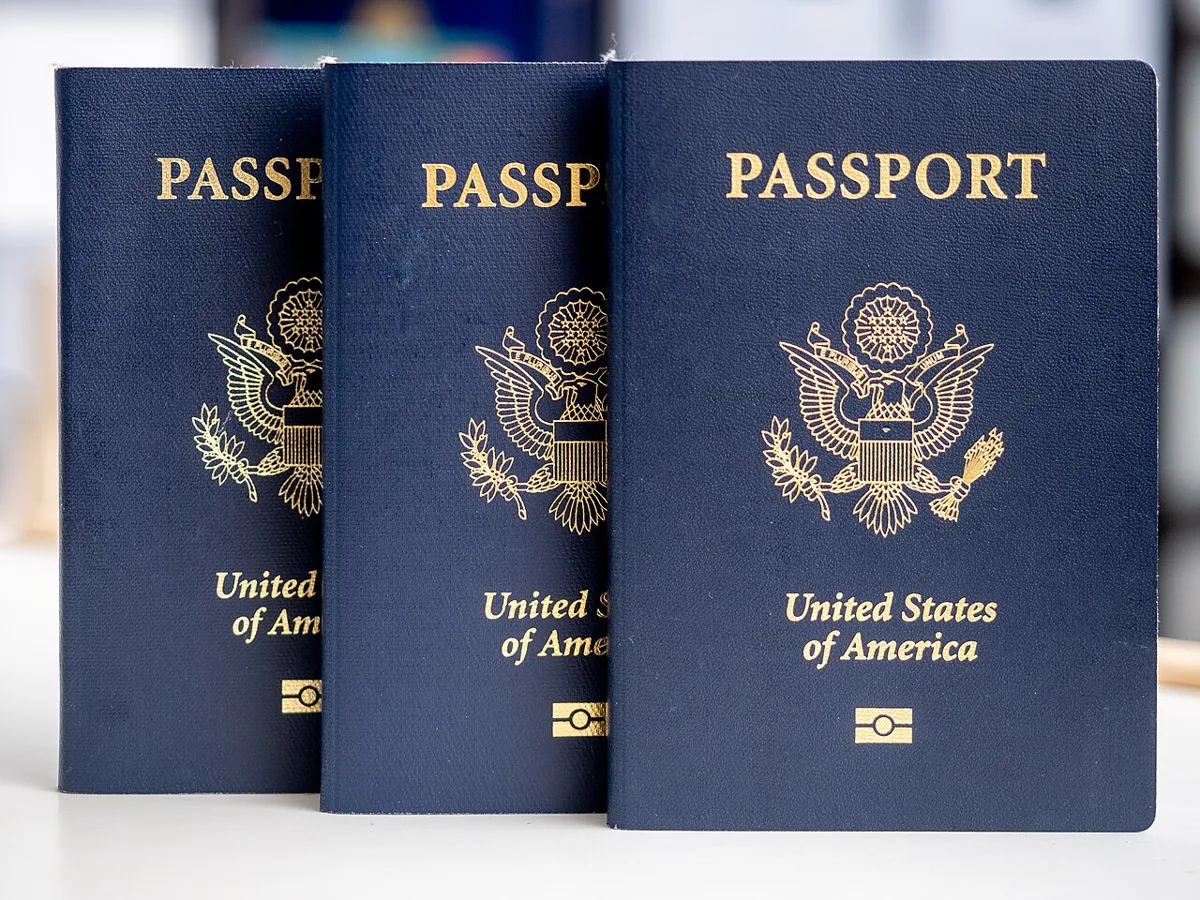
The Trump administration wants to take the private data of every American who has ever applied for a passport and run it through a voter eligibility check before the November midterms. The State Department confirmed it is actively assessing how to share those records with state and local officials and, yes, some nonprofit groups. The Justice Department disclosed the plan in a court filing last week, and it is a much bigger surveillance dragnet than anything the administration has attempted before.
What They're Actually Proposing Here
According to Fox News, the State Department is weighing how to share information from its Passport Services Records system with state and local governments as part of a push to purge noncitizens from voter rolls ahead of the midterms. The DOJ laid out the mechanics in a court filing: the State Department would publish a notice in the Federal Register establishing a new "routine use" for passport records, which is the legal mechanism the 1974 Privacy Act requires before the government can repurpose records it already holds on citizens.
That Federal Register notice, the DOJ filing said, could drop as early as October 22. For context, the midterms are in November. This is not a leisurely policy review. This is a sprint.
The records in question are not some narrow slice of government data. Passport records contain the personally identifiable information of every single American who has ever applied for a passport. That is tens of millions of people whose birthdate, address, photo, and citizenship documentation would be routed into a voter verification pipeline that includes, again, not just government agencies but nonprofit organizations.
The Legal Architecture Propping This Up
The timing of this filing is not a coincidence. It came just days before a 6-3 Supreme Court decision that allowed the Department of Homeland Security to share citizenship data with local governments for voter roll verification purposes. The administration now has a fresh Supreme Court green light and it is using it.
Earlier attempts to do something similar relied on Social Security Administration and DHS records, and several of those efforts got killed in court. Fox News reports that courts blocked multiple rounds of the administration's voter verification push. The passport gambit appears to be the next move, structured around different legal authorities to avoid the same judicial fate.
The DOJ court filing was submitted as part of a lawsuit brought by the Democratic Senatorial Campaign Committee challenging Trump's executive order on mail voting. The Supreme Court recently declined to lift an injunction blocking the U.S. Postal Service from implementing a final mail-ballot rule for November, so the administration is pressing hard on the voter roll front as the election machinery litigation drags on.
What 'Protecting Americans' Data' Actually Means When Nonprofits Are Involved
A State Department spokesperson told NewsNation the goal is to share the information in a way that "protects Americans' data, deters fraud and supports the integrity of U.S. citizenship." That sounds reasonable until you read the part where the proposed routine use would permit sharing with "various entities utilizing federal government verification platforms."
Various entities. That language is doing a lot of heavy lifting. State and local officials having access to passport records for government functions is one thing. Nonprofit groups getting routed into a federal passport database to help determine who gets to vote is a different thing entirely, and the administration's own filing language leaves that door wide open.
There is no public accounting yet for which nonprofits would qualify, what oversight would exist, or what happens to the data once it leaves federal hands. The Privacy Act notice will theoretically address some of this, but that notice has not been published yet. Right now there is a plan and a timeline and a court filing, and the details are coming later, maybe, shortly before an election.
The Pattern Is the Point
This is the third distinct federal records system the Trump administration has tried to weaponize for voter roll purges. Social Security records. DHS citizenship files. Now passport data. Each time a court blocks one approach, the administration finds a new federal database and tries again with different legal cover.
Fox News reports that the Supreme Court's recent DHS ruling gave this effort fresh momentum. The administration is reading that decision as permission to keep expanding the aperture of which federal records can feed into election administration, and it is moving fast enough that the infrastructure could be operational before voters cast a single ballot in November.
The Democratic Senatorial Campaign Committee and other Democratic plaintiffs are still actively litigating the underlying executive order. But the administration has learned to treat individual court losses as speed bumps. You lose one approach, you file a new routine use notice, you find a different database, you keep going.
The Dingo Take
You are supposed to believe this is about election integrity. Fine. Ask yourself why the integrity apparatus always runs in one direction, always before a major election, always structured in ways that maximize disruption to the voter rolls while minimizing time for anyone to challenge it in court. The Federal Register notice drops October 22. The election is in November. That is not policy development. That is a timed play.
The passport database is genuinely new territory. Previous voter verification attempts touched records that at least had some plausible direct connection to citizenship status. Passport records are different because a passport is something millions of naturalized citizens, dual citizens, and entirely ordinary Americans obtain for entirely ordinary reasons, and that data now gets folded into a system where unspecified nonprofits help determine whether you stay on the voter rolls. The administration has not explained who those groups are. It has not explained what safeguards exist. It published a quote about protecting Americans' data and called it a day.
Social Security records: blocked by courts. DHS citizenship files: blocked by courts. The administration went zero for several rounds before the Supreme Court handed it a lifeline on Friday. Now it is sprinting toward November with passport data and a Federal Register notice and the absolute confidence that if this one gets blocked too, there is another database waiting. That is not a voter integrity program. That is attrition.



Comments