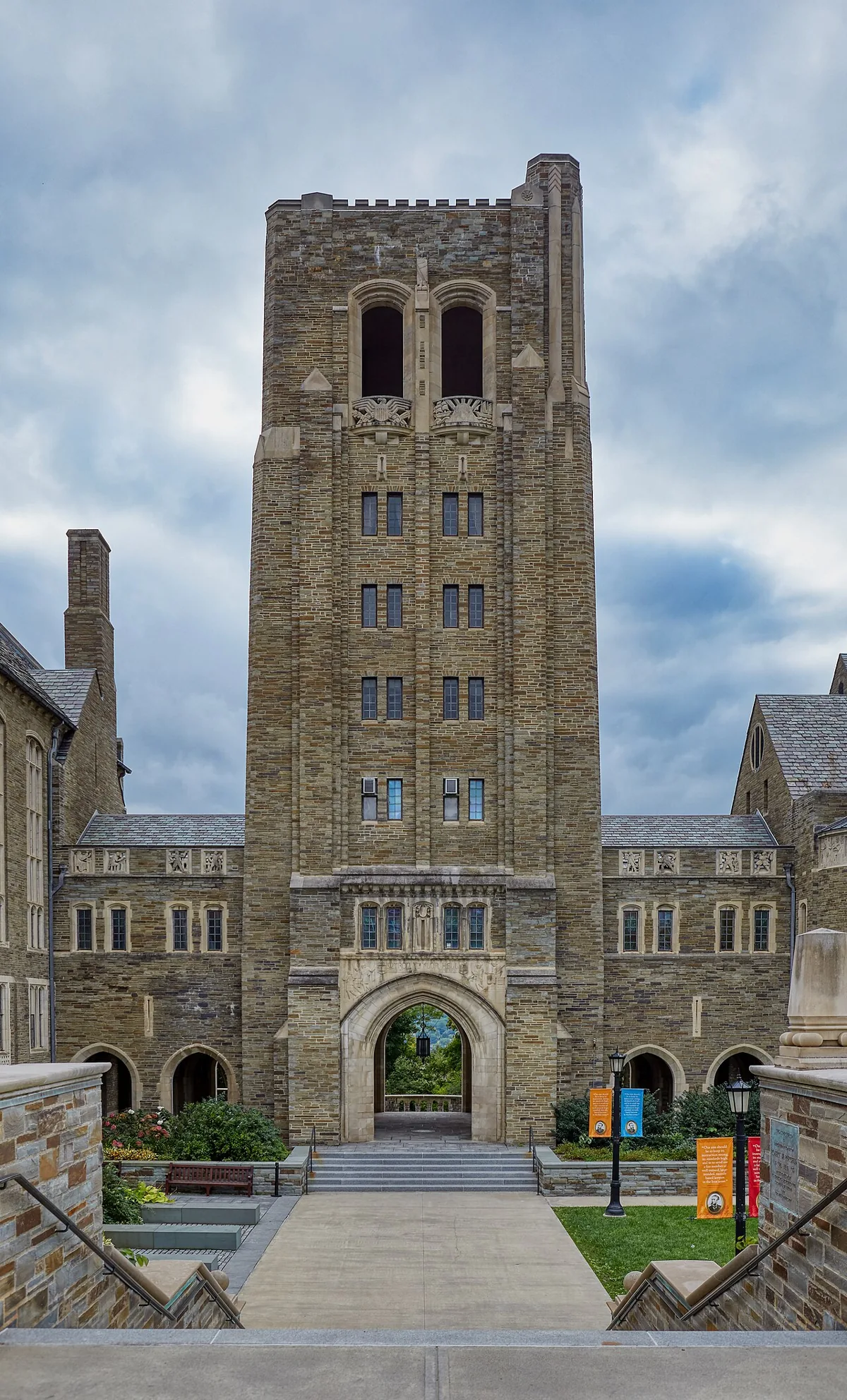
A 20-year-old woman says seven Cornell University fraternity members drugged and gang-raped her for four hours while one of them texted a group chat to invite more men into the room. Two years later, the Tompkins County District Attorney is admitting on camera that he never saw her statement saying, quote, "I can say with 100 percent confidence I was raped." Now Congress is involved, and everyone who touched this case has some explaining to do.
What Jane Doe Says Happened That Night
According to CBS News, the woman, identified in court documents only as Jane Doe, visited a friend at Cornell's Chi Phi fraternity house in October 2024 while already intoxicated. She alleges two fraternity members pressured her into taking what they said was ketamine. Then the assaults began.
At 1:42 a.m., according to the civil lawsuit, one fraternity member sent a message to a Chi Phi Snapchat group chat that CBS News describes as a crude suggestion that a woman upstairs was available for sex. More men came into the room. The lawsuit says the assaults continued until 5:45 a.m. Four hours.
Jane Doe waited three weeks before filing a report with Cornell's campus police. Her attorney, Thomas Giuffra, told CBS News that she went when she was emotionally ready, that she believed she was the victim of a crime, and that she expected investigators to follow up. According to Giuffra, no one from the DA's office ever did. "Other than her initial contact with Cornell Police, she was not contacted by investigators from the Tompkins County District Attorney's Office or any investigators trained in interviewing rape survivors," he said.
The Statement the DA Says He Never Saw
Here is where the story turns from horrifying into something that strains belief. CBS News New York obtained a transcript of Jane Doe's campus police interview from November 2024, a two-day session in which an investigator read her account back to her word by word. The transcript includes Jane Doe saying, explicitly: "I can say with 100 percent confidence I was raped."
Tompkins County District Attorney Matthew Van Houten told CBS News on September 29 that he was never provided the full transcripts of those interviews. The sworn statement submitted to his office, he said, made no mention of that line. "I never saw it, never heard it until tonight," Van Houten said. He added that if the statement was omitted, "it needs to be fully investigated by someone outside of Cornell."
Cornell says its police department provided the results of its investigation to the DA. Somebody is wrong. The transcript also shows that before Jane Doe signed her written statement, she told investigators, "I'm very confident about this." Her attorney's response to the DA's claimed ignorance was pointed: "What more did he need to do a thorough investigation and prosecute? He had a woman who told an officer she was raped and a group chat inviting sexual assaults. The failure to do anything is shocking."
What Cornell Actually Did About It
Cornell conducted its own internal investigation. The results, as described by CBS News, are a case study in institutional inadequacy. Cornell President Michael Kotlikoff laid out the breakdown in a September 29 meeting with the student government: two of the seven accused were expelled, two were suspended for at least two semesters, one had already graduated before any punishment could be handed down, and two were found not responsible for sexual misconduct.
Jane Doe's attorney claimed publicly that some of the accused had only to write essays as punishment. Cornell disputed that specific characterization, saying no one was offered essay writing as their sole consequence. The university's denial was narrow. The broader fact is not in dispute: not one of the seven men was arrested. Jane Doe dropped out of Cornell after the alleged assault. The men, by and large, did not.
The civil lawsuit she has now filed accuses Cornell and the seven former fraternity members of breach of contract, negligence, and violations of New York state law. She is seeking compensatory and punitive damages. The Tompkins County DA's office confirmed on September 28 that it is reopening the criminal investigation and will bring the evidence to a grand jury, citing community pressure as a factor in that decision.
Congress Picks Up the Thread — With a Very Specific Target
Axios reports that the case has triggered a new push from the Democratic Women's Caucus on Capitol Hill. The group is calling on congressional Republicans and the Trump administration to strengthen Title IX protections, arguing the administration's changes to the civil rights law are making students more vulnerable to exactly this kind of outcome.
The timing is not subtle. According to Axios, the push came just two days after the Trump administration rescinded Biden-era sex discrimination protections under Title IX. The Democratic Women's Caucus did not have to work hard to connect the dots. The Cornell case was already in the news. The rollback landed on top of it like a dropped anvil.
Whether Republicans engage with the request is a different question entirely. The current majority has shown little appetite for strengthening campus sexual assault protections. But the political pressure is real, and the Cornell case has given Democrats a concrete, specific, and deeply disturbing example to point to every time the conversation comes up.
The Grand Jury, and What Comes Next
The Tompkins County DA reopening the investigation is meaningful, but it is also a low bar. A criminal investigation was opened, went nowhere, and had to be pried back open by public outcry and a civil lawsuit two years after the alleged assault. The grand jury process is not a guarantee of charges. It is the beginning of a process that should have started in 2024.
The discrepancy between what the DA says he received and what the CBS News transcript shows is the central unanswered question. If the full transcript of Jane Doe's interview, including her statement that she was raped with certainty, was never transmitted to the DA's office, that is a failure somewhere in the chain between Cornell's police department and the prosecution. Van Houten says he will get the transcript now. Better late than never does not quite cover it, but it is at least something.
Giuffra has made clear he believes the system failed his client at every stage. The civil lawsuit keeps that pressure on Cornell specifically, separate from whatever the criminal process produces. Jane Doe is no longer a Cornell student. The men who were not expelled are, presumably, somewhere out in the world.
The Dingo Take
In October 2024, a woman reported a gang rape. By November 2024, she had given a two-day recorded interview to campus police in which she said, on the record, that she was raped. By the end of 2024, no one had been arrested, the DA's office apparently never received the full transcript, and the case was effectively closed. It took a civil lawsuit, two years, and a CBS News investigation to get it reopened. That is the timeline. Sit with it.
Every institution in this chain did the minimum or less. Cornell ran an internal process that resulted in two expulsions and, for others, sanctions that the victim's attorney described as essays, though Cornell disputes the characterization. The DA's office accepted a sworn statement it now acknowledges was incomplete and did nothing further. Campus police apparently did not ensure the full interview transcript made it to the prosecutors who needed it. Nobody arrested anyone. The Snapchat group chat inviting men into the room exists. It was not enough.
And now the Trump administration has rolled back Biden-era Title IX protections, at the precise moment when this case is demonstrating exactly why those protections existed. The Democratic Women's Caucus is calling it out, and they are right to. But calling it out and actually changing it are different things, and right now the people with the power to change it are the same people who just made it worse. Jane Doe is 22 years old, out of college, and waiting to see if a grand jury will do what every other institution in her life declined to do. That's where we are.

Comments