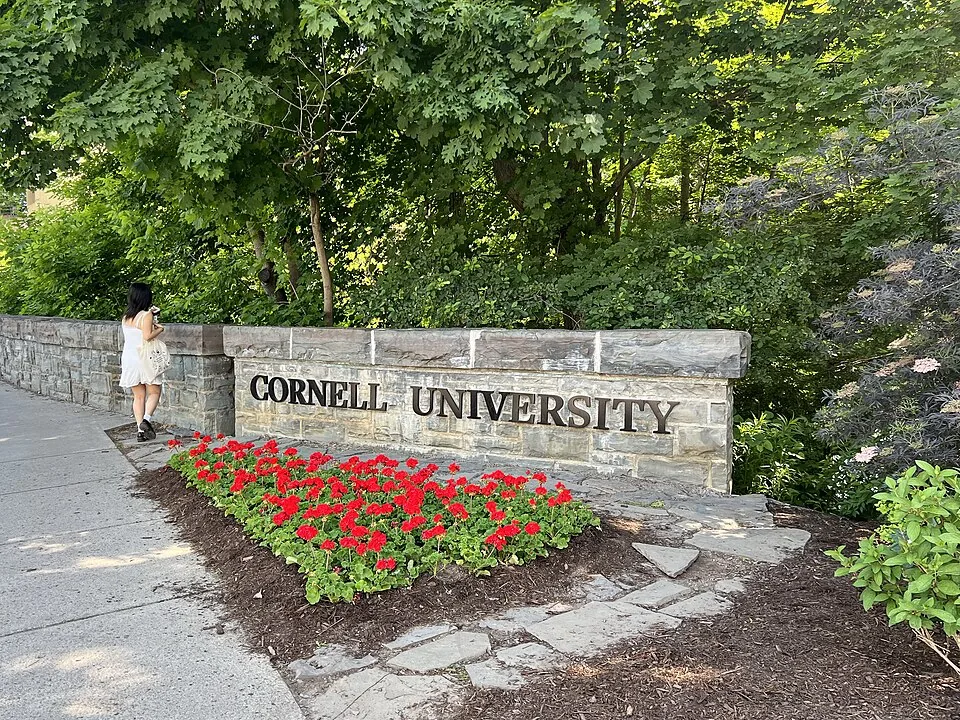
A former Cornell University student says she was drugged and gang-raped by seven men in 2024. Prosecutors declined to charge anyone. Now, two years later, the case has been reopened — and the question everyone is asking isn't just what happened in that fraternity house. It's what happened in that police interview room.
What the Statement Said, and What It Didn't
The woman, identified in court documents as Jane Doe, filed a civil lawsuit earlier this month laying out allegations against seven men she says assaulted her at Cornell in 2024. Prosecutors have since reopened the investigation. The lawsuit set off a wave of condemnation aimed at Cornell and the investigators who looked into this two years ago and decided there wasn't enough to prosecute.
Tompkins County District Attorney Matthew Van Houten explained his office's original decision by pointing to the statement Doe gave Cornell University Police shortly after the alleged attack. Van Houten told NPR that her 2024 statement did not allege she was drugged against her will or gang raped, and described her participation as voluntary, conscious, and consensual. That statement, he said, is the central reason his office passed on criminal charges.
Here's what Van Houten didn't lead with: according to NPR's reporting on excerpts from that same statement, there are multiple passages where Doe says she couldn't remember certain details, didn't consent to certain activities, and was getting increasingly intoxicated as the night went on. Those aren't minor footnotes. That's the whole ballgame.
Seven Hours. That's It.
If you want to understand why a police statement from a sexual assault survivor might be incomplete, contradictory, or seem to minimize what actually happened, you have to understand how trauma works on memory. And if you want to understand why so many investigators don't understand that, the numbers tell the story fast.
According to an analysis by the Bureau of Justice Statistics, the average basic police training program in the United States runs 833 hours. Of that, trainees in nearly 94% of academies that offered sexual assault training received, on average, seven hours of instruction on the subject. Victim response got six. Out of 833 hours. Less than one percent of a recruit's foundational education is spent learning how to talk to someone who just survived the worst night of their life.
Dave Thompson, a certified forensic interviewer who trains investigators in interrogation techniques, told NPR that anyone interacting with survivors should be trained in a trauma-informed approach. That means understanding that victims may not give clear, chronological, complete accounts right away. It means not treating gaps in memory as signs of deception. It means creating conditions where someone who just experienced serious trauma can actually tell you what happened.
Memory Doesn't Work Like a DVR
Trauma researchers have spent decades studying what serious violence does to the brain's ability to encode and retrieve memories. The takeaway is not complicated: memory isn't a recording. As Thompson put it to NPR, "We might remember the sound. The feeling of an impact. Maybe a scream. We remember bits and pieces."
Rebecca Campbell, a psychology professor at Michigan State who has studied trauma and sexual assault for nearly 30 years, told NPR that most U.S. police are not trained to account for this. What research consistently shows, she said, is that officers frequently treat victims not as survivors to be supported but as subjects to be interrogated. That distinction matters enormously. How you question someone shapes what they say. And what they say in that first interview can determine whether a case ever goes anywhere at all.
When investigators expect a clear timeline, a coherent narrative, certainty where there is none, and they get instead what trauma actually looks like — fragmented, nonlinear, full of "I don't remember" — they tend to read that as a credibility problem. That's not a neutral analytical judgment. That's a training failure dressed up as one.
The Cornell Case Is the Rule, Not the Exception
Cornell University Police did not respond to NPR's questions about the length, timing, location, or manner of the interview in which Doe's statement was taken. Van Houten, for his part, told NPR member station WSKG that the statement was taken by an experienced investigator trained in sexual abuse investigations over an extended period of time. Experienced. Trained. That word is doing a lot of work here.
Because if your training is rooted in a framework that treats inconsistency as dishonesty and memory gaps as fabrication, then being experienced in that framework doesn't help the victim. It just means you're more efficiently doing the wrong thing. The Cornell case is not some isolated failure of one investigator in one college town. It's a window into a systemic problem with how American law enforcement is taught to handle the most vulnerable people it encounters.
Tracy Matheson, whose 22-year-old daughter Molly Jane was raped and murdered in 2017, has spent years since then building Project Beloved, a foundation dedicated to creating specially designed police interview rooms that are calming and conducive to trauma-informed questioning. The fact that this has to be a passion project funded by a grieving mother tells you almost everything you need to know about how seriously institutions have taken the problem.
The Dingo Take
Medical malpractice works like this: a doctor uses an outdated technique that the profession has known for decades causes harm, a patient suffers for it, and everyone acts surprised. What's happening with sexual assault investigations in American policing is exactly that, playing out millions of times across thousands of jurisdictions, and the only difference is that no one loses their license. The Cornell case exists, in part, because the interview that followed the alleged assault almost certainly shaped what Jane Doe felt safe saying out loud to a stranger with a badge inside a police station two years ago. That's not speculation. That's what thirty years of research says happens.
Van Houten's office is reopening the investigation now, which is something. But the original decision not to pursue charges was made on the basis of a statement taken under conditions neither the police department nor the DA seems eager to explain in any detail. Seven hours of training. That's what stood between a survivor and an investigator who might have known how to actually hear her. The civil lawsuit shouldn't have been the thing that cracked this open.
The Cornell fraternity members named in this lawsuit have not been charged with any crime and deny the allegations. That matters and should be said. What also matters and should be said: the system that decided two years ago there was nothing to see here was never designed to look very hard. Fix the training, fund the resources, treat trauma like the documented neurological phenomenon it is rather than a credibility test survivors must pass. None of that is radical. It's just what the science has been saying since before most of these investigators ever put on a badge.




Comments