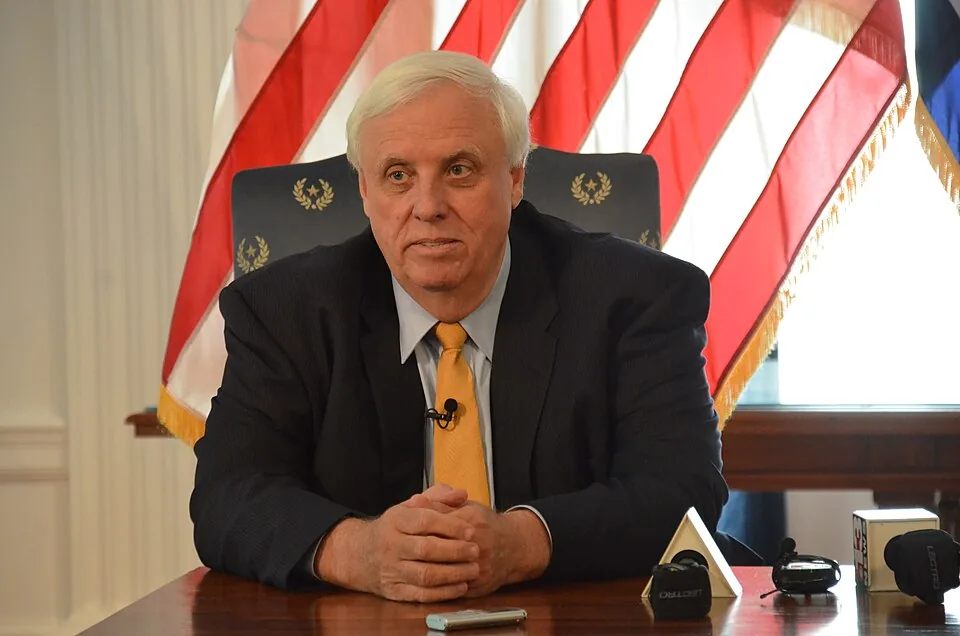
A Republican senator and Trump ally just told Politico that the administration should 'step back' from its immigration crackdown and admit it might be 'doing something wrong.' That senator is Jim Justice of West Virginia, and he didn't arrive at this position through moral clarity so much as through watching ICE haul away three-quarters of 593 arrested state residents who had zero criminal records.
The Quote That Should End Some Careers
Here is what Jim Justice actually said. 'Before you know it, you get people that get carried away in their job and whatever it may be, and all of a sudden, then you're dragging people away that have lived on your street corner for 15 years, and I don't know that we need to be doing that stuff.' That's a sitting U.S. senator, a member of the president's own party, describing federal law enforcement agents as people who 'get carried away' and start dragging neighbors out of communities where they've lived for a decade and a half.
This is not a Democrat. This is not a Never-Trumper with a Substack and a book deal. Jim Justice won his Senate seat in 2024 with Trump's endorsement and has been a reliable ally. When someone like that starts using the phrase 'I don't know that we need to be doing that stuff,' something has gone badly wrong.
What the Numbers Actually Say
Justice's comments didn't come out of nowhere. An ACLU of West Virginia investigation found that roughly three-quarters of the more than 593 people arrested by ICE in the state during 'Operation Country Roads' back in January had no criminal record. Read that again slowly. An operation with the word 'Country' in the name, in a deeply conservative state, swept up hundreds of people and the vast majority of them were not criminals by any legal definition.
Justice sits on the Senate agriculture committee, which is relevant because the people getting picked up in these raids aren't just community members, they're workers. The Kansas Livestock Association, Oklahoma Cattlemen's Association, and Texas Cattle Feeders Association released a joint statement last week saying ICE operations have had 'a massive chilling effect on the legal, documented, skilled workers' who keep beef production and the cattle supply chain running. Legal. Documented. Skilled. The ranchers aren't describing undocumented migrants in this framing. They're describing people with papers who are now terrified to show up to work.
The Agricultural Industry Is Sounding the Alarm
It's not just cattle country. Rick Naerebout, CEO of the Idaho Dairymen's Association, told NPR that 'if we had a concerted effort to have enforcement activities within agriculture, you could really harm our ability to produce food to feed ourselves.' That is the head of a state dairy industry saying, plainly, that the immigration crackdown threatens the food supply. Not a coastal liberal think tank. Idaho dairy farmers.
West Virginia alone has more than 22,700 ranchers, and the Guardian reports most of them are family operations. These aren't corporate agribusiness outfits with armies of lobbyists and the ability to absorb disruption. They're family farms, and they're watching the workforce that keeps them solvent get rounded up by federal agents in what the administration has branded as tough-on-crime enforcement.
The Midterm Math Starting to Kick In
Justice isn't alone in his sudden rediscovery of proportionality. Florida Republican congresswoman Maria Elvira Salazar, as the Guardian reports, recently ran a campaign advertisement telling Trump directly that his 'immigration enforcement efforts have gone too far.' A campaign advertisement. Paid media. Targeted at her own voters, telling the president of her party that he crossed a line.
The midterms are coming, and Republican members of Congress are starting to do the math. The immigration crackdown polled well in 2024 as an abstract concept. 'Tougher enforcement.' 'Secure the border.' Strong verbs, vague nouns. But 'ICE arrested 593 of your neighbors and 75% had no criminal record' is a very different story, and it turns out rural Republican voters are noticing when the labor force holding their agricultural communities together starts disappearing.
What the Administration Has to Say About All This
The Guardian asked the White House for a response to Justice's comments. As of publication, nothing. Which tracks. The Trump administration's standard operating procedure when confronted with inconvenient data points from its own coalition is either aggressive counter-messaging or strategic silence, and the math on 'no criminal record' is hard to spin.
The administration built its entire second-term identity around immigration enforcement as a signature achievement. Trump's base was told this would make America safer. The problem is that 'safer' is a complicated word when the people being arrested at high rates haven't committed crimes, and when the industries feeding the country are warning about supply chain damage.
The Dingo Take
You are supposed to believe this is about public safety. That is the entire sales pitch. The administration didn't sell mass deportation as an agricultural policy, or as a workforce reduction program for rural economies, or as a mechanism to arrest people with no criminal records in states that voted overwhelmingly for the president who ordered it. It sold this as making Americans safer. Jim Justice just told Politico that ICE agents 'get carried away' and drag people away from street corners where they've lived for fifteen years. That is not a public safety program. That is something else.
The rancher associations piling on here matter more than people realize. These aren't advocacy groups with a political agenda that's easy to dismiss. The Kansas Livestock Association and the Texas Cattle Feeders Association are not exactly MAGA antagonists. When they're putting out joint statements about ICE operations causing a 'massive chilling effect' on their documented, legal workforce, they are sending a signal that the crackdown has left the realm of border enforcement and entered something far more chaotic.
The midterm pressure is real, but don't mistake these Republican defections for principle. Justice didn't arrive at 'maybe we're doing something wrong' because he read the ACLU report and had a crisis of conscience. He got there because West Virginia has 22,700 ranchers and some of them called his office. The question is whether a few campaign ads and some carefully worded Politico quotes are enough, or whether Republicans will actually do anything to slow this down. History suggests we already know the answer.

Comments