
A woman who says she was drugged and gang-raped by seven men at a Cornell University fraternity house went to see a university doctor two days after the alleged assault. The doctor's professional medical recommendation: go to therapy. No rape kit. No specialist. No physical exam. Just a referral to "speak with somebody" and a door to walk back out of.
What the Doctor Did — and Didn't Do
Jane Doe, as she is identified in court filings, told the Cornell doctor that she had contracted a urinary tract infection "in a traumatic way," according to the New York Times. The doctor, per documents from the university's own Title IX investigation, did not follow up. What that doctor should have done, according to Doe's lawyer Thomas Giuffra, was order a rape kit, consult medical professionals trained in sexual assault response, and document her injuries.
Instead, she was told to go to therapy. That's it. That is the full extent of Cornell's medical response to a woman who had just disclosed a traumatic sexual encounter to a licensed professional.
"Inexplicably, all the medical professional did was to advise Ms. Doe to 'speak with somebody,'" Giuffra said in a statement to the BBC. He called the visit "yet another failure by Cornell." Cornell told the BBC it had no additional information to share.
The Rape Kit She Didn't Get Until Three Weeks Later
Doe eventually got a rape kit on November 7th, three weeks after the alleged assault took place. No DNA evidence was recovered. Giuffra told the BBC that if she had received a rape kit in October, when she went to the university doctor, it is likely that DNA evidence would have existed to collect.
Let that land. The evidence that could have corroborated her account, that could have driven charges, may have been lost specifically because the person whose job it was to help her instead handed her a therapy pamphlet and sent her home.
Doe filed a civil lawsuit against Cornell in September, alleging she was drugged with ketamine and raped by seven men at a fraternity house in 2024. The lawsuit also alleges the university failed to protect her and failed to adequately punish the men involved.
A Snapchat Group Chat, an Apology Text, and a DA Who Claims He Missed the Transcript
The criminal case has its own problems. The Tompkins County District Attorney's Office, led by Matthew Van Houten, received the case back in 2024 and declined to bring charges. Van Houten told the BBC his office had only seen a statement from Doe that implied the encounter was consensual, and that she had not been drugged.
The BBC reports that Cornell had also provided Van Houten's office with a Snapchat group chat in which fraternity members discussed a "free" sexual encounter with Doe on the night of the alleged assault. There was also a 120-page transcript of a Title IX interview with Doe, which Van Houten now says he had not read in full at the time. He told the BBC he has since obtained and reviewed the full transcript, and confirmed it supports her sworn statement. His office announced it would reopen the case less than two weeks after Doe filed her civil lawsuit.
Giuffra's assessment of the DA's office was not warm. "He changes his story so many times, I can't keep up with it," he said, adding: "The pattern I am seeing is that whenever evidence comes out supporting prosecution, he claims he never saw it."
How Doe Got There: A Textbook Trauma Response That No One Was Trained to Recognize
The Title IX documents obtained by the New York Times lay out the three weeks between the alleged assault and Doe's formal report to the university. The morning after, she returned to her sorority house and told her roommates she had done drugs and had sex with multiple men, but did not yet use the words "rape" or "assault." A roommate told investigators Doe appeared to be "in shock" and "not really understanding the gravity of what she was saying."
One of the men accused of assault texted Doe an apology afterward. "I just wanted to apologize for how things went down the other night," he wrote, saying that he and the other men felt awful for being too intoxicated to "shut it down and kick people out before it got way out of hand." That is not an innocent man's text message.
On November 3rd, Doe texted one of her alleged attackers directly. "Let's be clear that 90% of what happened that night was not consensual," she wrote. "I was given more key than I can remember" -- key being shorthand for ketamine. "I know that I told u I felt uncomfortable and I didn't know anyone in the room." By the time of her Title IX interview, she said she felt "100 percent" confident she had been raped. Her attorney confirmed that to the BBC. Giuffra said her progression from denial to shame to acceptance was "a textbook reaction to trauma."
The Tension Cornell Wants to Stay Quiet
The BBC spoke to students and a faculty member at Cornell, all of whom asked to remain anonymous. Many others were reluctant to speak at all. That tracks. When a university's response to a rape disclosure is to recommend therapy and move on, the message to the rest of the campus is loud and clear: keep your head down.
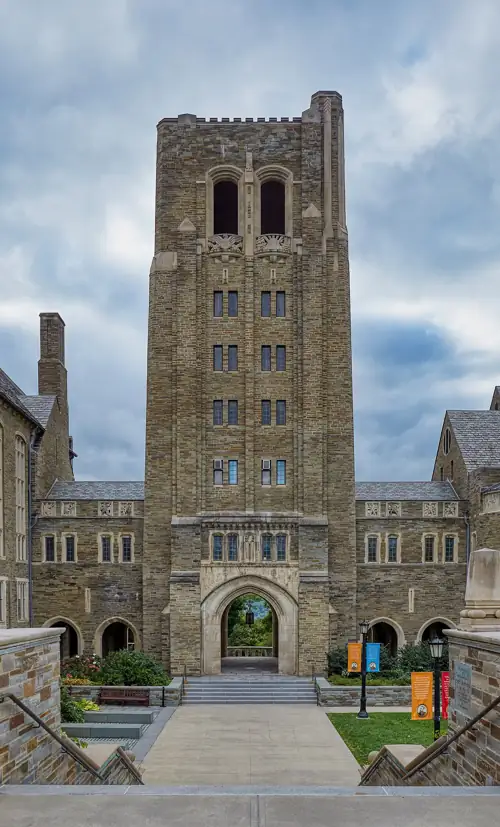
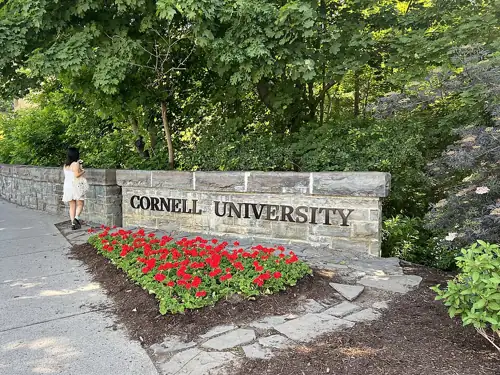
Cornell is an Ivy League institution with an endowment measured in the billions, a reputation to protect, and apparently a health system that treats trauma disclosures like mild inconveniences. The campus is in upstate New York, described by the BBC as "sprawling" and tucked away, which mostly just means it's the kind of place where the administration can hope that what happens stays local.
The Dingo Take
Cornell failed this woman at every single turn. A doctor who didn't order a rape kit. A DA who claims he never read 120 pages of evidence sitting in his own office. A fraternity group chat discussing a "free" sexual encounter that somehow wasn't enough to prompt immediate action. Each institution that touched this case found a way to look the other way, and the cumulative effect is that two years later, a woman is fighting for accountability in civil court because the systems that were supposed to protect her were busy protecting something else.
The apology text alone should make your blood run cold. One of the accused men texted Doe to say he felt awful for not shutting things down before they "got way out of hand" -- and that still wasn't enough for a prosecutor to move. The Snapchat group chat celebrating a "free" sexual encounter wasn't enough either, apparently. The DA now says he'll reopen the case. Convenient timing, given the civil lawsuit. Whether that reopening leads anywhere real or just gives him better cover remains to be seen.
The therapist referral is the detail that should follow Cornell's administration around forever. That doctor saw a woman two days after an alleged gang rape and offered her a counseling recommendation. Not a rape kit. Not a forensic exam. Not a call to a specialist. If that is what an Ivy League university's health system does with a trauma disclosure, then the Ivy League needs to be asked, loudly and repeatedly, what exactly all that tuition money is paying for.


Comments