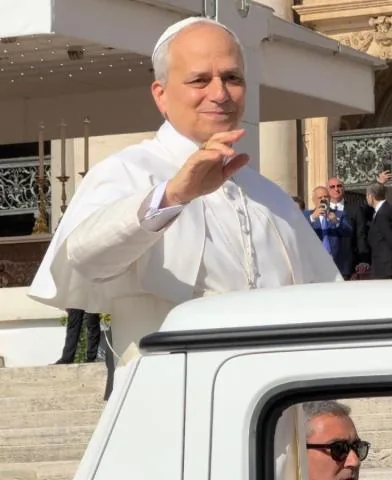
The Pope walked up to the microphone and said what a lot of people have been thinking but nobody with institutional power has actually said out loud: human art and machine-generated content are not the same thing, and the difference matters. Pope Leo XIV called Friday for the Catholic Church to forge an alliance with artists to protect human creativity in the age of AI. This is not a gentle suggestion from a man who hates technology. This is a warning shot.
What the Pope Actually Said
According to Axios, Leo XIV's exact framing was this: "In this era of artificial intelligence, it is becoming urgent to distinguish human art from what machines produce." Read that sentence again. The head of the world's largest Christian denomination, speaking to over a billion Catholics, is telling them that the distinction between human and machine creativity is urgent. Not interesting. Not worth monitoring. Urgent.
This is not the pope ranting about the internet in 1999. Leo XIV has acknowledged AI's potential benefits before, and he's doing so again here. The concern is specific: that the relentless acceleration of AI-generated content is happening at a cost, and that cost is human dignity. That's the line in the sand. You can have the technology. You cannot have it at the expense of what makes people people.
The Anthropic Angle Nobody Should Miss
Axios notes that Leo XIV's statement lands in the wake of New York Times reporting on Anthropic, the company behind the Claude AI model, reaching out to religious scholars in an effort to infuse religious morals into its systems. Let that sit for a second. One of the most powerful AI labs in the world is consulting theologians about how to make its chatbot more ethical.
This is either genuinely thoughtful or a very sophisticated piece of reputation management, and the answer is probably somewhere in between. Either way, the Pope's response lands on the same week that news breaks about AI companies shopping for moral frameworks to bolt onto their products. The church is watching. And it is not impressed by the gesture alone.
The timing is not a coincidence. Leo XIV is not reacting to Anthropic specifically, but the convergence of these two stories tells you something important about where we are in 2026. The biggest religion on earth and the hottest sector in technology are now in active conversation about who owns the definition of human dignity. That is a genuinely extraordinary sentence to be writing.
Why Artists and Why Now
The call for a church-artist alliance is the part that deserves more attention than it's getting. The Catholic Church has one of the longest and most complicated relationships with art of any institution in human history. It commissioned Michelangelo. It burned books. It has been the patron, the censor, the subject, and the enemy of artists across centuries. Calling for an alliance now is not a small move.
The practical logic is straightforward. Artists are the people most immediately and materially threatened by AI-generated content. Illustrators, musicians, voice actors, writers, and photographers have watched their industries get disrupted in real time, with their own work scraped without consent to train the systems replacing them. If the church is looking for a constituency that understands what it means to have something irreplaceable treated as raw data, artists are exactly the right people to call.
The deeper logic is theological, and it's actually interesting whether you're Catholic or not. The argument is that human creativity is not just economically valuable. It is an expression of something essential about what humans are. When you replace that with a statistical prediction engine, you are not just cutting costs. You are making a claim about what human beings are worth. Leo XIV is saying that claim is wrong.
The Church's AI Track Record So Far
This is not Leo XIV's first time at this particular rodium. He has been consistent about threading a needle: AI can be good, AI can be useful, but AI cannot be allowed to degrade human dignity in the process of being useful. That framing is more careful than a flat condemnation, and it's also more durable. It doesn't get dismissed as technophobia. It forces the actual hard question, which is who benefits and who pays.
The Vatican has been developing its thinking on AI for several years now, well before Leo XIV. The Pontifical Academy for Life released guidance on AI ethics back in 2020 that drew signatures from IBM and Microsoft. The church has institutional skin in this game. What Leo XIV is doing is raising the temperature, making the alliance language explicit, and doing it at a moment when the cultural argument about AI and creativity is still very much in play.
The Dingo Take
The money behind AI-generated content is the thing to keep your eyes on here. The companies training models on human-made art, music, and writing are worth hundreds of billions of dollars. The artists whose work built those training datasets are, in many cases, broke, out of work, or fighting class-action lawsuits they can barely afford to fund. When the Pope says it is urgent to distinguish human art from machine output, he is not making an abstract philosophical point. He is describing a transfer of value so large and so fast that most people haven't processed it yet.
Anthropic shopping for theological credibility and the Pope calling for an artist alliance are two sides of the same coin. The AI industry knows it has a legitimacy problem. It is trying to solve that problem by associating itself with moral frameworks it did not build and does not fully accept. The church's response, essentially, is: nice try, but an alliance means shared sacrifice, not a consultation fee.
What happens next is the actual test. A papal statement is a papal statement. It carries weight with a billion people. But weight without mechanism is just rhetoric. If the church-artist alliance Leo XIV is calling for becomes something real, with resources, with legal support, with the kind of institutional muscle the Vatican can actually bring to bear, then this matters. If it stays a press release, then the algorithms will keep grinding and the quarterly earnings will keep climbing, and nobody will remember the Pope said anything at all.



Comments