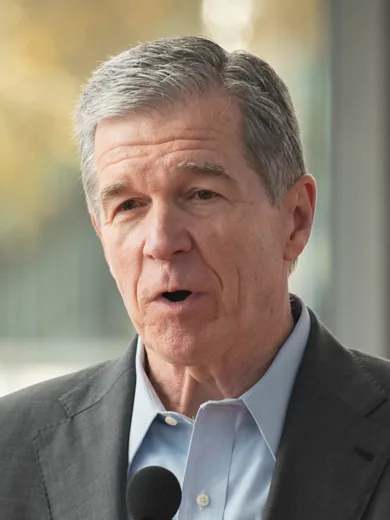
More than a thousand North Carolina families spent years sitting in temporary homes after two devastating hurricanes, waiting for the state to rebuild what the storms took from them. Meanwhile, according to an analysis by the John Locke Foundation, Roy Cooper's disaster recovery agency was sending $100 million in federal relief money toward affordable housing projects that had no requirement to serve hurricane victims at all. That is not a mix-up. That is a policy choice.
What NCORR Was Actually Doing With the Money
The North Carolina Office of Recovery and Resiliency, the $1 billion agency Cooper's administration stood up to handle disaster recovery, directed over $100 million toward affordable housing while operating under a significant budget shortfall, the John Locke Foundation analysis found. The John Locke Foundation is a free-market think tank, so take the ideological framing with whatever grain of salt you prefer. The underlying numbers are the numbers.
One of those projects was Starway Village, a $9 million, 278-unit complex built about 12 miles from the beach, open to anyone earning up to around $45,000 a year. Sounds fine, except for one detail the New York Post flags clearly: affordable housing projects funded through this program did not require applicants to be hurricane victims. Anyone could apply. Storm survivors got no priority.
The Families Who Waited While This Was Happening
Hurricane Matthew hit North Carolina in 2016. Hurricane Florence followed in 2018. Years later, a report by WHQR found that over a thousand families still did not have rebuilt or repaired homes. Over a thousand. Years later.
A state audit reviewed by the New York Post found that reconstruction of more than 1,100 homes was still unfinished when Cooper left office. It also found that the state took an average of 138 days just to decide whether someone was eligible for reconstruction funds. After that decision, it took an average of four years for construction to actually begin. Four years. On a home that a hurricane destroyed.
How Cooper's Team Is Defending This
NCORR did not go quietly. A spokesperson told the New York Post that the agency worked with HUD to prioritize needs in storm-impacted areas while maintaining compliance with federal requirements, and that local governments and community organizations were consulted along the way. The spokesperson also argued that HUD "strongly encourages" states to build varied program portfolios, and that housing availability broadly is considered part of community recovery.
That is a coherent position, technically. States do routinely blend disaster recovery with longer-term housing goals. But "HUD encourages it" is doing a lot of work in that defense when the specific outcome is that over a thousand storm victims were still waiting years after the fact. Cooper's campaign did not respond to the New York Post's repeated requests for comment.
The Senate Race This Is Landing In
Cooper is not a former governor fading into retirement. He is running for a competitive U.S. Senate seat in North Carolina against Republican Michael Whatley, and right now he is winning. The Cook Political Report rates the race as "lean Democrat," and the latest RealClearPolitics polling average has Cooper up by nine points.
Cooper has publicly claimed he "helped repair or rebuild more than 14,000 homes" during his tenure. His campaign clarified that number goes beyond the HUD-funded program the state audit examined, which found 3,522 completed rebuilds and more than 1,100 unfinished ones. How those numbers add up depends heavily on what you count, and who is doing the counting.
Who Gets to Define "Recovery"
The NCORR spokesperson's most interesting line to the New York Post was this: the ReBuild NC program "has returned 4,240 eastern North Carolina families to safer, more resilient homes." That is real. That is not nothing. Four thousand families back in homes is a genuine thing.
But the audit also found that reconstruction took, on average, four years to begin after eligibility was confirmed. That is four years of temporary housing, of disrupted lives, of kids in unstable living situations while the bureaucracy processed paperwork. And during those same years, $100 million that came in specifically labeled as disaster relief went to housing projects that served the general public, not the people the storms hit.
The Dingo Take
Families in eastern North Carolina sat in temporary housing for years, some of them still waiting when Cooper packed up his office in Raleigh. These are not abstractions. They are specific people with specific storm damage who applied for specific funds and then waited 138 days just to hear whether they qualified, and then waited four more years for a shovel in the ground. That is the concrete human reality behind the budget line items.
The defense here is not crazy. Affordable housing is genuinely connected to disaster recovery, HUD does encourage varied program portfolios, and Cooper's team did complete thousands of rebuilds. But "we followed HUD guidance" is a procedural answer to a moral question. When a disaster recovery agency has a budget shortfall and a backlog of unhoused storm victims, the decision to send nine figures toward housing open to anyone in the general public is a choice someone made. That choice has a name attached to it.
Cooper is currently nine points up in a Senate race and the frontrunner. That is probably where this story stays, a footnote. But the families still waiting for their homes to be rebuilt know exactly what those four years felt like, and no amount of HUD compliance language gives that time back.




Comments