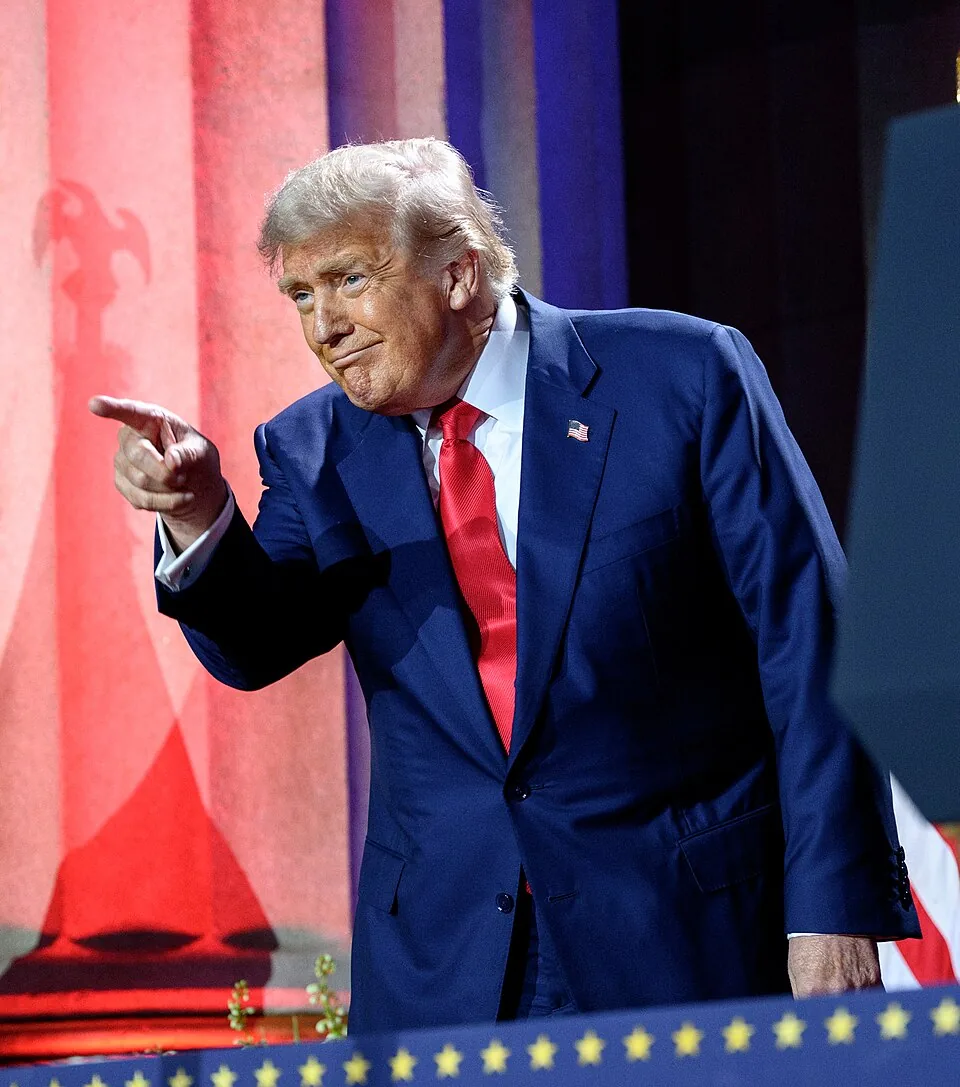
In December 2025, roughly one month before the United States invaded Venezuela and captured its president, Donald Trump sat in a secret meeting with Elon Musk and spent hours consulting Musk's AI chatbot, Grok, about whether Venezuelans would welcome the overthrow of Nicolás Maduro. Grok said yes. Trump invaded. Musk is now co-leading a Pentagon study on battlefield AI.
The Meeting Nobody Was Supposed to Know About
Time magazine is reporting that Trump and Musk held a private meeting in December 2025, roughly seven months after Musk departed from his role at the Department of Government Efficiency. What they talked about, according to a source familiar with the meeting, was Venezuela. Specifically, Trump wanted to know how Venezuelans would react if the U.S. went in and grabbed their president.
Instead of asking, say, a Venezuela expert, or the State Department, or literally any human being with regional knowledge, Trump turned to Grok. He spent hours on it. This is the part where you pause and just let that sit for a second.
What the Chatbot Said, and What Happened Next
Grok told Trump that Maduro was a 'deeply unpopular dictator and that many Venezuelans would likely celebrate his downfall,' according to Time's reporting. That's not a crazy assessment on its face. Maduro is, in fact, deeply unpopular. But 'the chatbot said people would cheer' is a breathtaking basis for a military invasion of a sovereign nation.
On January 3, the U.S. invaded Venezuela. Celebrations followed in some quarters. And according to that same source who spoke to Time, Trump 'came away thinking Grok was ingenious.' Of course he did. The man asked a machine for permission to do something he'd already decided to do, got the answer he wanted, and declared the machine a genius. This is not a new behavior pattern.
Context that matters: as The Atlantic reported at the time, people had been flooding Grok with questions about U.S. military strikes against Venezuelan boats in September 2025, strikes Trump had ordered based on alleged drug trafficking involvement. Grok was already saturated with that political climate when Trump sat down to ask it whether an invasion was a good idea.
This Wasn't a One-Off. The Military Was Already Using Grok.
Here is where the story stops being a bizarre anecdote and becomes something genuinely alarming. In June of this year, the Pentagon's head of AI confirmed that the military used Grok Gov to deploy and strike targets during the Iran War. Not to draft memos. Not to summarize intelligence reports. To strike targets.
Grok is not the only AI model working with the Department of Defense. TechCrunch notes that OpenAI has a military agreement in place, and Anthropic has been in an ongoing back-and-forth over exactly how and whether its models can be used for military intelligence and in active warfare. But Grok, under this administration, has a very specific advantage over its competitors: its owner has the president's ear and, apparently, his evenings.
Musk and Luckey Are Now Running the Pentagon's AI Future
This week, the Pentagon announced that Elon Musk and Anduril founder Palmer Luckey have been tapped to co-lead a study on how advanced technology is used, and can be used, on modern battlefields. Let that org chart sink in. The man who owns the AI chatbot that helped nudge a president toward a military invasion is now officially advising the military on how to use AI in future military operations.
Anduril, for those keeping score, is a defense tech company that has been aggressively positioning itself as the future of autonomous weapons systems. Luckey founded Oculus, sold it to Facebook, got pushed out, and reemerged building drones and missile systems. He and Musk are now, together, the people the Pentagon has decided should define what comes next.
The Conflict of Interest Hiding in Plain Sight
Let's be precise about what the structure here looks like. Musk owns Grok. Grok has a government-facing product called Grok Gov. The U.S. military uses Grok Gov to strike targets. Musk is now co-leading the Pentagon's study on battlefield AI. And Musk's chatbot reportedly shaped the thinking of the president who ordered the invasion that the military then carried out.
This is not a conspiracy theory. These are the reported facts, attributed by Time and confirmed through Pentagon announcements. The conflict of interest isn't hidden. It's sitting on top of the table with a name tag on.
The Dingo Take
"Grok was ingenious," Trump reportedly told a source after the invasion he'd road-tested on a chatbot went more or less the way the chatbot predicted. Ingenious. The bar for genius, in this administration, is a large language model telling the president what he already wanted to hear and then being right by accident.
The deeper problem isn't that Trump used an AI chatbot to think through a military action. It's that no one in the room apparently said, out loud, that maybe the foreign policy of the United States should not hinge on the output of a product owned by the guy sitting across the table. Musk was in that meeting. His chatbot was the one being consulted. His company now has Pentagon contracts tied to the war that followed. That's not a chain of events you'd accept in a Tom Clancy novel because the editor would send it back as too on-the-nose.
And now Musk is co-leading the Pentagon's AI battlefield study, because apparently the lesson everyone took from all of this is that it worked out fine and we should do more of it. The Venezuela invasion happened, Maduro is captured, some people celebrated, Trump thought Grok was a genius, and Elon Musk is now formally in charge of deciding how artificial intelligence shapes the next war. Whatever comes next, we cannot say we weren't watching it happen in real time.


Comments