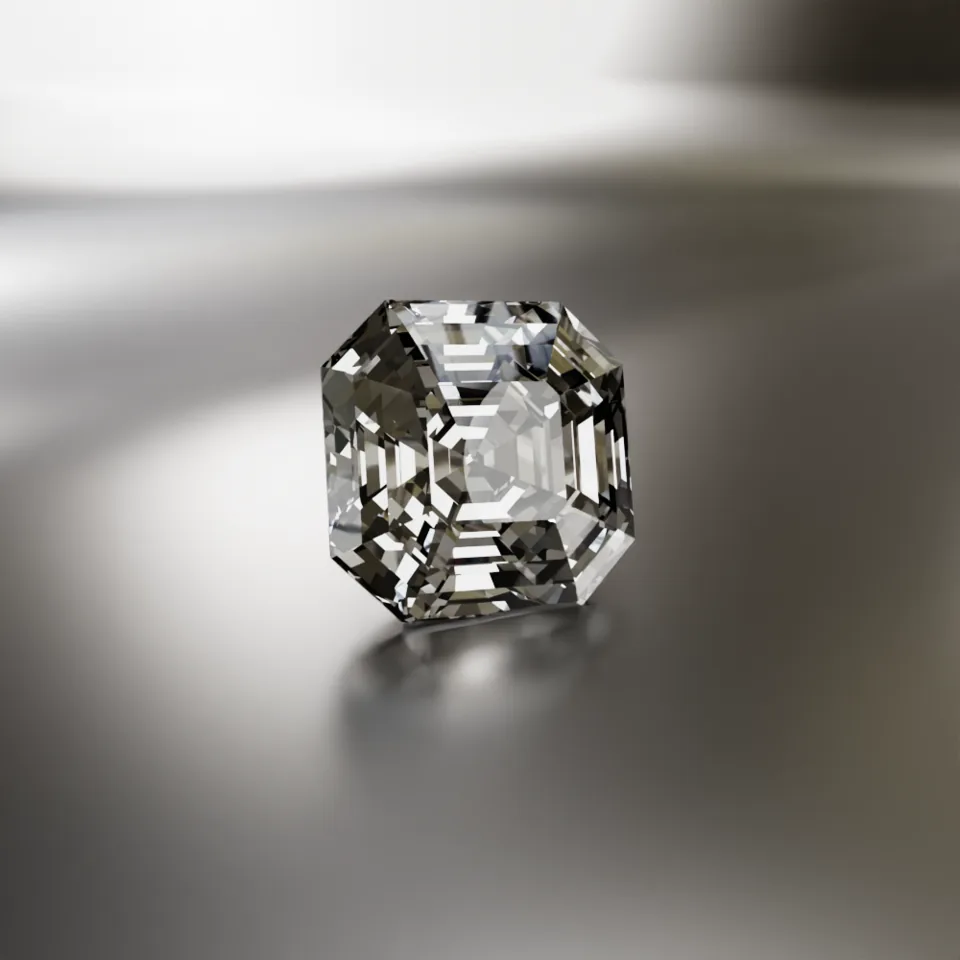
Jack Pearadin paid fifteen dollars to fill a bucket with rocks and walked out of a state park in Arkansas with a 6.03-carat diamond he's calling the American Dream. He's been doing this since 2013, has found over 300 gems, and never hit anything close to this. Then one day he flipped a pile of gravel onto a table while livestreaming on TikTok and started screaming.
Thirteen Years of Shoveling for a $15 Jackpot
According to the Associated Press, Pearadin is a Navy reservist originally from Missouri who loved the park so much he moved to nearby Murfreesboro to be closer to the dirt. He's been shoveling through gravel at Crater of Diamonds State Park since 2013. Three hundred gems over twelve-plus years, most of them small, most sold online for a few hundred bucks each.
This one was different. On a visit earlier this year, Pearadin and his friend Michael Schumacher of Wisconsin filled a five-gallon bucket, rinsed it down, and dumped the contents onto a table. Sitting in the pile was a 6.03-carat diamond, roughly the size of a fingernail, glinting like it had been waiting there specifically to end a thirteen-year dry spell.
"Oh my God! Oh my God!" Pearadin said on his TikTok livestream. "Holy crap, we got a big one!" The video, as you can imagine, has done numbers.
What Is This Thing Actually Worth?
Pearadin says collectors have told him the stone could be worth $1 million. The New York Post reports that at least one experienced appraiser gave the Associated Press a more conservative number: a diamond of this size and quality is more realistically worth about a quarter of that.
Laura Stanley, a certified gem appraiser in Little Rock, told the AP that a high-quality six-carat yellow diamond from the park can sell for around $250,000. That's still a life-altering number, especially for something you pulled out of a $15 bucket of gravel. Stanley also made the point that these stones carry a premium because of where they come from. "They are their own entity," she said. "It's the only place in America where you can go find your own diamond and you can't compare that to a diamond from anywhere else."
Pearadin has named the stone the American Dream. He plans to split the proceeds with Schumacher and use his share to open his own crystal mine. So even his dream is to go find more rocks.
The Park Is a Legitimate Geological Anomaly
Crater of Diamonds State Park sits on top of one of only two known primary diamond deposits in the entire United States, according to Nathan Renfro, senior manager at the Gemological Institute of America. The other is Colorado's Kelsey Lake, where the land was reclaimed after a commercial mining operation went under. Which means the Arkansas park is effectively the only place on Earth where a member of the general public can hunt for diamonds and legally keep what they find.
"It's a pretty remarkable operation that that's available to the public," Renfro told the AP. "Most diamond mines are super high security." The park has been open to the public since 1972, when the old open-pit mine became state property. More than 37,000 diamonds have been found there since.
Park assistant superintendent Waymon Cox told the AP that between 400 and 800 diamonds turn up each year. Most weigh about a quarter of a carat. But there have been bigger scores: a 9-carat diamond found by an Arkansas bank manager in 2020, and a 7-carat stone unearthed by a French visitor in 2024. The largest diamond ever found in the United States, a 40.23-carat monster called the Uncle Sam, came out of this same field in 1924 and now lives in the Smithsonian.
How a Diamond Actually Gets From the Ground to a Table
The AP's reporting touched on something genuinely wild about how these stones exist in a plowed Arkansas field in the first place. Diamonds form under extreme pressure and heat deep inside the Earth, then get pushed toward the surface through volcanic activity, then scatter further by wind and water over millions of years. The Crater of Diamonds site is essentially a very old, very eroded volcanic pipe.
Renfro noted that the raw stones are often cloudy and oddly shaped, and lose about 25% of their weight once they're cut and polished into something a jeweler would sell. So Pearadin's 6.03-carat rough stone will likely come in lighter once it's properly finished, which factors into the final valuation. Still a lot of carats. Still potentially a lot of money.
The Dingo Take
Jack Pearadin deserves every dollar he gets, and the fact that this story exists at all is worth sitting with for a second. A guy moves to rural Arkansas because he loves digging in a field. He does it for thirteen years on a hobbyist budget. He livestreams on TikTok to, presumably, a modest audience of fellow rock people. And then one afternoon he dumps a bucket of gravel and his life changes. That's not the American Dream as a brand slogan. That's just a man who found what he loved and did it until it paid off in the most absurdly literal way possible.
The $15 entry fee detail is doing a lot of work here. The park charges fifteen dollars to fill a five-gallon bucket, and that bucket can contain a quarter-million-dollar diamond. Every hedge fund manager who has spent the last decade trying to engineer alpha from nothing should go sit quietly with that information.
Pearadin plans to split the money with his friend Schumacher and open a crystal mine. Not retire to a beach. Not buy a second house. A mine. To dig for more rocks. Some people are just built different, and in a news cycle that is otherwise an unrelenting punishment, it is a genuine pleasure to write about one of them.




Comments