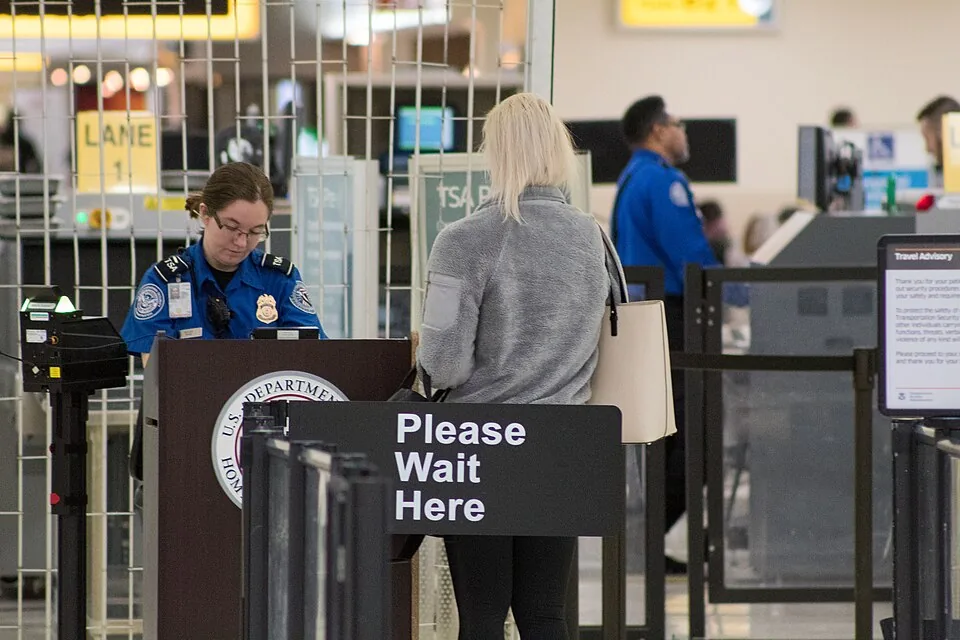
The Transportation Security Administration has decided that the best way to reward airport security officers who just survived a 76-day government shutdown — working without pay, watching their colleagues quit in real time — is to take away their chairs. Not metaphorically. Their actual chairs. The ones they sit in while checking your boarding pass.
The Policy, Explained in All Its Glory
TSA officers who verify IDs and boarding passes at security checkpoints will no longer be permitted to sit down while doing their jobs. The agency confirmed the change to ABC News recently, framing it as a move to keep officers "alert" and to project what the TSA called a "welcoming and professional environment for travelers."
"This welcome change reinforces both our security posture and our commitment to hospitality by having these officers on their feet and alert," a TSA spokesperson said. Commitment to hospitality. That's the phrase they went with. For the workforce that just got stiffed for two and a half months.
The agency also noted that all officers must meet "fitness for duty requirements" to perform their "vital national security function." So standing is now a national security matter. The chair is a threat to the homeland. Got it.
What the Union Has to Say About This
The American Federation of Government Employees Council, which represents TSA officers, found out about the change the same way you might expect in this administration: they weren't consulted. The union said in a statement that it was not involved in the decision at all.
"These chairs serve as basic ergonomic and safety support for officers that stand and walk on hard surfaces all day," the union said, according to The Guardian. "TSA is treating this matter like it is a privilege — it is not; it is basic safety and common decency for the workforce."
The AFGEC went further, calling the move a "disregard for employee rights and safety" and describing it as part of a "broad pattern" of how TSA leadership actually views the workers keeping American airports running. Hard to argue with that framing when the evidence is sitting right there in the policy memo. Or rather, standing. The evidence is standing, because sitting is forbidden now.
Context the TSA Would Really Prefer You Forget
Here is the part you need to hold in your head while reading the TSA's hospitality-focused statement. From February to April of this year, the US government shut down for 76 days. TSA officers were among the federal workers required to show up anyway, doing their jobs without receiving a paycheck. Some didn't show up. Some quit. Airport security lines ballooned across the country as a result, according to The Guardian's reporting.
Those workers finally received back pay at the end of March after Donald Trump signed a presidential order. The shutdown itself ended April 30, after the House passed a bill funding the Department of Homeland Security. The same department that oversees the TSA. The same TSA that has now decided the chair is the enemy.
The timeline here is not subtle. You work for free for months, you drag the agency through a staffing crisis it caused, you get paid eventually because a court order made it unavoidable — and the next thing you hear from management is that standing is patriotic and sitting is a liability.
The Bigger Fight Brewing
The chair ban is not happening in isolation. The AFGEC is also raising alarms about a separate Trump administration push to expand privatization of security checkpoints at three airports, and the union is currently reviewing legal options to fight that effort, The Guardian reports.
Privatizing airport security checkpoints isn't a new idea, but the scale and speed of the current push has the union treating it as an existential threat. The AFGEC has been urging congressional and senatorial leaders to join what it's calling a "collective resistance" against the administration's treatment of its workforce.
"This is an opportune time to meet with members and non-members alike to tell and show them the importance of joining this union to form our collective resistance against this regime that is literally attempting to take out our workforce through whichever means possible," the union's statement concluded. A federal labor union calling the sitting president a "regime" in an official statement is not standard language. That tells you something about where things stand.
The Dingo Take
The TSA officer standing at a podium for eight hours on a concrete floor, checking IDs, did not need the federal government to teach her about alertness. She's alert. She was alert when she showed up without a paycheck for 76 days because federal law required it. She was alert when she watched coworkers walk out because they couldn't afford not to. She has been, in fact, relentlessly alert in conditions that would send most people in comfortable government offices reaching for a stress ball and a therapist.
The chair was never really about alertness. This is the kind of petty, performative management move that powerful people reach for when they want to remind the workforce who's in charge — when they can't fire everyone outright, they take the chairs. It's the same energy as making people stand in an open-plan office to seem "dynamic," except the people being forced to stand were just expected to work for free for two and a half months and are now watching their jobs get quietly handed to private contractors. The TSA's hospitality-forward vision of a standing officer projecting a professional environment is a great pitch. For someone who has never worked a physical job.
The privatization fight is the thing to watch. The chair ban is a management flex, dumb and mean in the way petty management flexes always are. But if the Trump administration successfully expands private contractors into TSA checkpoint operations, the union doesn't just lose the chairs. It loses the leverage to fight for anything at all. The AFGEC knows this. That's why they're using the word "regime" in press releases. When a federal union starts talking like that, someone in Washington should probably pay attention before they find out what happens when the people checking bags at every major airport in America decide they've had enough.



Comments