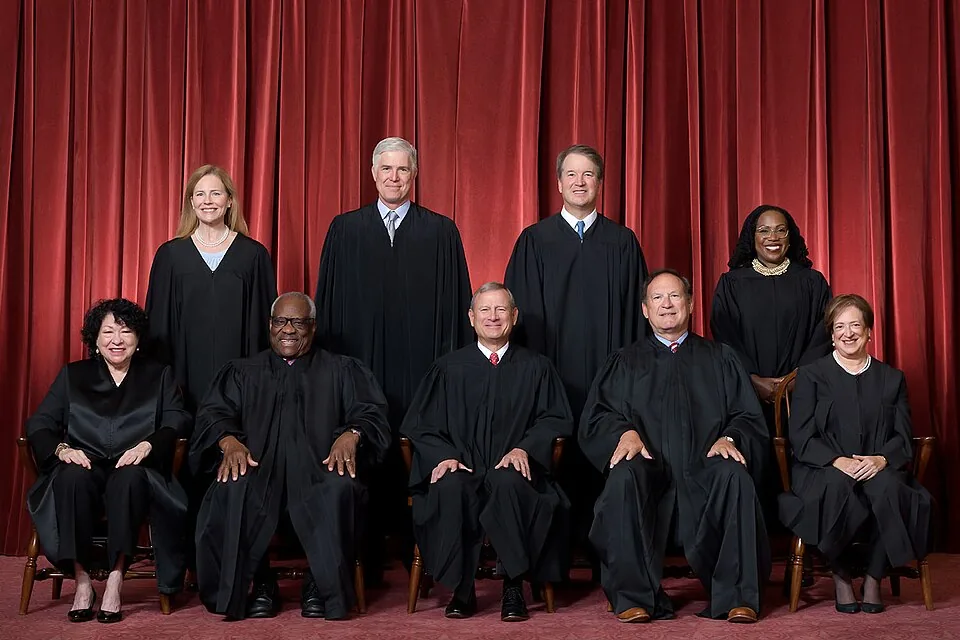
Samuel Alito went on television and said, out loud, that he thinks about retirement every year now and "has to." The man who personally erased fifty years of abortion rights is dangling the prospect of his own exit like a reality show cliffhanger, and the entire American legal order is supposed to hold its breath until he figures it out.
What He Actually Said
In a rare interview with CBS News anchor Jan Crawford, set to air Monday, Alito confirmed he "thought about" stepping down at the end of the court's June term. "It's something that I think someone at my age has to think about," said the 76-year-old justice. He then decided, in his own estimation, that he "could still make a valuable contribution" and stayed put.
When Crawford noted he would probably revisit this every year, Alito said, "Yeah, I think I have to." So that's where we are. The future composition of the United States Supreme Court is on a rolling annual subscription, renewed or canceled at the pleasure of a 76-year-old man who once got hospitalized at a Federalist Society dinner and was treated for dehydration.
The Guardian first reported details from the preview clip circulated online by CBS ahead of the full broadcast.
The Hospital Trip Nobody Forgot
This interview didn't happen in a vacuum. Back on March 20, Alito became sick at that Federalist Society dinner in Philadelphia and was taken to a hospital. A Supreme Court spokesperson said it was dehydration, that he went home to Virginia that same night as planned, and was back at work by March 23. Fine. Totally fine. Nothing to see here.
Except, as The Guardian notes, the hospital visit set off a wave of commentary across the political spectrum about whether Alito might retire and whether Donald Trump would get a fourth Supreme Court appointment. That would give the conservative supermajority an even deeper bench, likely with someone younger and at least as conservative as Alito. The math is not subtle.
Clarence Thomas, 78, is also in the picture. Progressive groups, according to The Guardian, have been bracing for the possibility that Thomas could also step down while Trump is in office. Two open seats, a Republican Senate, and a president who already reshaped the court once. That is the actual stakes conversation happening underneath all of Alito's very dignified annual introspection.
He'd Like You to Know Dobbs Took Courage
Alito also used the CBS interview to reflect on writing the 2022 majority opinion in Dobbs v. Jackson, which struck down the federal abortion right that Roe v. Wade had guaranteed for nearly fifty years. He said it required "courage" from him and the four justices who joined the opinion: Gorsuch, Kavanaugh, Barrett, and Thomas.
According to The Guardian, Alito said the decision cost him "the loss of old friendships" and subjected him to "physical threats and harassment." Lost friendships, he said, are "something you have to live with" because displeasing people is "part of the job." This is true of many jobs. It is also true that Pew Research Center polling shows nearly six in ten Americans disapprove of overturning Roe. Alito framed this as the price of courage. Most people would call it the price of doing something deeply unpopular to the majority of the country you ostensibly serve.
He did say threats and harassment were "quite disturbing" and a "danger for the courts." That part is fair and real. Barrett and Kagan testified before the House in July about the rising threat environment, and a would-be assassin was arrested near Kavanaugh's home back in 2022. The security concerns are legitimate. The self-congratulation woven around them is something else.
Not Political, He Says, With a Straight Face
Here is the part where Alito insists the Supreme Court is not a political institution. "We are not part of any political movement," he told Crawford. "And we are not attempting to further any political agenda."
This is the same justice who, according to The Guardian, recused himself from a major climate change case in late September because of scrutiny over his stock holdings in oil companies. He also characterized "very harsh criticism" from both Trump and Biden as potentially "quite damaging" to the court, which is an interesting thing to say while sitting for a promotional interview timed to the release of his memoir. The book is called So Ordered: An Originalist's View of the Constitution, the Court and Our Country, and it dropped Tuesday. The CBS interview dropped Monday. The timing is not a coincidence, and originalism is not a political agenda, he would like to remind you.
Trump appointed three justices in his first term: Gorsuch, Kavanaugh, and Barrett. Those three, alongside Alito, Thomas, and Chief Justice Roberts, make up the conservative supermajority that has, as The Guardian notes, "frequently though not always" ruled in favor of the Trump administration. Purely coincidental. Totally apolitical. Moving on.
What Happens If He Goes
If Alito does retire, Trump nominates a replacement, and the Republican-controlled Senate confirms them. That is the whole process. The question is whether the replacement is someone in Alito's mold or someone younger and further right, which is entirely possible given the shortlists floating around conservative legal circles.
Alito told Crawford it was "too hard to predict" what the political situation would be a year or two from now, which is either genuine humility or a very polished way of keeping everyone guessing. Given that he is simultaneously releasing a memoir, appearing on network television, and holding the decisive vote on a six-three court, the humility is doing some heavy lifting.
The Dingo Take
Think of it like a franchise quarterback dangling retirement every spring while the front office freezes all its other offseason plans around him. Except in this version, the franchise is the American legal system, the offseason plans involve reproductive rights and climate policy and voting access, and the quarterback once compared abortion to the historical acceptance of infanticide in his Dobbs draft. The power dynamic here is not subtle. One man, at a moment of his own choosing, will determine whether Donald Trump gets to replace him with someone who could sit on that court for the next thirty years.
Alito wants to be seen as a serious jurist making a solemn, personal decision about service and legacy. The memoir, the CBS interview, the talk of courage and lost friendships: it is all very dignified. What it actually is, stripped of the pageantry, is a political actor making a political calculation while loudly insisting he does not make political calculations. The recusal from the oil company climate case should have been a much bigger story. The Federalist Society dinner hospitalization should have prompted more transparency. Instead, we get a book tour and a gentle chat with Jan Crawford about what a difficult year it has been.
Sixty percent of Americans, per Pew, opposed overturning Roe. They do not get a vote on who replaces Alito. They did not get a vote on Alito. They will not get a vote on whatever 40-year-old true believer fills that seat next. The Supreme Court is not a political institution, Samuel Alito would like you to know. He will be reconsidering that position annually.

Comments