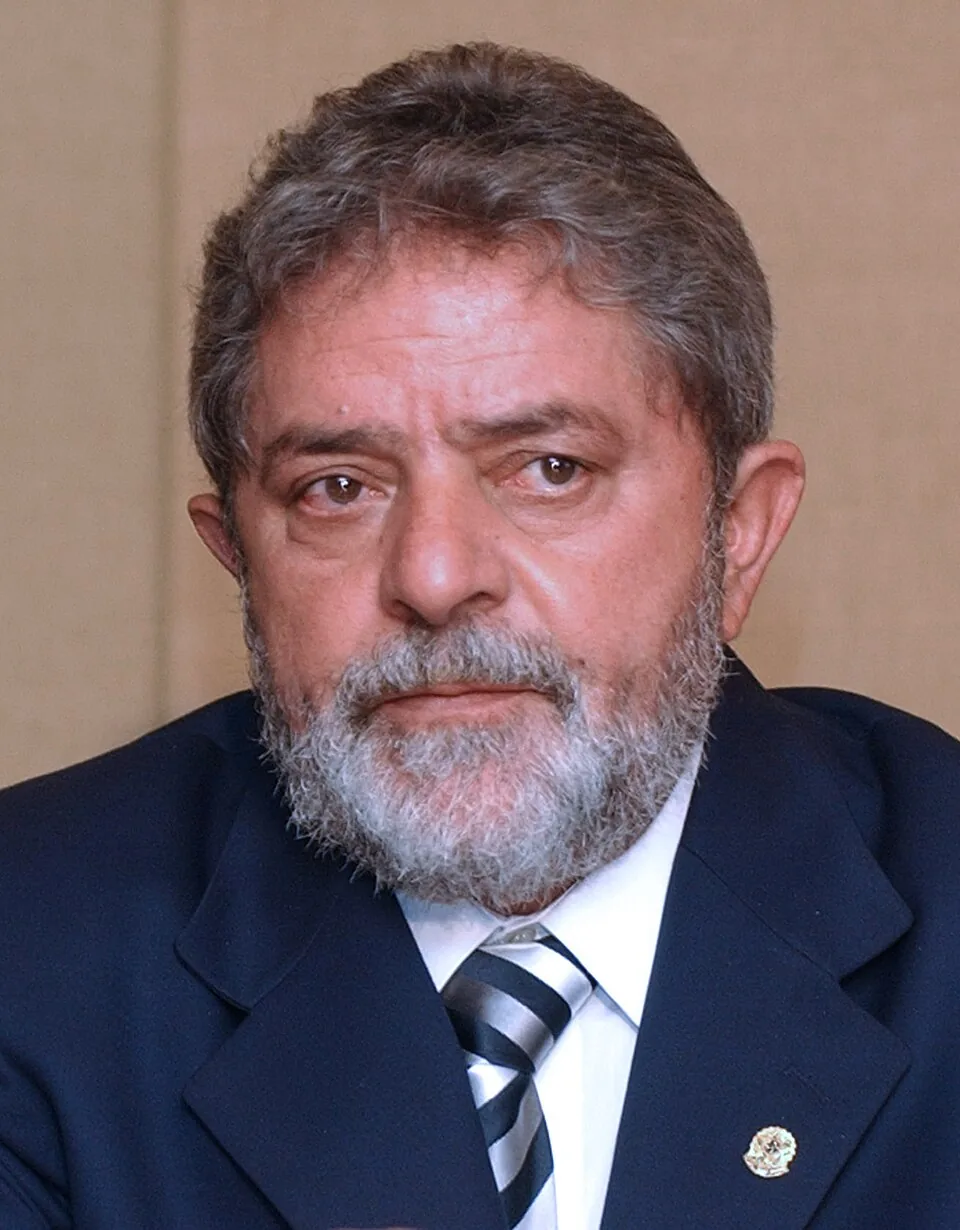
Brazil's presidential election just delivered a result that sounds like a fever dream: the son of the man currently serving 27 years for trying to overthrow the last election finished ahead of the incumbent in round one. Flávio Bolsonaro, 45, led with over 47% of the vote against President Luiz Inácio Lula da Silva's 44%, with more than 98% counted, according to NPR. Now they do it all again on October 25.
A Rematch, But Weirder
Let's set the scene. In 2022, Lula narrowly beat Jair Bolsonaro. Jair then allegedly tried to organize a coup to stop Lula from taking office, got convicted, and is now serving a 27-year sentence under house arrest. His son Flávio, who has pledged to carry on his father's legacy, promptly ran for president and came out ahead in the first round. You genuinely cannot make this up.
This is not a metaphor or a loose comparison. The actual son of the actual convicted coup plotter is now three weeks away from potentially becoming Brazil's next president, running explicitly on the platform of continuing what his father started. NPR reports that Flávio, a federal senator, is 45 years old, deficit-hawkish, and very interested in realigning Brazil's foreign policy with Washington. Which brings us, as everything does these days, to Donald Trump.
Trump Is in This Race Whether Brazilians Want Him There or Not
The American president's fingerprints are all over this election in ways that should make everyone deeply uncomfortable. NPR reports that Bolsonaro rallies have featured American flags and a giant inflatable doll of Trump holding a jailed Lula. Think about that visual for a second. The frontrunner's campaign rallies are using the sitting U.S. president as a prop to mock their opponent's imprisonment risk.
Lula, for his part, has accused the United States of actively trying to meddle in Brazil's election. The U.S. State Department denied it. Lula has campaigned hard on protecting Brazilian sovereignty from foreign interference, which NPR notes was barely a talking point in 2022. The fact that it's now a central campaign theme tells you everything about how the political atmosphere in Latin America has shifted since Trump returned to power.
On election day in Rio, NPR found voters on the streets wearing Trump T-shirts and others with "out with Trump" stickers. A Brazilian domestic election, and the defining fashion choice is a shirt featuring a 79-year-old American. This is the timeline we're in.
The Numbers Are Bad News for Lula
Finishing second in round one would be bad enough on its own. But the deeper problem for Lula is the shape of the loss. NPR reports that the candidates who finished third, fourth, and fifth in Sunday's vote are all right-wing, meaning Bolsonaro has a natural reservoir of voters to absorb heading into the runoff. When most of the overflow votes in a Brazilian election are ideologically pre-sorted toward your opponent, that is not a good sign.
The right also made significant gains in Congress, particularly in the Senate, according to NPR. So even in a scenario where Lula pulls off the comeback, he could be staring down a legislature that is even more hostile to him than the one he's dealt with for the last four years. The political math is rough from almost every direction.
Lula is 80 years old and going for his fourth nonconsecutive term. NPR notes that younger voters have shown noticeably less enthusiasm for his campaign than in 2022, which is a problem any incumbent needs to solve fast. Three weeks is not a lot of time.
A Muted Campaign for a Country That's Exhausted
One detail from NPR's ground-level reporting captures the mood of this election better than any poll number: this year's campaign featured smaller rallies than past cycles. A Rio de Janeiro nutritionist named Raysa Tavares put it plainly after casting her vote in the Vidigal favela: "I think the campaign feels more muted because people are tired of fighting."
Tired of fighting. In a country that, per NPR, saw dozens of people physically attacking each other for political reasons during the 2022 runoff campaign. That's the baseline they're exhausted from. The second round is expected to see political violence escalate again, as Brazilian news site Pública has reported happened in 2022. Three weeks of Bolsonaro-versus-Lula in a country where both sides have already been through this once, where the last guy's father is in prison for trying to rig the result, and where an American president is cheering from the sidelines.
What Happens October 25
The runoff is shaping up to be a contest over multiple overlapping questions simultaneously. NPR identifies the dominant domestic concerns in polling as security policy, corruption, and the economy. Lula has spent four years on broad social spending programs and positioning himself against Trump's regional ambitions. Bolsonaro wants to slash the deficit and pull Brazil into Washington's orbit.
But underneath all of that is the bigger question NPR identifies plainly: does Brazil want to continue with Lula, or does it want to embrace the rightward shift that Sunday's results revealed? The first round didn't just show a close race. It showed a country that has moved meaningfully to the right since the last time these families faced each other. Whether that movement is enough to put a Bolsonaro back in the presidential palace is what October 25 will decide.
The Dingo Take
Are we just going to keep doing this? Every election cycle, in country after country, the choice somehow ends up being between the incumbent left and a right-wing candidate running explicitly on the platform of the authoritarian who came before, while an American president with obvious sympathies cheers one side on? Brazil's version just happens to be maximally on the nose about it, because the previous right-wing candidate is literally in prison for trying to steal the election, and his son is the one on the ballot now.
Flávio Bolsonaro is not a surprise. He's what happens when a political movement decides that losing, even losing badly enough that the loser gets convicted of a coup plot, is not actually a reason to change course. The Bolsonaro brand is intact. The rallies still have American flags. The inflatable Trump doll is still floating above the crowd. The father's 27-year sentence is being treated by supporters as a political persecution rather than a consequence, and that reframing is working well enough that his son is currently ahead in the race.
Lula has three weeks and a structural disadvantage and the weight of being 80 years old running for a fourth term while a 45-year-old with a famous last name is capitalizing on the energy of an angry electorate. He's beaten long odds before. But this version of the fight, with Trump in the White House actively pulling the political gravity of the Western Hemisphere to the right, is harder than 2022. Nobody should pretend otherwise.


Comments