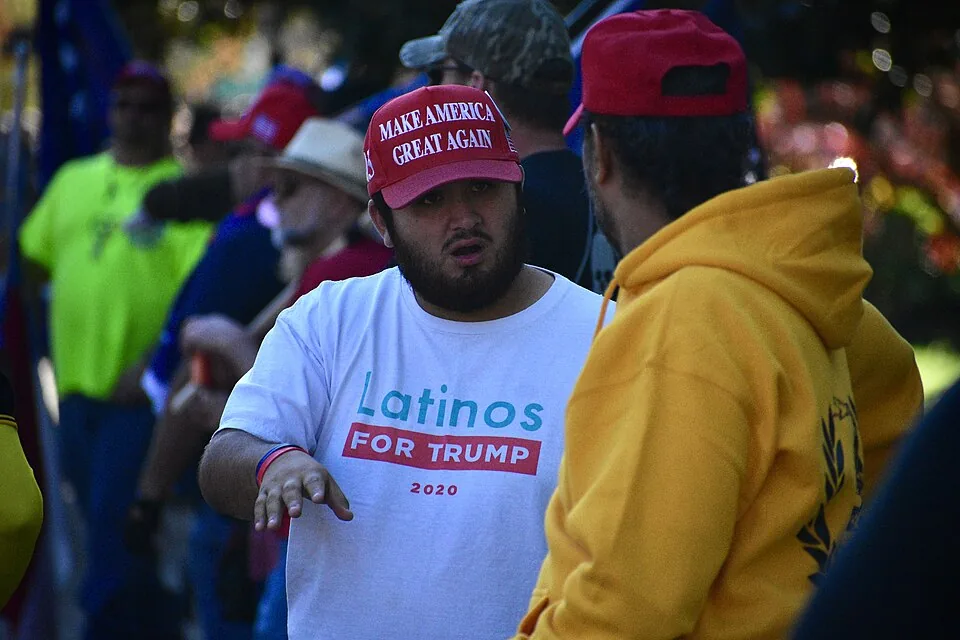
Three months ago, immigration authorities shot and killed Lorenzo Salgado Araujo, a 52-year-old husband and father, on a Houston street. His name is now more familiar to Houston-area Latinos than the names of the people running for their state's highest offices. That is how you radicalize a community.
A Memorial, a Neighborhood, a Breaking Point
As NBC News reports, when the sun sets near the roadside memorial for Salgado Araujo, people who never even knew the man show up anyway. Berta Lopez, a nearby resident, sat on barbershop steps and sang, prayed, and wept. For a stranger. Because that is what happens when a killing stops being a news item and starts being a mirror.
"It was unjust, he was killed unjustly," Lopez told NBC News in Spanish. "Why don't they release the names of the people who killed Lorenzo? Why don't they expose them?" She is still waiting for an answer. So is the rest of the neighborhood.
The agents who shot Salgado Araujo have not been publicly named. The government has not explained in full what happened. What the community has instead is a memorial, a lot of grief, and a political awakening that the Republican Party is now going to have to reckon with heading into November.
The Numbers Are Not Close
A new NBC News/Telemundo survey of 800 registered Latino voters, conducted September 21-28 with a margin of error of plus or minus 3.5 percentage points, found that 69% disapprove of the job Trump is doing as president. Fifty-four percent said they intend their midterm vote to be an explicit signal of opposition to him.
Think about that for a second. More than half of Latino registered voters are not just picking the other party by default. They are going to the polls with a specific message in mind. That is not apathy. That is fury with a plan.
The survey also found that 67% of potential Latino voters believe Trump's immigration enforcement has gone too far. And before anyone trots out the talking point that Latinos actually support tough border enforcement: only 6% of Latino voters in this poll named immigration and border security as a top issue. They are not against enforcement in the abstract. They are against a government that shoots fathers in the street and then hides the names of the people who pulled the trigger.
"That Could Have Been My Dad"
NBC News spoke with more than three dozen Houston-area Latinos for this story, including residents, elected officials, activists, and political strategists. The through line in every conversation was the same. Salgado Araujo was 52 years old. He had a wife. He had children. He had a neighborhood. He could have been anyone's family member.
"They're being unfair. They've lied about a lot of things. They're killing innocent people, breaking families apart," Houston resident Julio Roa told NBC News. Roa was born a U.S. citizen to Mexican parents. He is not undocumented. He is not in any legal jeopardy. And he still lives "day by day" watching his neighbors too scared to walk to the corner store.
That is the thing that gets lost when this administration talks about its enforcement operations as a clean, targeted process. It is not clean. It bleeds into every corner of a community. It makes citizens afraid. It makes people who have every legal right to be here feel like they are one traffic stop away from a nightmare. That feeling has a political consequence, and Texas Republicans are about to learn what it is.
How ICE Crackdowns Became a Statewide Political Crisis
Texas has been ground zero for some of the most aggressive ICE operations of Trump's second term. NBC News found that after more than a year of intensive enforcement activity, the cumulative effect on the Houston Latino community has been something closer to collective trauma than political inconvenience.
People described feeling degraded by what they hear out of Washington. They described being horrified by stories of detainees, many wrongly held, left to languish in facilities. They described disbelief that the U.S. government was deporting people to countries those individuals had never even set foot in. And then, sitting on top of all of that: a man named Lorenzo Salgado Araujo, shot dead by the very agency carrying out those operations.
Political strategists in the state told NBC News they are watching this moment closely. Texas has not gone Democratic in a presidential election since 1976. But the demographic math of the state has been shifting for years, and events like the Salgado Araujo killing have a way of accelerating timelines. When you turn grief into organizing fuel, things move faster than polling models expect.
The Transparency Question Nobody in Washington Wants to Answer
Berta Lopez asked it plainly at that memorial: why won't the government release the names of the agents who killed Lorenzo Salgado Araujo? It is a fair question. It is, in fact, an obvious question. And the fact that it remains unanswered three months later tells you a great deal about how this administration views accountability for its enforcement apparatus.
This is a pattern. When ICE or Border Patrol agents are involved in a use-of-force incident, transparency tends to move at a glacial pace, if it moves at all. The public gets a press release with carefully managed language. The agents involved stay anonymous. The family is left to grieve in public while the government treats the circumstances of their loved one's death as something closer to a classified matter than a public accounting.
Lopez put it simply: "God doesn't care about papers." The current administration, based on its behavior, cares about very little else.
The Dingo Take
The official line from this White House has always been that Latinos support strong border enforcement, that the 2024 numbers proved it, that the community understood what Trump was really about and signed on. The NBC News/Telemundo poll from last week shows 69% disapproval among Latino registered voters. Those two things cannot both be true at the same time.
What actually happened in 2024 is that a slice of Latino voters, exhausted by inflation and frustrated with Democratic messaging, took a chance on a guy who promised economic results. They did not sign a blank check for a years-long campaign of fear, wrongful detention, deportations to countries people have never lived in, and federal agents shooting a 52-year-old father dead on a Houston street with zero public accountability for who pulled the trigger. There is a difference between those things. Turns out voters noticed.
Lorenzo Salgado Araujo has a memorial now. Flowers and prayers and a neighbor who cries for a man she never met. What he does not have is justice, a public accounting, or even the names of the government employees who killed him. That last part is a political problem for Republicans in Texas. It is also, much more simply, just wrong.

Comments