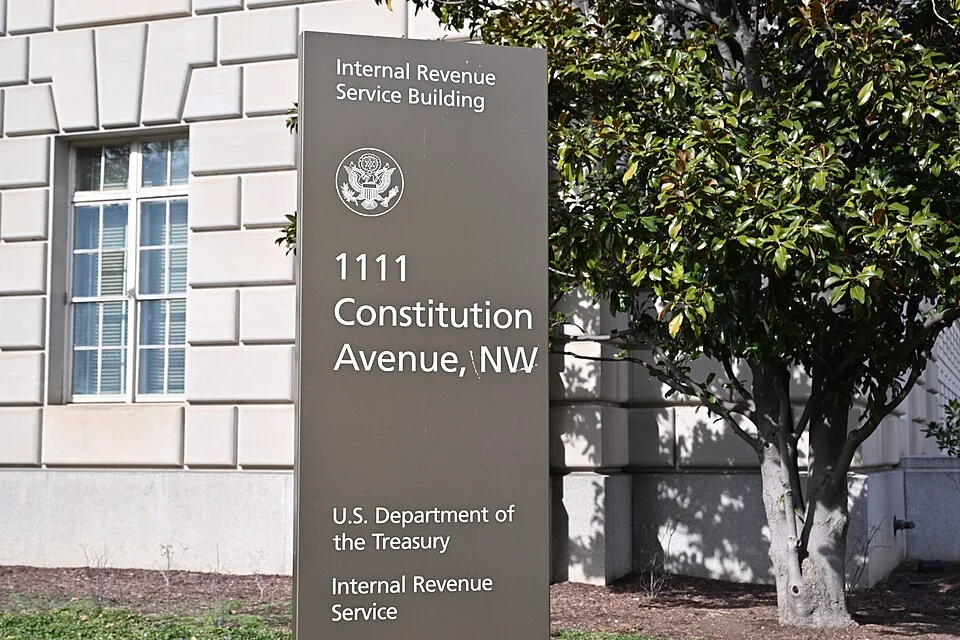
Kathleen Walters spent nearly two decades at the IRS protecting taxpayer privacy. Then DOGE showed up asking for data on roughly seven million people, and she did the math on what that would actually mean. She resigned 23 days before she would have qualified for early retirement, and her elementary-school daughter left a $10 bill on her shelf to help out.
The Book Nobody in Washington Wants You to Read
Michael Lewis has made a career out of finding the human story inside systems most people never think about until those systems fail. He did it with mortgage derivatives in "The Big Short." He did it with baseball analytics in "Moneyball." Now, as CBS News reports, he's turned that lens on the federal civil service, and the result is "Blockers: Rebels in the Deep State," due out October 6.
The title comes from a word Elon Musk deployed like a weapon. According to CBS News, Musk instructed the twentysomethings he imported into DOGE to root out the "blockers" -- the career employees who would get in the way of whatever he wanted to do -- and eliminate them. Lewis told CBS News his reaction was blunt: "It's an insult."
The people Lewis profiles are not saboteurs or partisans or swamp creatures. They are people who took an oath to defend the Constitution and, when the moment came, took that oath seriously. Lewis told CBS News he didn't even know federal civil servants swore an oath until well into his research. Most Americans probably don't either. That ignorance is part of the problem.
Seven Million 'Criminal Investigations'
Here is what Kathleen Walters was actually being asked to do. CBS News reports that Immigration and Customs Enforcement came to the IRS requesting information on undocumented workers who had been paying taxes into the U.S. Treasury. The number ICE floated for how many people they were targeting: approximately seven million.
Walters did not buy it. "I questioned in my head, I did not believe there could be seven million active criminal investigations going on," she told CBS News. ICE would later put out a memo claiming they only wanted information on individuals under active criminal investigation, which makes that seven million figure either an extraordinary coincidence or an extraordinary lie.
Walters resisted for months. Then she resigned. And then, CBS News reports, the IRS handed over the data anyway. The Treasury Department's Inspector General subsequently found that ICE did not meet "safeguarding standards," and federal courts ruled that privacy rights were violated. The Trump administration continues to argue it acted within the law, which is the kind of thing you say when the courts keep telling you otherwise.
Twenty-Three Days
Let that number sit for a second. Twenty-three days. That is how far Kathleen Walters was from qualifying for early retirement when she decided she could not stay. She had been at the IRS for nearly twenty years. She has a kid in elementary school. She walked away from the pension, the security, the finish line she had been running toward for two decades, because she was being asked to do something she believed was illegal.
"Simple isn't easy always," she told CBS News. That is one of the more understated things a person has ever said about a decision of that magnitude.
Her daughter found out, at a level appropriate for a young child, that her mother had been asked to break the law and refused. The girl put a $10 bill on the shelf to help out at home. Walters told CBS News she had to sneak the money back into her daughter's piggy bank. If you need a cleaner summary of what DOGE has actually cost real people, you will not find one.
The 'Savings' That Weren't
Musk promised "at least $2 trillion" in savings from the DOGE operation, according to CBS News. That was always a number designed to sound impressive in a headline rather than survive contact with arithmetic, and sure enough, it didn't. The Government Accountability Office -- a nonpartisan federal watchdog, not a Democratic opposition group -- conducted an audit and found that DOGE overstated its savings, could not verify them, and fell far short of its stated goals.
The Trump administration's Office of Personnel Management praised DOGE in a statement to CBS News's "Sunday Morning." Of course it did. The people who were supposed to be checking DOGE's work have been replaced by people whose job is to celebrate it. That is not government efficiency. That is a closed loop.
What Government Actually Does
Lewis told CBS News that the core problem is that Americans have been trained to distrust government without understanding what they're actually trusting it to do every single day. "Every time they drink water out of the tap, or fly on an airplane, or eat food, or put dollars in their bank account, they're trusting the government," he said.
The people who hold that system together are not faceless bureaucrats collecting paychecks for doing nothing. Lewis described them to CBS News as "some of the most valuable people on the planet" -- people who chose public service over money and fame, who have a sense of purpose that the private sector cannot manufacture or buy.
Those are the people DOGE called blockers. Those are the people who got fired, or pushed out, or who walked away 23 days before retirement rather than violate the law. And the people who replaced them, or who simply inherited the system after they left, handed over the data.
The Dingo Take
Think about what happened to whistleblowers during Watergate: they were called enemies of the president, enemies of efficiency, obstacles to be removed. The people who turned out to be right were the ones labeled disloyal. What Michael Lewis is documenting in "Blockers," according to CBS News, is the same movie with a bigger budget and worse special effects -- career public servants being branded as saboteurs for the crime of knowing what the law says and refusing to pretend otherwise.
The IRS data handoff is not a footnote. Federal courts found privacy rights were violated. The Treasury Inspector General found ICE did not meet safeguarding standards. The administration's response has been to keep arguing it acted legally, which is a position that requires you to ignore what the courts and the watchdogs have actually said. Kathleen Walters saw it coming. She said no. She paid for it. And then it happened anyway.
A $10 bill on a shelf from a kid who wanted to help her mom make rent. That's the human cost of what DOGE actually did, stripped of the press releases and the savings figures the GAO says it cannot verify. Musk got his headlines. The government got the data it wanted. And a woman who spent twenty years defending taxpayer privacy had to sneak money back into her daughter's piggy bank. If that doesn't make you angry, check your pulse.





Comments