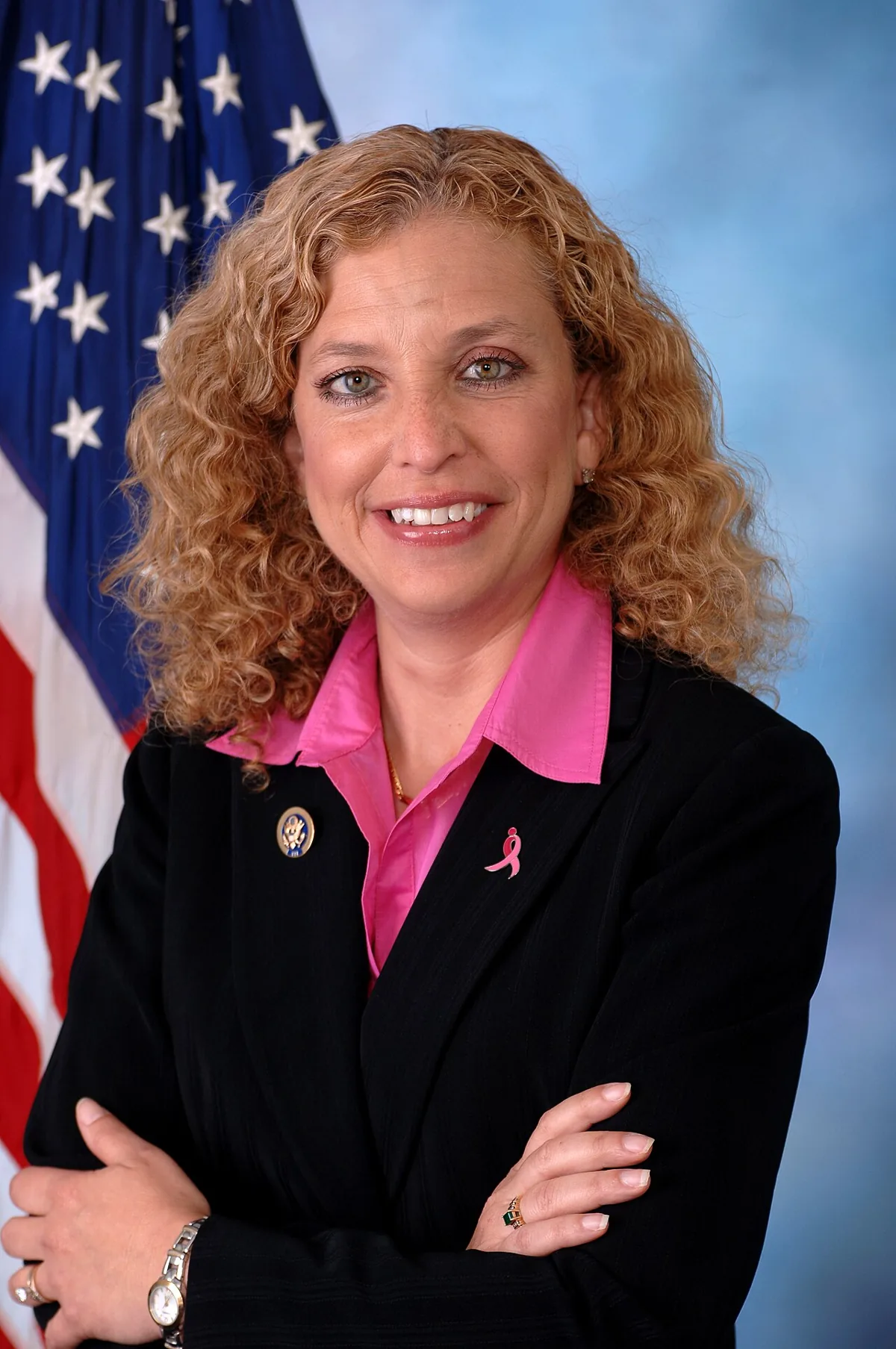
For 33 years, Florida's 20th congressional district sent a Black representative to Washington. Then Ron DeSantis redrew the map, Debbie Wasserman Schultz saw an opening, and four Black candidates spent two meetings across two weeks failing to agree on literally anything. The seat is now hers.
How a Black Seat Gets Eaten From Two Directions at Once
The setup here is almost too neat to believe. Florida's Republican-controlled legislature, operating with a green light from the Supreme Court's Louisiana v Callais ruling blessing partisan gerrymandering, shredded Wasserman Schultz's old district. It had been 42% Hispanic, a Democratic stronghold she'd held for 21 years. DeSantis's mapmakers turned it into something she couldn't win. So she looked around, found the 20th district, which is 42% Black, and decided that was close enough.
This is what redistricting actually does at scale. It doesn't just eliminate seats in one clean stroke. It pressurizes the whole system, pushing incumbents into new terrain and forcing a scramble where incumbents with money and name recognition tend to win and everyone else tends to lose. Wasserman Schultz didn't draw the maps. But she read them, liked what she saw, and moved.
Four Candidates, Two Meetings, Zero Agreement
When local Democrats realized what was happening, Broward County's state attorney Harold F Pryor called a meeting at the African-American Research Library and Cultural Center in Fort Lauderdale's historic Sistrunk neighborhood. The ask was simple: consolidate behind one Black candidate, deny Wasserman Schultz the split-field she needed to win, keep the seat in Black hands. Simple in theory.
The four candidates who showed up were, to put it charitably, a complicated coalition. Dale Holness, former mayor of Broward County. Luther "Uncle Luke" Campbell, yes that Uncle Luke, of 2 Live Crew. Sheila Cherfilus-McCormick, the former congresswoman who resigned after a money-laundering indictment and a House ethics investigation. And Elijah Manley, a 27-year-old substitute teacher and gay progressive who'd been homeless at points in his life and was not, by any available measure, about to quietly step aside.
The first meeting ran two hours and ended with nothing resolved. The second meeting, held a week later at an Omega Psi Phi fraternity building, ran more than four hours. Voices were raised. Tempers went. According to The Guardian's reporting, Manley had already signed his candidate oath with the Florida Department of State thirty minutes before that second meeting even started. Cherfilus-McCormick, who told The Guardian she believed she and Holness were the only "real candidates" in the room, found out and walked. "I'm running regardless," she reportedly said. "This is my seat, and I'm running for my seat."
The War Chest Problem Nobody Wants to Say Out Loud
Here is the part that doesn't get discussed enough in these conversations about Black political representation: the structural money problem. The Guardian's reporting flags it directly. So-called Black seats, meaning districts where Black voters are the majority, tend to generate less campaign fundraising than comparable majority-white or majority-Hispanic districts. The candidates running in them start out with less. That's not a moral failing, it's a structural one baked into decades of wealth disparity.
Wasserman Schultz walked into this race with a war chest that none of the four Black candidates could touch, two months out from primary day. She'd spent two decades building a donor network. She'd chaired the Democratic National Committee. She knew every bundler, every PAC contact, every major donor in the state. The Black candidates were not starting from the same line. They were not even in the same race in that sense. The consolidation plan was an attempt to compensate for that gap by eliminating the vote-splitting that would hand her a plurality. It didn't work.
The National Democratic Party Watched and Did Mostly Nothing
The Guardian's reporting notes that when local Democrats first caught wind of Wasserman Schultz's plan, some tried to wave her off. Some local officials understood immediately what was at stake. The seat had been held by a Black legislator since Alcee Hastings won it in 1992. Hastings himself had been a symbol in the district, a former federal judge impeached and removed on bribery charges who came back and won a congressional seat. As one consultant told the Miami Herald at the time, Black voters saw him as someone who had "overcome" and "fought the man and won."
What the national Democratic Party did in response to Wasserman Schultz's move into the 20th is described in The Guardian's reporting under the heading "anemic national Democratic response." That word, anemic, is doing a lot of work there and you should sit with it. A veteran party insider with 21 years in Congress, former DNC chair, walks into a historically Black district and the national party's response is described as anemic. The people who run the party made a calculation. They made it quietly. And they let it play out.
What Representation Is Actually Supposed to Mean
Wasserman Schultz is white, Jewish, and at the time she declared her candidacy did not live in the 20th district. Her defenders would argue that effective representation isn't about identity matching, that a skilled and experienced legislator can fight for a community's interests regardless of whether she shares their lived experience. That's a real argument that serious people make.
It's also an argument that gets deployed almost exclusively when the person moving into the community is more powerful and better-funded than the people already there. You don't hear it much when the movement runs the other direction. The 20th district has been majority-Black for decades. The congressional seat was held by a Black legislator for more than three decades. Alcee Hastings held it until his death in 2021. Cherfilus-McCormick won the seat in a special election after that. The district has political history, and that history has a face. Wasserman Schultz's argument, stated or unstated, is that her experience and resources make her the better choice. The voters in the Democratic primary agreed. That is the outcome we're left with.
The Dingo Take
In 1992, Alcee Hastings won Florida's 20th district and Black voters had a seat at the table. Thirty-four years later, in the span of about two weeks and two failed meetings, that streak ended, not because Republicans drew the district out of existence, though they tried, but because four Black candidates couldn't unify and a white party veteran with a massive fundraising advantage walked through the door they left open.
The redistricting piece of this is real and it matters. DeSantis and the Republican legislature used the Supreme Court's gerrymandering blessing to scramble the whole board. That's not in dispute. But the part that should make Democrats genuinely uncomfortable is what happened after that, which is that their party infrastructure produced approximately nothing by way of pushback when a 21-year incumbent decided the solution to losing her majority-Hispanic district was to run in a majority-Black one. The word "anemic" in The Guardian's headline on the party's national response is the most damning word in the piece, and nobody put it there by accident.
And yeah, the four candidates who couldn't consolidate share some of the blame here, Cherfilus-McCormick most visibly. Pride and distrust are real things and politics is personal. But the conditions that made consolidation the only viable option, the money gap, the fractured field, the indifferent national party, those were structural. You can't blame four candidates for not perfectly executing a long-shot workaround to a rigged game and then call the outcome fair.




Comments