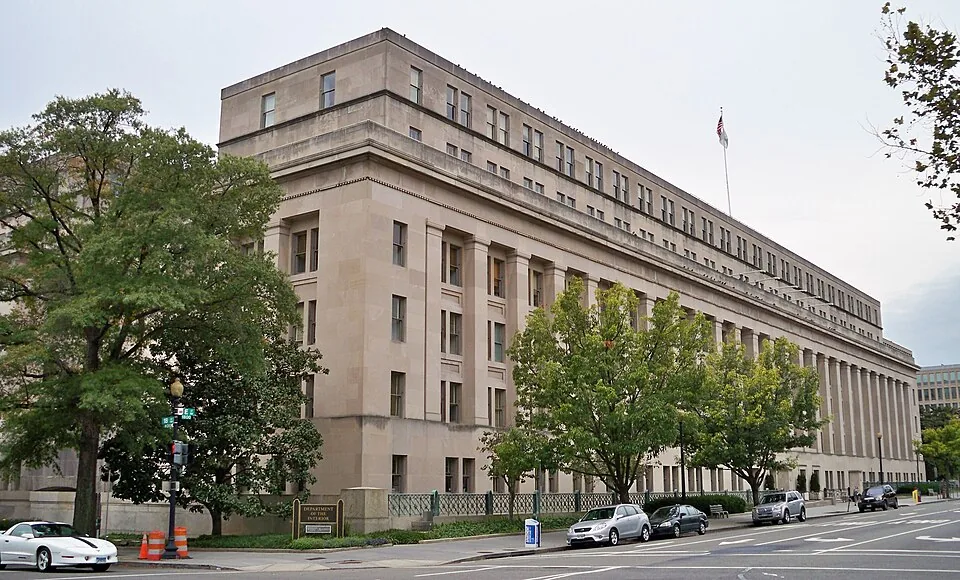
An attorney who spent 18 years at the Interior Department, who describes himself as a conservative Christian, and who helped clean up BP's Deepwater Horizon disaster just quit in protest. His reason: he watched a Trump official brag about "the highest environmental standards" while the administration skipped the environmental laws that are supposed to set them. The Guardian and Public Domain obtained his resignation letter, and it is not subtle.
A Resignation Letter With No Hedging
John Murdock joined the Interior Department's legal office in 2002 and officially stepped down on September 30, according to The Guardian. His letter, first sent to his supervisor earlier this year, cites "glaring legal flaws" he witnessed during the Trump administration and calls what he saw "a deeply troubling assault on the rule of the law."
He also wrote, plainly, "We are headed in the wrong direction."
Murdock is not a bomb-thrower from the environmental left. The Guardian describes him as a self-described conservative Christian who spent nearly two decades doing the unglamorous lawyering that keeps a sprawling agency inside the law. When that guy walks out the door writing about assaults on the rule of law, it's worth asking what he saw on the way out.
The Speech That Broke the Camel's Back
The final straw came last December in New Orleans, where Matt Giacona, the acting director of the Bureau of Ocean Energy Management, took the stage to announce the results of a Gulf of Mexico oil and gas lease sale. The Guardian reports that 30 companies, including BP, Chevron and Shell, bid more than $370 million.
Giacona praised the administration's pro-drilling agenda. Then he claimed the administration was "upholding the highest environmental standards."
Murdock heard that and decided he was done. "I felt an ethical obligation to highlight the glaring legal flaws I saw," he wrote. Imagine sitting in that audience, knowing what the legal memos actually said, while a man on stage described them as a triumph of environmental stewardship.
Which Environmental Laws Apply? Apparently None
Here's the legal problem. The lease sale, known as BBG1, was mandated by Trump's One Big Beautiful Act, per The Guardian. In a memo published shortly before the sale, Giacona, coordinating with Interior's legal office, determined that the National Environmental Policy Act, a key provision of the Endangered Species Act, and several other environmental safeguards "are not applicable at the lease sale stage."
Environmental groups sued almost immediately. "The Trump administration has no basis for exempting these massive drilling lease sales from the bedrock laws that Congress passed decades ago after destructive oil spills off our coasts," said George Torgun, a senior attorney at Earthjustice. He called it "payback to oil and gas drillers."
The administration's defense, according to a legal filing cited by The Guardian, is that because Congress mandated the sale, the agency lacked "sufficient discretion to alter the scope or terms of the lease sale in ways that could affect environmental outcomes." In other words: our hands were tied, so we didn't bother with the environmental review. That is a choice of words.
The Rice's Whale Has Entered the Chat
Murdock also took aim at the administration's decision this year to exempt oil and gas operations in the Gulf from the Endangered Species Act. "Whether technically legal or not, it is a repugnant policy that I in no way support," he wrote, pointing to the Rice's whale, one of the most imperiled marine mammals on Earth, which calls the Gulf home.
Then there's the personal angle. Murdock's work at Interior included helping "clean up a mess that BP had made" after Deepwater Horizon. BP, you will recall, was one of the 30 bidders in the December sale. "I do not want to now be part of creating an even greater disaster," he wrote.
That sentence should be printed on a banner and hung outside the department's headquarters.
From "All of the Above" to "One of the Above"
Murdock's letter also torches the administration's energy strategy. The "all of the above" approach, he wrote, has morphed into "one of the above," focused solely on fossil fuels.
He singled out the decisions to shutter nearly complete offshore wind projects and to pay TotalEnergies hundreds of millions of dollars to renounce wind leases. Those moves, he wrote, "are an assault on logic and the American taxpayer." The Guardian notes the administration announced the reimbursement earlier this year.
So the government is paying a company to not build energy, while skipping environmental review to sell drilling rights. Fiscal conservatism, everyone.
The Department's Response: He's Just Mad
An Interior spokesperson told The Guardian that "one former employee's personal disagreement with the Department's policies does not transform lawful policy decisions into an 'assault on the rule of law,' nor does his inflammatory rhetoric make his opinion accurate." The department says it "stands firmly behind its work to implement President Trump's agenda consistent with federal law."
Notice what's missing. There is no rebuttal of the specifics. Nothing about the memo declaring NEPA inapplicable. Nothing about the Endangered Species Act exemption. Just a shrug and a reminder that this was one guy with feelings.
It is also worth remembering the lawsuits challenging BBG1 are still ongoing, so the question of what is lawful here has not been settled by the people who get to settle it.
One of Thousands Heading for the Exits
Murdock's departure lands amid a broader exodus. The Guardian reports that Interior has lost thousands of employees since Elon Musk's so-called Department of Government Efficiency began slashing federal employment last year. Murdock himself wrote, "Sadly, I am but one of many civil servants who have departed the government under less than ideal circumstances in recent years."
He added that if his story helps others or helps preserve the rule of law, he's willing to share it. That is a man who could have quietly collected his pension and instead chose to put his name on the record.
The Dingo Take
Who exactly is supposed to stop an administration from skipping the law when the lawyers who know the law keep leaving? That is the real story buried in Murdock's letter. It's not one principled guy having a bad day. It's 18 years of institutional knowledge walking out of a building that regulates the most dangerous industry in the Gulf of Mexico.
The Interior Department's response was to call his concerns "inflammatory rhetoric." Maybe. But the memo declaring that NEPA and key parts of the Endangered Species Act don't apply is not rhetoric. It's a document. The lawsuits are not rhetoric. They are lawsuits. And a conservative Christian lawyer who scrubbed up BP's last catastrophe is not an activist with a grudge. He's the person you'd want in the room, and he just left it.
The Rice's whale doesn't have a lobbyist. The Gulf communities that Earthjustice says will "pay the price" don't get a bid in a $370 million lease sale. Thirty companies got a seat at that table. The law, apparently, was left in the lobby. Murdock noticed. He quit. Now we get to find out who else was paying attention.




Comments