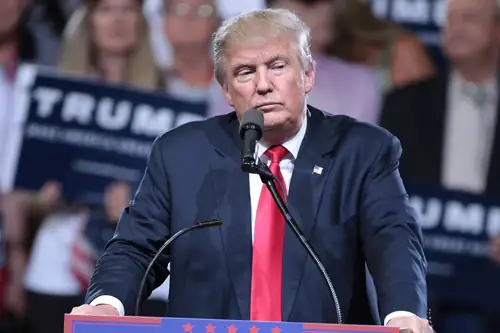
Donald Trump stood in a dusty, unused Baltimore shipyard on Tuesday and announced a $6.6bn factory to build parts for nuclear attack submarines, with $2.9bn coming from the US Navy. The company that will own it, Anduril, has never before played any known role in building a manned submarine, and its founder has handed $5.9m to Republican causes since 2017.
A Very Expensive Friend Of The President
According to The Guardian, the new facility at Sparrows Point will be called "Arsenal Two" and will build torpedo tubes and other sections of Virginia-class nuclear-powered attack submarines. The money breaks down as $2.9bn from the Navy and $3.7bn in private funding. Anduril, not the government, will own the place.
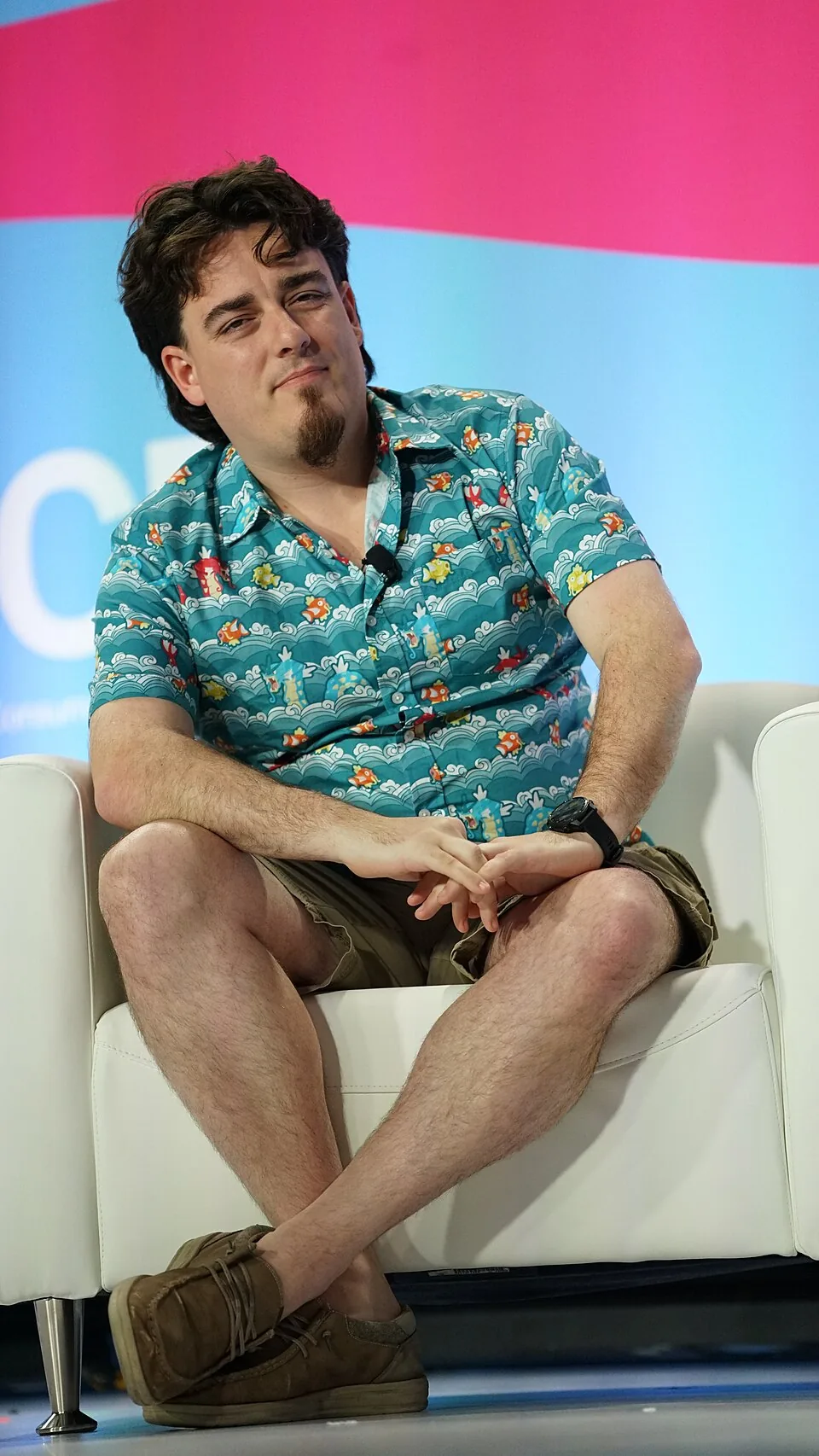
The Guardian reports that Anduril's founder, Palmer Luckey, has hosted campaign fundraisers for at least 20 Republican politicians, Trump among them. His donations to Republican causes since 2017 total $5.9m. That is a lot of cash, and this is a lot of shipyard.
Trump called Luckey "a friend of mine" and a "brilliant guy." Luckey did not attend the event. Maybe he was busy. Maybe he figured the check had already cleared.
Experience Not Required
Here's the part that should make you put your coffee down. The Guardian reports that Anduril has never before played any known role in the highly specialized manufacture of manned submarines. The company has built smaller unmanned maritime systems, but it won't say how many have actually been deployed.
Nuclear-powered attack submarines are among the most complicated machines humans have ever assembled. This is not a startup pivoting from selling drones to selling sandwiches. And yet Acting Navy Secretary Hung Cao praised the company in extraordinary terms, calling the plant a "partnership between the navy and Anduril that breaks through bureaucratic red tape."
Red tape, in this case, presumably includes the part where a company shows it can do the thing before it gets billions to do the thing.
Come Back In 2030
The Guardian reports that Anduril says the operation won't be ready to produce ship parts until 2030. So the "rapid ship construction" that Trump's administration has made a priority, part of its promised "golden fleet," begins with a multi-year wait while the new owner gets the lights on.
Submarine production is already a bottleneck. Handing a chunk of it to a firm with no submarine track record, on a timeline that stretches years out, is a funny way to speed things up. It is the logistical equivalent of fixing a traffic jam by building a new road that opens in the next decade.
The 40 Percent Mystery
Trump told the crowd that US taxpayers would "receive a 40% stake" in the shipyard. What does that mean? Nobody seems to know. The Guardian notes it is unclear what he meant, and whether the government is actually taking an equity share in the company, as it has in some other firms.
That is not a small detail. If taxpayers are putting up $2.9bn, whether they own 40 percent of something, or nothing, or a vibe, is the whole ballgame. A deal this size should come with paperwork that answers that question before the president says a number into a microphone.
Sailors As Set Dressing
The Guardian reports that dozens of uniformed sailors from the USS Billings, a shallow water combat ship, were on hand at the dusty industrial site. One naval specialist said he wanted to see the president but was more anxious to get home after a deployment in the Caribbean. He told the paper the ship had been scheduled to return to Florida but was re-routed to the event.
Read that again. Sailors coming off a deployment were pointed at a Baltimore rally instead of home. They got to sit in folding chairs and be told by Cao, "Anduril will be making these systems for you!" Nothing says support for the troops like using them as a backdrop for a donor's business announcement.
Snatching You And Your Wife In The Night
Then there was the speech. The Guardian reports that Cao embraced Trump's new term for artificial intelligence, repeatedly calling it "super intelligence." He also issued what the paper called a bizarre warning to adversaries: "Piss us off [and] we'll sneak into your country in the middle of the night and snatch you and your wife while you sleep in your beds."
That is the acting Secretary of the Navy, talking to sailors, at a shipyard event. Not a movie trailer. Not a podcast. A government official describing kidnapping as a foreign policy brand.
The Dingo Take
Who exactly is this arrangement built for? Not the sailors who got re-routed to clap in the dust. Not the taxpayers who can't get a straight answer on whether their 40 percent stake is real. It's built for a donor who gave $5.9m, hosted fundraisers for at least 20 Republicans, and just landed a Pentagon advisory gig the week before his company got a billion-dollar shipyard.
Maybe Anduril pulls it off. Maybe a company with no known submarine-building history figures out torpedo tubes for nuclear attack boats by 2030. But the order of operations here is backwards. You prove you can build the thing, then you get the money, not the other way around, and certainly not with the donor's friend standing on stage calling him brilliant.
This is how it goes now. The president announces a number, the donor gets a plant, the acting Navy secretary promises to snatch your wife, and the public gets a mystery percentage and a 2030 delivery date. If you wanted a case study in how access turns into contracts, the Navy just sent one out of Baltimore with a bow on it.



Comments