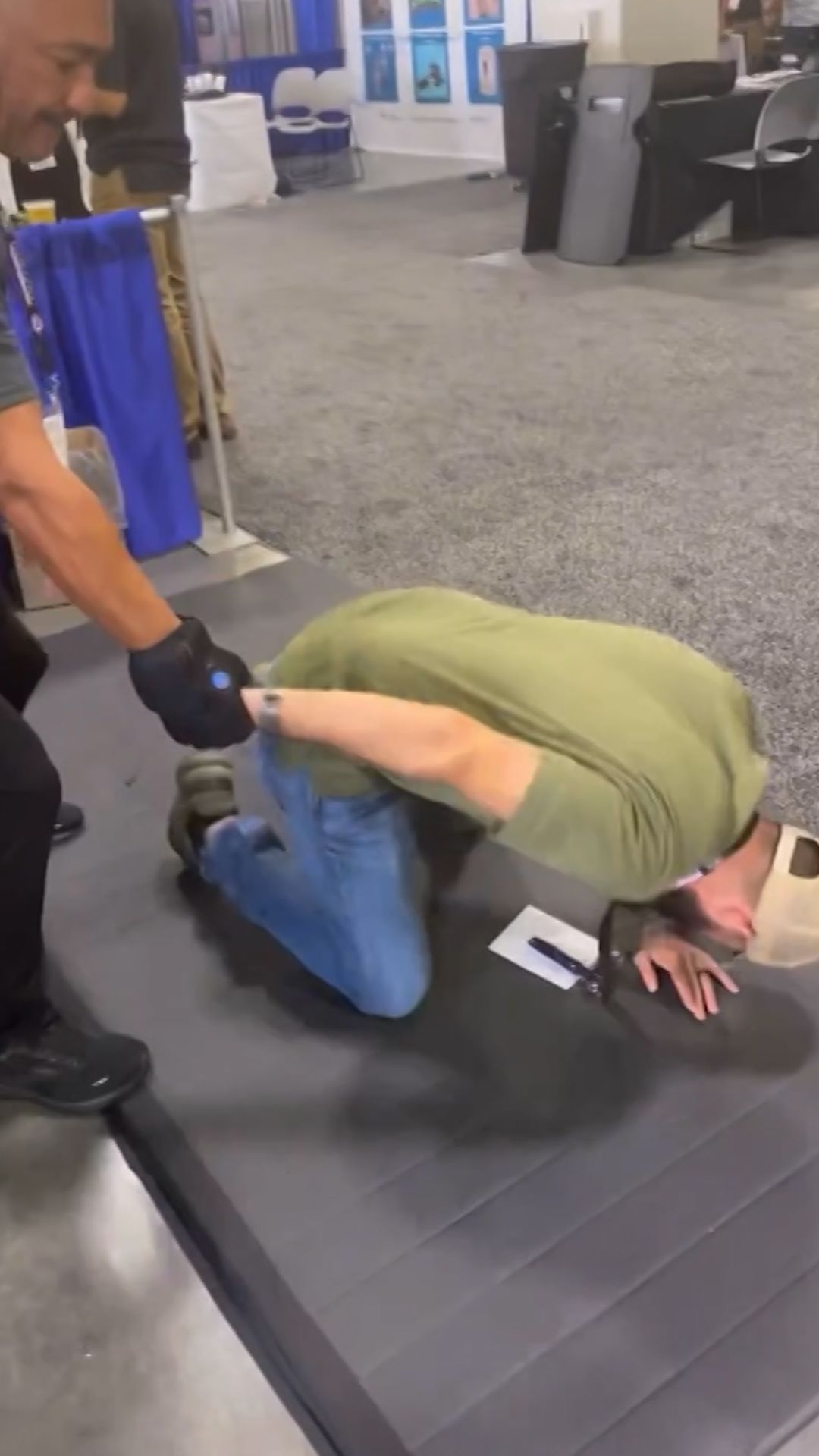
A previously unreleased Army study found that electric-shock gloves caused such intense pain that subjects stopped fighting within seconds and feared being shocked again. ICE leaders knew about those findings before signing a $16.7 million contract in August for 6,000 pairs.
The Study ICE Had On File
According to the Associated Press, which received the records from the watchdog group American Oversight, the Army ran its exercise at the military prison at Fort Leavenworth in Kansas in October 2024. Army employees played combative prisoners. Several of them were large-statured men. They were told to fight as hard as they could.
They didn't fight for long. The Guardian reports that participants stopped resisting seconds after officers touched the gloves to their skin. Afterward they were left with, in the study's words, "fatigue, soreness and excessive apprehensiveness to being shocked again."
The authors added a line that should be framed and hung in a hallway somewhere: "After experiencing the effects of the GLOVE ... participants stated just seeing the GLOVE was enough to make them want to comply." Read that again. The product works by making people afraid of the product.
How the Gloves Actually Work
The gloves carry the brand name G.L.O.V.E., which stands for Generated Low Output Voltage Emitter. They are made by Compliant Technologies, a veteran-owned company in Lexington, Kentucky. The Guardian reports the study found they don't freeze the body the way a Taser does. Instead they work by "overloading the peripheral nerve endings" of the skin to cause pain.
That is not a side effect. That is the mechanism. CBS News reports the study found participants who were wet or had oil on their skin described even more powerful shocks, and one reported discomfort for 30 minutes afterward.
CBS also notes that the gloves are easy to discharge, leave no mark, and have not been extensively used outside of jails. The manufacturer itself warns they should not be used on high-risk populations such as children, pregnant women or disabled people. Which raises a fun question about who ICE plans to use them on at a protest.
The $16.7 Million Shopping Trip
CBS News reports the six-month contract covers the gloves, support equipment and services. The gloves themselves run $2,495 apiece. ICE's own procurement documents, per CBS, argue the agency "does not currently have an empty hand use of force device" for the field "amid unprecedented levels of threats and violence against ICE officers and agents."
The agency calls the gloves "distraction and de-escalation devices." Yes, de-escalation. A device that causes intense pain and leaves people afraid of a repeat performance has been filed under de-escalation. ICE argues the rapid compliance will keep officers safer and prevent incidents from escalating to potentially lethal force.
The study does back up part of that pitch. It found the gloves "increased the efficiency" of forced cell extractions, shortened physical encounters, and spared guards from exhaustion. It also found they gave "a boost in confidence to smaller or less trained members." Hold onto that last phrase, because it matters.
The Kentucky Jail Death Nobody Should Forget
The Guardian reports that when the administration's order first surfaced, experts pointed to lawsuits over the gloves' use in local correctional facilities. In one extreme case, a 43-year-old man died after allegedly being shocked 40 times by officers using a combination of the gloves and a Taser in a county jail in Kentucky. His widow is suing.
Forty times. That is the track record the experts were pointing to when they sounded the alarm. It is also what American Oversight means when it says the Army's work does not establish safety.
"The military assessment in ICE's own files shows that these gloves can cause 'intense pain' and force compliance. It does not establish that they are safe," said Chioma Chukwu, the group's executive director. "Everyone should be alarmed that ICE is preparing to deploy a tool designed to inflict, at best, intense pain, without showing that it is safe for the people who will be subjected to it."
Sixteen Senators Got Ghosted
Sen. Catherine Cortez Masto of Nevada says ICE never answered an Aug. 27 letter she signed along with 15 other Democratic senators. The letter urged ICE to abandon the purchase or explain how the gloves would be used and managed to avoid abuse. Both the Guardian and CBS report she still wants answers.
"Without ICE's responses to legitimate questions from 16 United States Senators, the American public is being left in the dark about how these electric shock gloves are being deployed and what, if any, training the agents who use them have received," she said.
Tom Homan, the White House border czar, has said it could "be awhile" before the gloves reach the field because ICE is still ironing out training and policy issues. So the agency bought 6,000 pairs and is working out the rules afterward. A statement from ICE on Tuesday didn't address the study or the rollout. It said only that "officers are highly trained in de-escalation tactics."
What the Manual Says, and What DHS Says Back
CBS News reports the manufacturer's instruction manual says users should "always give the subject(s) a reasonable opportunity to comply before force is used." It suggests applying the shock for up to 15 seconds unless the subject becomes more violent or endangers people. That is a guideline written by the seller, and it will be followed by whoever happens to be holding the glove.
The Department of Homeland Security has defended the purchase, according to CBS, accusing critics of trying to deny federal law enforcement officers safety equipment. Owner Jeff Niklaus declined interviews, with CBS reporting he cited a busy workload. Business is booming, apparently.
Critics, per the AP reporting carried by both outlets, say the agency is already under fire for excessive force that has left a trail of deaths and injuries across the country. Adding a pain device that leaves no mark to that picture is not what they'd call reassuring.
The Dingo Take
Picture a foreign government buying 6,000 pairs of pain gloves for its immigration police, then reading an internal military study that says the gloves work because people become terrified of them. Picture that government writing the contract anyway and ignoring letters from sixteen legislators. We would call it a human rights story. We would put it on the front page. We would demand sanctions.
This is the United States, in October 2026, and the agency doing the shopping has the safest-sounding word in the English language stamped on the paperwork. De-escalation. Nothing de-escalates a situation like nerve-ending overload that leaves subjects sore, fatigued and afraid to be touched again. The study's own authors wrote that just seeing the glove was enough to produce compliance. That is not a safety feature. That is the product working as designed.
Here is the part that should keep you up. The Army study praised the gloves for boosting the confidence of smaller or less trained members. A tool that makes undertrained people feel braver is being handed to an agency whose own senators say it can't or won't explain its training. ICE bought first and wrote policy later, and a man in Kentucky allegedly took 40 shocks in a county jail. Sixteen senators asked questions and got silence. At some point silence is the answer.



Comments