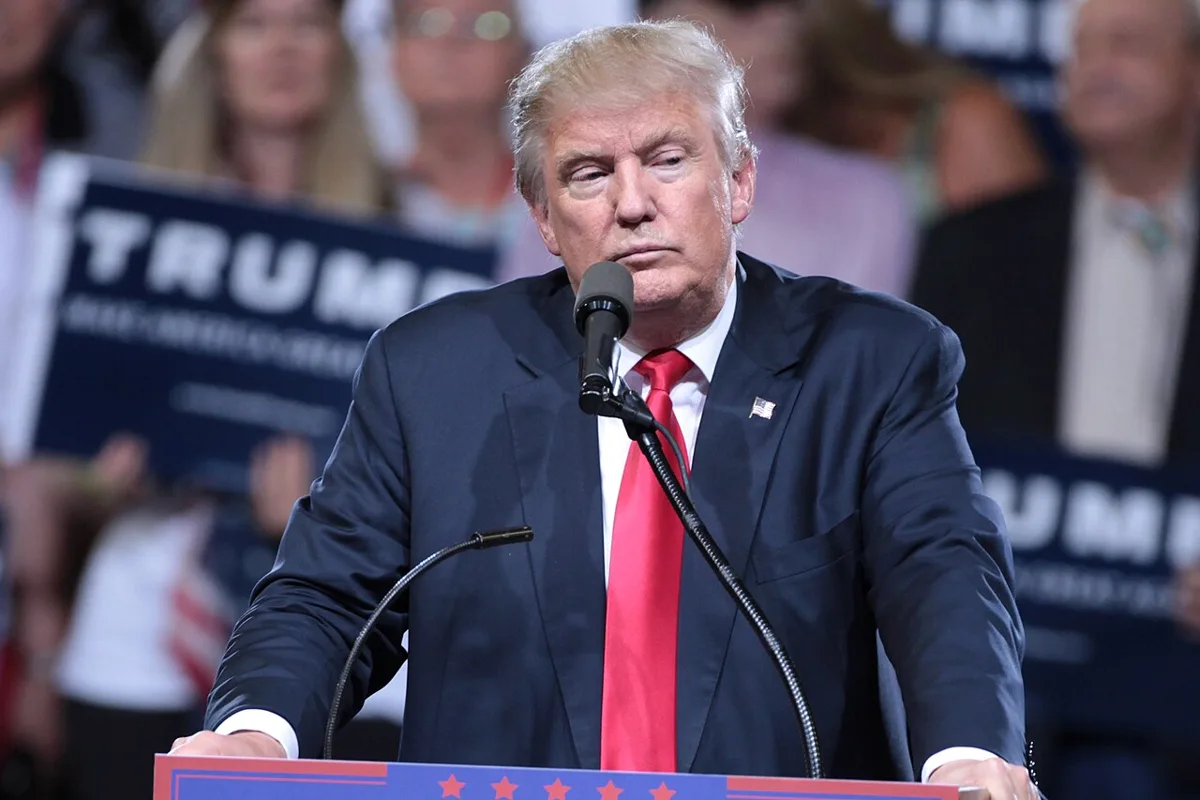
On Thursday, President Trump announced that anyone who says "Artificial Intelligence" instead of "Super Intelligence" is "THE ENEMY!" The White House, which is still using the term "AI" in its own materials, did not immediately explain how it plans to arrest itself.
The Enemy Is Apparently a Vocabulary Choice
Let's start with what we actually know, because Axios laid it out: Trump went after anyone using the phrase "Artificial Intelligence" and demanded they say "Super Intelligence" instead. He used the word "ENEMY" in all caps with an exclamation point, because of course he did. This is the same energy as a middle manager who just discovered a new buzzword at a conference and now considers it a loyalty test.
Note what the enemy list looks like here. It is not foreign adversaries. It is not people actively trying to hurt anyone. It is people who use the standard name for a technology that the entire industry, the entire research community, and your uncle who just discovered ChatGPT all call by the same two words. Enemy status, granted by phrasing.
The White House Is Also The Enemy, Apparently
Here's the part that makes this a masterpiece. The White House itself continues to use the term "AI." The building that issued the statement condemning people for saying AI is, per the reporting, still saying AI.
So either the administration is full of enemies, or the president's declaration is aimed at a category of person that includes his own staff. Both options are great. One of them involves a purge of the communications office over a two-letter abbreviation. The other involves the leader of the free world issuing a decree that his own government ignores by lunchtime.
These Are Not The Same Thing, Sir
Now for the part where the joke stops being a joke. Super intelligence is not a fancier word for AI. It is a hypothetical form of AI that would be more advanced than human intelligence. That is a specific, contested, and frankly terrifying concept that researchers argue about in very serious rooms with very worried faces.
AI is the thing that exists. It writes your emails, flags your fraud alerts, and occasionally tells you to put glue on pizza. Super intelligence is the thing that may or may not ever exist, and that some people think could end us all. Calling the first thing the second thing is like calling a Honda Civic a Saturn V rocket because you like the sound of it better.
Axios flagged exactly this: Trump's rebrand blurs the distinction between the two, and it clashes with how the technology industry actually talks. That blur is not harmless. If you tell the public that the chatbot on their phone is already super intelligent, you have either lied to them or you have no idea what you're saying.
Why Words Matter Here
Terminology is how policy gets written. When lawmakers draft rules for AI, they need to know what they are regulating. When a president declares that the correct word is a hypothetical, civilization-altering milestone we have not reached, the laws start to get confusing in ways that conveniently serve whoever is lobbying hardest.
Hype is also a business model. Calling everything super intelligence makes the products sound more powerful, the companies sound more valuable, and the stakes sound more apocalyptic, which is great if you are selling the thing and terrible if you are trying to have an honest conversation about what it can and cannot do. We have no evidence this is the motive. We are simply noting that the incentives point in a very particular direction.
The Pattern Is the Point
This is not a one-off. It is a style of governing: pick a word, make it a loyalty test, attach a threat, and watch everyone scramble to figure out whether they are on the right side of it. We have seen this with place names, with newspaper names, with entire government departments getting renamed because the new title sounded tougher.
The tell is always the same. The substance does not change, but the demand for ritual compliance goes up. You do not have to understand the technology. You just have to say the right word, loudly, when the boss is listening. And if your own press office keeps saying the wrong word, well, that's a problem for someone else to figure out.
The Dingo Take
Words are not policy. Somebody should tell the president, and then somebody should tell him again, slower.
The man is calling people enemies over a phrase, while his own White House keeps using that phrase, about a technology he is describing as something it is not yet. That is not a vision. That is a guy who heard a cool word and decided it was a personality. Meanwhile, the actual questions about AI, who it displaces, who it surveils, who profits, who gets hurt when it breaks, are sitting in a pile no one is reading.
The tragedy is that this is the part of the administration's AI agenda that will get the headlines. Not the policy. Not the safety debate. The all-caps fatwa on a two-letter abbreviation. We deserve a government that can tell the difference between a chatbot and a god. We have one that cannot tell the difference between a vocabulary preference and treason.


Comments