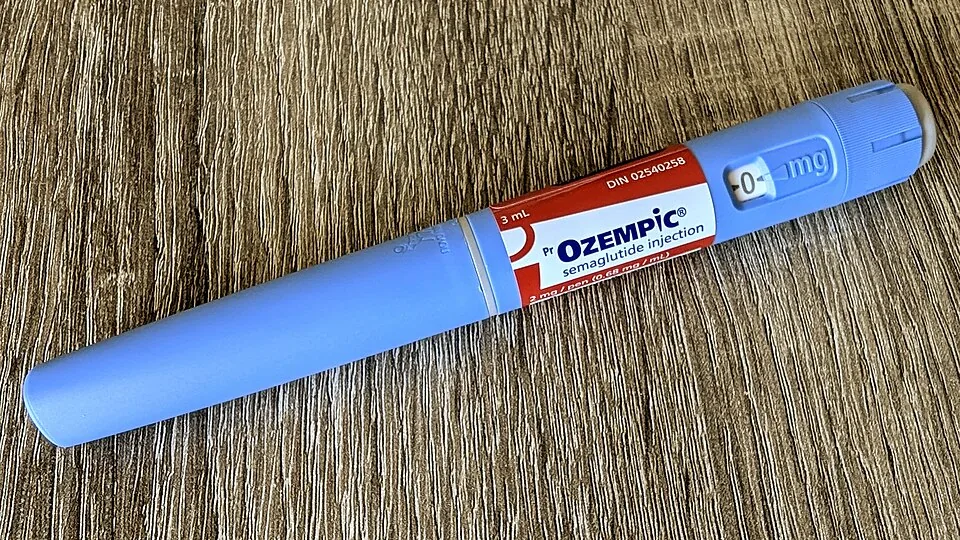
Todd Engel woke up on New Year's Eve 2023 with a black patch where his right eye used to be. His doctor said nobody had heard of any link to Ozempic, so he kept injecting it every week until his left eye went dark too. Now he is one of thousands of plaintiffs suing the drugmakers, and the grim punchline is that nobody can tell you how many people are in his situation.
Two Eyes, Seven Months, One Weekly Shot
Here's the sequence, and read it slowly. In early 2023, a doctor put Todd Engel on Ozempic for diabetes. That winter, he lost vision in his right eye. His doctors diagnosed NAION, a form of optic neuropathy caused by tiny strokes that cut off blood flow to the eye. It is inoperable.
When the doctor listed the known causes, Engel's wife Shelley asked point blank about Ozempic. The answer, as she recalls it: "We have heard nothing about that."
Seven months later, JAMA Ophthalmology published research showing higher rates of NAION among diabetic patients taking semaglutide, the active ingredient in Ozempic. Neither Engel nor his doctor knew. He kept taking the weekly shots. Then his left eye went black, just like the first one. According to NPR, Engel has spent four decades running forklifts and loaders in suburban Maryland. Now he mourns the ability to work or walk the beach on his own.
More Than One in 10 Americans Are on These Drugs
This is not a niche product. A recent Gallup analysis found more than one in 10 Americans are taking a GLP-1 drug for weight loss, and one in seven has taken them at some point. The drugs are now prescribed for a growing list of conditions, each with its own menu of side effects.
That scale is the whole point. When a drug reaches that many bodies, even a rare complication stops being a rounding error and starts being a crowd. A one-in-a-million event is still a few hundred people when you've got hundreds of millions of doses in the pipeline.
So the question of how often this stuff happens is not academic. It is the entire ballgame.
The Company Says 'Rare,' the Lawyers Say 'Warn Us Anyway'
Engel is suing Novo Nordisk, alleging the company failed to warn patients and doctors about NAION risk. His case is part of two consolidated lawsuits over GLP-1 harms. Lead court-appointed attorney Jonathan Orent says his cases include 247 plaintiffs with NAION and more than 4,000 with serious digestive conditions like pancreatitis and gallstones.
Novo Nordisk told NPR the cases are without merit and pointed to later research casting doubt on whether its drug causes NAION. The company says NAION and other serious conditions are exceedingly rare in clinical trials. Eli Lilly, which makes Mounjaro and Zepbound, said it will "vigorously defend against these claims."
Orent's counterargument is the part that should bother you. Clinical trials, he says, will never have the population size to catch rarer events, and they'll never have the diversity of the real world. He also notes that drugmakers updated warnings in Europe. Same drug, same alleged risk, different continent, different label.
What the Science Actually Says (It's Messy)
Let's be fair, because the facts demand it. The JAMA Ophthalmology study showed a correlation, not causation. The American Academy of Ophthalmology and the North American Neuro-Ophthalmology Society said as much, noting that this is "not the type of study that can show the treatment caused NAION." They acknowledged a potential link, said more research is needed, and do not recommend patients stop their GLP-1s.
So nobody has proven the drugs blind people. Nobody has proven they don't, either. That gap is exactly where lawsuits, and people like Engel, live.
The legal fight hinges in part on whether the drugs caused the harm. And causation takes the kind of detailed investigation that, apparently, is still pending.
A Safety Database Held Together With Tape
The main early-warning system here is the FDA's adverse events database. Reporting is mostly voluntary. The agency does not verify the reports. It is one of the only ways doctors, patients, and drugmakers can flag possible complications, and it's a crucial first step toward label changes.
NPR dug into it and found more than 1,000 reports of optic neuropathy linked to GLP-1s since 2024, out of nearly 190,000 reports on the drugs in that period. Most of the rest were minor stuff like stomach trouble, dosing errors, and red injection sites. NPR also found 1,928 reports of pancreatitis since 2024, including 135 cases of necrotizing pancreatitis.
Now do the math on what that database can and can't tell you. Voluntary, unverified, and only as good as whoever bothers to file. Engel's own doctor didn't know to connect the dots. How many other doctors didn't either?
The FDA Is 'Assessing'
Novo Nordisk says it keeps collecting and sharing data with the FDA. The agency has not requested warning-label changes. The FDA told NPR it has undertaken its own study of NAION risk and is assessing claims, and will "determine the need for regulatory action" once that assessment is complete.
Note what that sentence does. It promises a decision after the homework is done, with no date attached. Meanwhile, the drugs keep going out the door and the weekly shots keep getting jabbed.
Engel says he would have stopped taking Ozempic had he known it might put him at risk for blindness. That is the entire argument for a warning label in one sentence.
The Dingo Take
The official line is that these complications are exceedingly rare, the science is unsettled, and no label change is needed yet. The facts in this story say something messier: a man lost both eyes in sequence because nobody told him to stop, more than 4,000 plaintiffs are in court, and the one tool meant to count the damage is a voluntary suggestion box that the government doesn't even verify. "Rare" is a claim. It is not a measurement, and right now nobody is measuring.
Here's the thing about "correlation is not causation." It's true. It's also the most convenient sentence in medicine when the people who profit from the drug are also the people who fund and publish most of the data. Europe updated its warnings. The United States is still "assessing." That's not caution. That's a delay with a lanyard.
None of this means you should panic and toss your prescription. The ophthalmology groups say don't stop, and those groups are not the villains here. It means you should ask your doctor about the risk, because apparently the doctor might not volunteer it. Todd Engel asked the right question the first time, got a shrug, and lost the second eye to the silence. A warning label costs a few cents of ink. Seven months of silence cost him his sight.



Comments