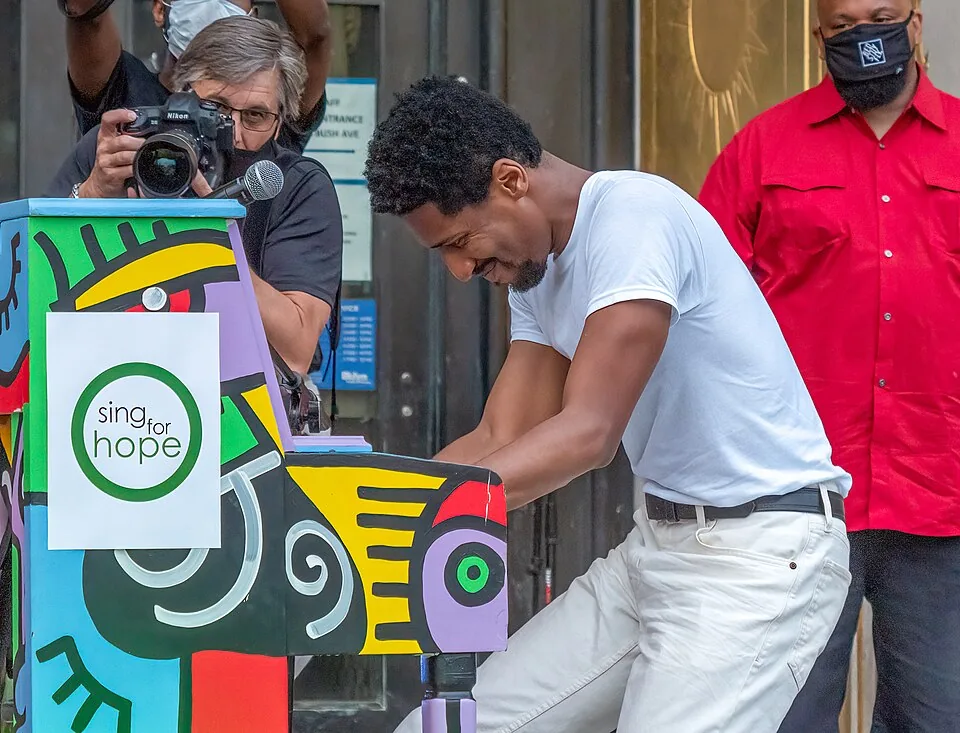
Jon Batiste walked into a Juilliard audition, got handed sheet music he couldn't read, and just made something up on the spot. They let him in. Years later he is still making it up as he goes, and somehow the whole world keeps singing along.
The Kid Who Barely Spoke
Here's a fact that sounds fake until you hear the man say it. The Grammy-winning performer, composer and multi-instrumentalist considers himself an introvert, according to a 60 Minutes profile from CBS News. He grew up in Kenner, Louisiana, a New Orleans suburb, and barely spoke until he was about 10.
Where does a silent kid put all that stillness? Up a magnolia tree in his family's front yard. He told 60 Minutes that's where he learned to embrace quiet, which is a hell of a way to train for a career that involves performing for the entire planet.
His mother nudged him toward the piano, and he turned out to be very good at it. By high school graduation he was already gigging all over New Orleans. Then he wanted a bigger challenge, and he went looking for one in New York.
Winging It at Juilliard
Batiste auditioned for Juilliard despite, by his own admission, being unable to sight-read music. Naturally, the audition included an on-the-spot sight-reading test. Picture the dread. He looked at the page and thought, "I can't read this. What am I going to do?"
So he improvised. "Whatever it was, in that moment, was certainly not what was on the page," he said, "but it was music that was coming through me at that moment." Juilliard took him anyway, which tells you the judges had better ears than most people running anything.
The fit didn't last. His free spirit clashed with the school's structured methods, and exasperated instructors eventually sent him to see a psychologist. That could have gone badly. Instead the psychologist told him, in Batiste's telling, that he may be weird but he was all right, son.
The Price of Being Misunderstood
That therapy session mattered more than any diploma. Batiste said it gave him evidence that his vision was worth chasing even if nobody around him understood it.
"It's really tough, man. It's annoying," he said. "You have to be comfortable being misunderstood. You have to be comfortable moving at a pace that is not at the pace with the rest of the world."
That's the most useful career advice you'll read this week, and it costs nothing. He decided to make his music his way, without apology, and the results speak for themselves. Colbert certainly thought so.
From Colbert Report to Electric Lady
In 2014, Batiste impressed Stephen Colbert on the Colbert Report. When Colbert took over The Late Show, he brought Batiste and his Stay Human band along. Batiste served as the show's bandleader for seven years while still making his own music on the side.
60 Minutes dropped in on a recording session last month at the famed Electric Lady Studios in Greenwich Village, where Batiste seemed to pull music out of thin air. He improvised at the piano like a man in a trance, and he said he only truly heard what he'd made afterward, listening to the playback in the control room.
"When I get to the piano, there's a, that's the openness. It's a tidal wave," he said. He kept improvising right up until the last minute while preparing for the Hollywood Bowl, mixing rhythm and blues with pop and classical. Most people rehearse. Batiste summons.
Love Riots Underground
Back at Juilliard, Batiste invented a testing ground for what he calls "social music." He named the ritual a "love riot." Last month he took 60 Minutes along as he led a group of musicians through the New York City subway, playing from station to platform and platform to train.
The result: an ordinary subway car, briefly turned into the happiest place in New York. Let that sink in. This is a city where people will fight you for a seat and then stare at the floor for 40 minutes. A man with a band made it joyful.
Batiste insists it's more than a party. "This is a mass revival of the soul," he said. He loves watching different songs land with different people, and giving someone "that kind of unexpected feeling of belonging, feeling like they're not alone in the world."
Lights Up at the Hollywood Bowl
The softer story runs underneath all of this. Batiste and his wife, artist and writer Suleika Jaouad, started dating in 2014 and married in 2022. She has been in and out of treatment for leukemia, and this month she went into the hospital for her third bone marrow transplant. Her second transplant came while Batiste was nominated for multiple Grammys.
"The highs are never separate from the low points," he said. "That's life. And it's a part of how you find gratitude in life."
At the Hollywood Bowl last month he played "Butterfly," a lullaby he wrote to help Jaouad heal. He asked the crowd to hold up their phones and turn on their lights, and the whole stadium glowed. "That's evidence of the light that we ignited in these people tonight," he said.
The Dingo Take
Think about the 60,000-odd people at the Hollywood Bowl holding up their phones for a lullaby written to help one woman survive leukemia. None of them had to be there for her. They showed up for a stranger's love song and turned their screens into candles. That's the audience this story is really about, and they did the work.
We spend most of our days at The Dingo Daily documenting people who use power to divide. It's a depressing beat. Then a shy kid from Kenner who barely spoke until age 10 shows up and spends his career trying to get strangers to feel less alone, and it lands like a cold glass of water. We're not saying music fixes everything. We are saying that wanting to unite people against all odds, as Batiste puts it, is a rarer ambition than it should be.
His wife went back into the hospital this month for a third transplant. Send her your good thoughts. And the next time someone tells you that you're doing it wrong, remember a Juilliard hopeful who couldn't read the page, played something else, and got the seat.



Comments