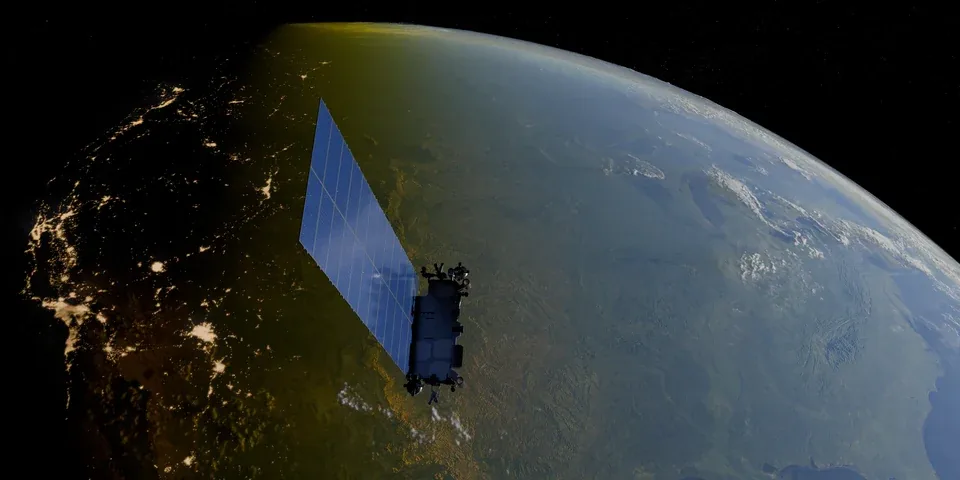
In a single week, the American government reportedly capped the speed of the satellite system Ukraine uses to guide its drones, went dark on advance warnings of Russian strikes, agreed to buy $4bn of Russian diesel, and invited Vladimir Putin to a golf club in Florida. If you set out to design a pro-Russia foreign policy from scratch, you would struggle to improve on it.
Jonathan Freedland, writing in The Guardian, argues that Donald Trump keeps showing the world exactly who he is while the West keeps refusing to believe it. After this week, the refusal is starting to look less like optimism and more like a hostage situation.
The Drone Kill Switch Nobody Wanted to Name
Earlier this week, Ukrainian forces discovered that a vital piece of equipment, a version of Elon Musk's Starlink used to guide their drones, had stopped working at speeds above 100mph. That is not a minor inconvenience. It meant a sudden shrinking of Ukraine's ability to strike behind Russian lines. It also hobbled an air defense system that protects Kyiv from Russian jet-propelled drones.
This was not a glitch. Starshield, the military-grade version of Starlink, is owned and controlled by the US government. As Reuters reported, the order to limit its use in Ukraine came from the White House.
So let's be precise about what happened here. The president of the United States personally reached into an active war and made one side worse at defending its capital city. Volodymyr Zelenskyy told Piers Morgan the decision "will bring a lot of human losses." He added, "Of course, people will die."
Two Nights in the Dark
The same week, Ukraine endured at least two nights of Russian bombardment without the usual advance warnings from the US about when or where Moscow was about to strike. Those warnings are the difference between a family getting to a shelter and a family not getting to a shelter.
Trump denied that he had broken off the long-established intelligence sharing with Kyiv. Fine. But the warnings did not arrive, the missiles did, and Ukrainians were left to draw their own conclusions about which part of the president's statement to believe.
When an administration denies cutting off intelligence while the intelligence is, in practice, not showing up, you are allowed to notice the gap. Nobody is obliged to take the denial on faith. Not after the week's other developments.
Four Billion Dollars in Diesel for the War Machine
Then there is the money. Trump decided to break the international sanctions regime on Moscow by agreeing to buy $4bn worth of Russian diesel oil. In the American market that volume barely registers. High diesel prices are, however, imperiling Republican midterm chances in several rural states that depend on the stuff.
For Putin, the math is different. It is a welcome cash infusion at exactly the moment Russia's military position was looking precarious. The man was on the ropes, and the US president showed up with a towel, a water bottle, and a $4bn check.
Sanctions only work if the biggest economy in the world participates. Trump has now made clear that participation is optional when the pump prices get inconvenient before an election.
Putin Gets a Tee Time
As if the practical help were not enough, the US has invited Putin to attend December's G20 meeting, to be held at one of Trump's golf clubs in Florida. The man whose forces are bombing Kyiv on a near-nightly basis is being offered hospitality at a Trump property.
There is a certain symmetry to it. Ukraine's drones get throttled and its capital goes without warnings, while Russia's leader gets a golf-club welcome. The administration is not even bothering with subtlety anymore. It is skywriting.
Freedland's point is that this should have been obvious since February 2025, when Trump staged an on-camera dressing down of Zelenskyy in the Oval Office, telling him "you don't have the cards" while JD Vance demanded their visitor show gratitude. The message was sent then. The West just kept returning it to sender.
The Question That Answers Itself
For years people have tried to work out what is behind all this. Is Trump a Russian asset? Is it kompromat? Is it money? Is it simple dictator envy? Luke Harding, the Guardian's expert on the subject, answers the question with a question: if Trump were a Russian asset, in what way would he behave any differently from the way he behaves now?
It's a good question, and nobody has produced a good answer. Maybe it is greed, ideology, envy, and leverage in some combination. Maybe we never get the full picture. But the motive is, in a sense, beside the point. The behavior is on the record, and the behavior is what gets people killed.
Meanwhile the head of MI5 spent the same week describing Russia as "aggressor number one." One study counted 151 confirmed Russian-directed industrial sabotage incidents in Europe between February 2022 and February 2026. There are credible reports of a Russian plan to assassinate executives of key European defense firms. That is the country the US president is buying diesel from.
Do Not Exhale After the Midterms
Freedland's warning to Europe is the part that should keep people up at night. The midterms are a little over two weeks away and are expected to deliver big Democratic gains. Plenty of European leaders will be tempted to conclude that the orange storm has passed and normal transatlantic service is about to resume.
They should resist that urge. A constrained Trump is not necessarily a tamed Trump. One Washington hand warns he could become a "cornered animal," even more extreme in foreign affairs, the one area where a president is freest to act.
And even after Trump is gone, the lesson stays. "This shift is permanent," a former UK cabinet minister told Freedland. Trump has proved that Trump and Trumpism can happen. The alliance is not guaranteed. It is vulnerable to a change in the American political weather.
The Dingo Take
Who benefits? Start with Putin, who gets cash, cover, and a calmer sky over the targets he picks. Then look at the diesel deal, which lets the White House shave a little off rural pump prices ahead of an election it is expected to lose badly. Ukrainians pay the bill in blood so a few farm-state Republicans can feel slightly less doomed. That is the trade, stated plainly.
The lazy response from the democratic West has been to keep hoping this is a phase. A bad stretch. A weird personality quirk that a good midterm will fix. It won't. Freedland is right that the old certainties are gone, and treating a betrayal as a misunderstanding is how you keep getting betrayed.
So here is the part nobody in Europe wants to hear. Stop waiting for Washington to come back. Spend what it takes, arm Ukraine like it matters, and build the defenses of a continent that can no longer assume its biggest ally is on its side. Because the guy with the golf club just told you whose side he's on, and he told you in writing.

Comments