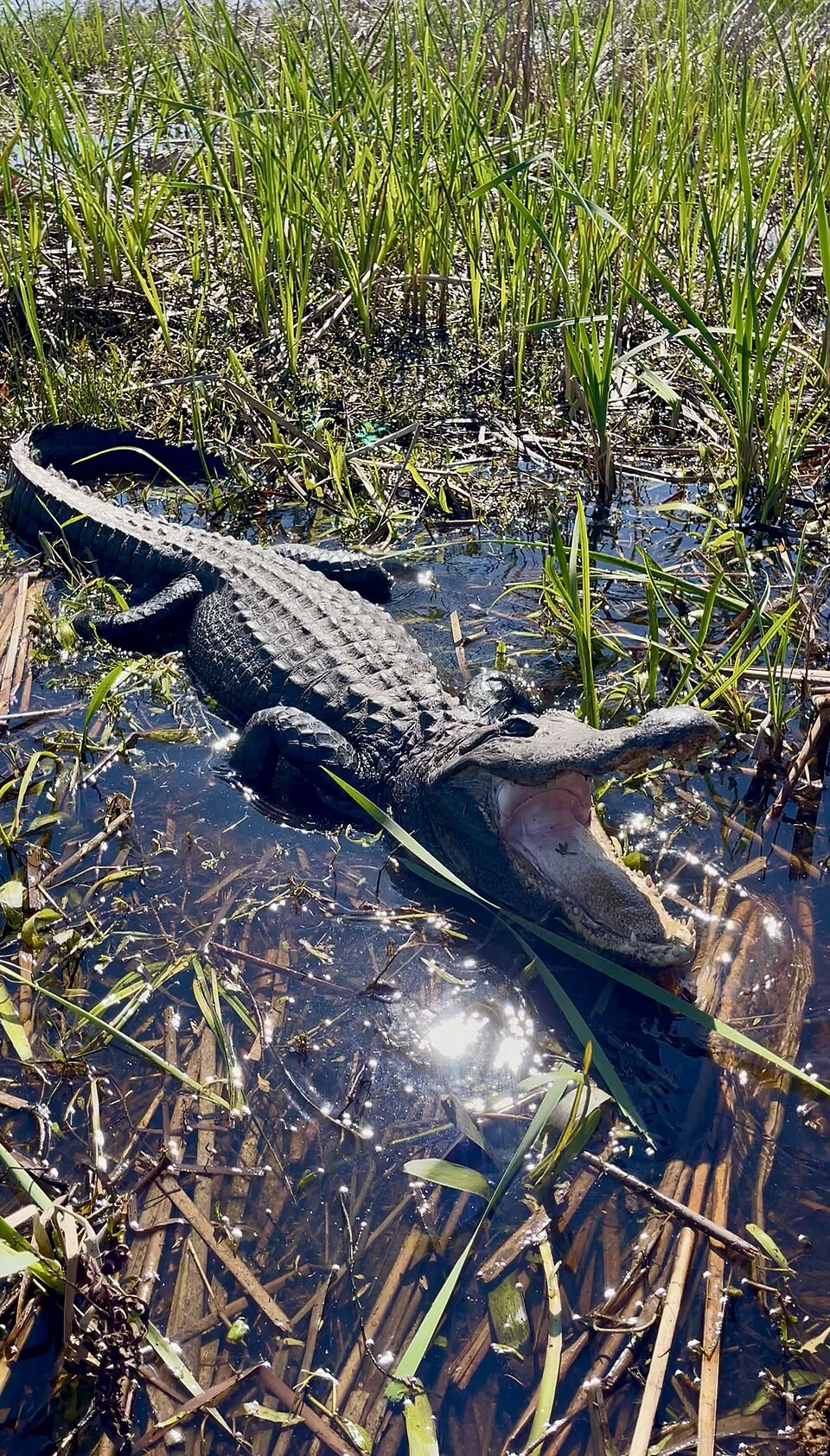
A 71-year-old man went fishing at a park pond in Florida on Friday afternoon and never came home, killed by a nearly 12-foot alligator that dragged him into the water. The police captain on the scene described the pond as having "tons of alligators in it," which is a hell of a thing to say about a place with a park attached.
A Friday Evening at the Pond
Steve Hamilton was standing on the shoreline at Dr. Bradford Memorial Park in Winter Garden, about 15 miles west of Orlando, when the alligator grabbed him. Emergency crews got a 911 call at about 5:20 p.m. Friday and rushed to the scene, according to reporting from The Guardian, citing Florida outlet WOFL.
Radio traffic recorded during the response, per NBC News, relayed that witnesses had seen someone possibly grabbed by an alligator and pulled into the water. So there were people watching when this happened. Think about that for a second. Someone saw a man yanked off the bank and into a pond, and then had to dial 911 about it.
Hamilton was pronounced dead at the scene, according to the Florida Fish and Wildlife Conservation Commission. His body was recovered from the water a couple of hours later.
Rescuers Couldn't Get to Him Because of More Gators
Here's the detail that should make every Florida parent rethink the family picnic. Emergency crews tried to rescue Hamilton, but they had difficulty doing so because of nearby alligators.
Read that again. The professionals who show up for a living when someone is in mortal danger could not reach the victim because the water was crowded with other alligators. This was not a lone rogue reptile. This was a neighborhood.
The animal that killed Hamilton was later trapped and killed by FWC authorities, according to a statement from the Winter Garden Police Department. It measured roughly 12 feet long. That is longer than most sedans' wheelbases and heavier than several of the people reading this combined.
"Tons of Alligators" and Zero Warnings
Winter Garden police Capt. Michael Mason told reporters that authorities had not been alerted to any gator sighting at the pond on Friday. The pond connects to Lake Apopka, and Mason was blunt about what lives there. The body of water has "tons of alligators in it. That is not uncommon to see alligators in this part of town."
So the official position seems to be that nobody reported a gator because gators are everywhere, and everyone knows it, and so reporting one is like calling in a sighting of a pigeon. Fair enough. But it also means the plan for keeping people safe at this pond amounts to vibes.
Mason's advice to the public was to "be aware of your surroundings." He added that the animal "looks like it's docile. It looks like your Florida emblem, but it can be dangerous." The Florida emblem. The state mascot, essentially, just ate a retiree.
The Math on "Rare"
The FWC says serious injuries from alligators are rare in Florida, and statistically that holds up. At least 34 people have been killed by alligators in the state since 1948, according to the commission, which tracks encounters with Florida's estimated 1.3 million gators. That is more than a million large reptiles and a few dozen deaths across nearly eight decades.
But rare is not the same as quiet lately. Hamilton's death came less than four months after Brittany Clark, 31, was killed by a 13-foot alligator while swimming with her boyfriend in the Econlockhatchee River in Seminole County. Autopsy results released in July showed Clark struggled for her life before dying from the wounds the animal inflicted.
NBC News describes that earlier case as an alligator biting off one of Clark's arms and mauling the other. The animal was removed from the river and euthanized. Two fatal attacks in the same part of central Florida in under four months is not a trend you can prove from two data points. It is, however, a hell of a coincidence for a statistic we keep calling rare.
What Happens Next
Police are asking anyone who witnessed the incident to come forward and contact authorities. Given the radio traffic, there appear to be people who saw it happen.
The gator that killed Hamilton is dead. The other gators, the ones that kept rescuers back from the water's edge, presumably are not. The pond is still connected to Lake Apopka, and Lake Apopka is still full of alligators, because it is Florida and that is the arrangement.
No one has announced any change to signage, fencing, or patrols at the park. Maybe that is coming. Maybe it isn't. For now, the guidance is the same as it was before a man died: keep your distance and stay aware.
The Dingo Take
Suppose a municipal park in any other state had a pond where police openly admit the water holds "tons" of man-eating predators, where rescuers literally cannot approach the shoreline during an emergency, and where nobody bothered to post a warning. There would be a lawsuit by Monday and a city council meeting by Tuesday. Instead, in Florida, we call it Friday.
The cultural shrug is the real story here. Alligators are the state brand. They are on the license plates, the T-shirts, the college football helmets. We have spent decades teaching ourselves that the thing with the teeth is cute, and then we act shocked when a 71-year-old man gets dragged off a bank while casting a line. Captain Mason is right that it looks like the Florida emblem. That is exactly the problem.
Nobody is saying drain the swamp and evict the gators, though the metaphor is tempting. But if a pond is known to be thick with 12-footers, and it sits next to a park where people fish, the bare minimum is a sign, a fence, or a sentence in a city pamphlet that says do not stand on this shoreline. Steve Hamilton wanted to fish on a Friday afternoon. "Be aware of your surroundings" is what you tell people after you've decided not to fix anything.





Comments