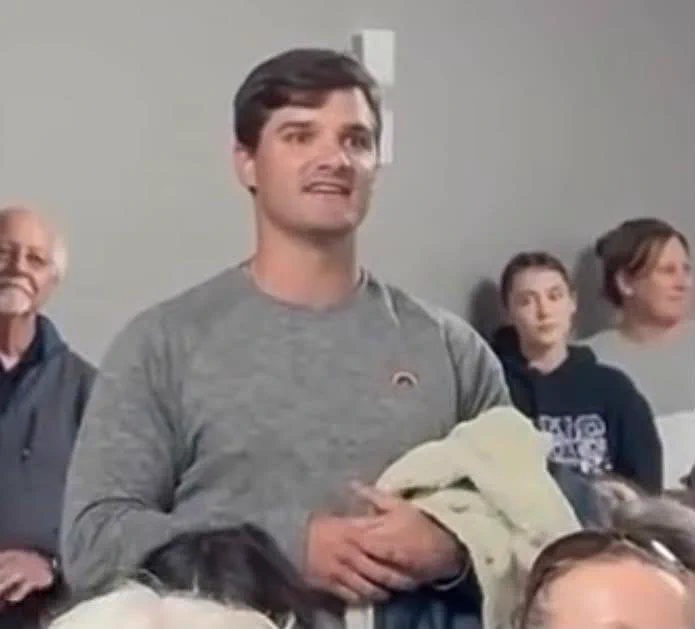
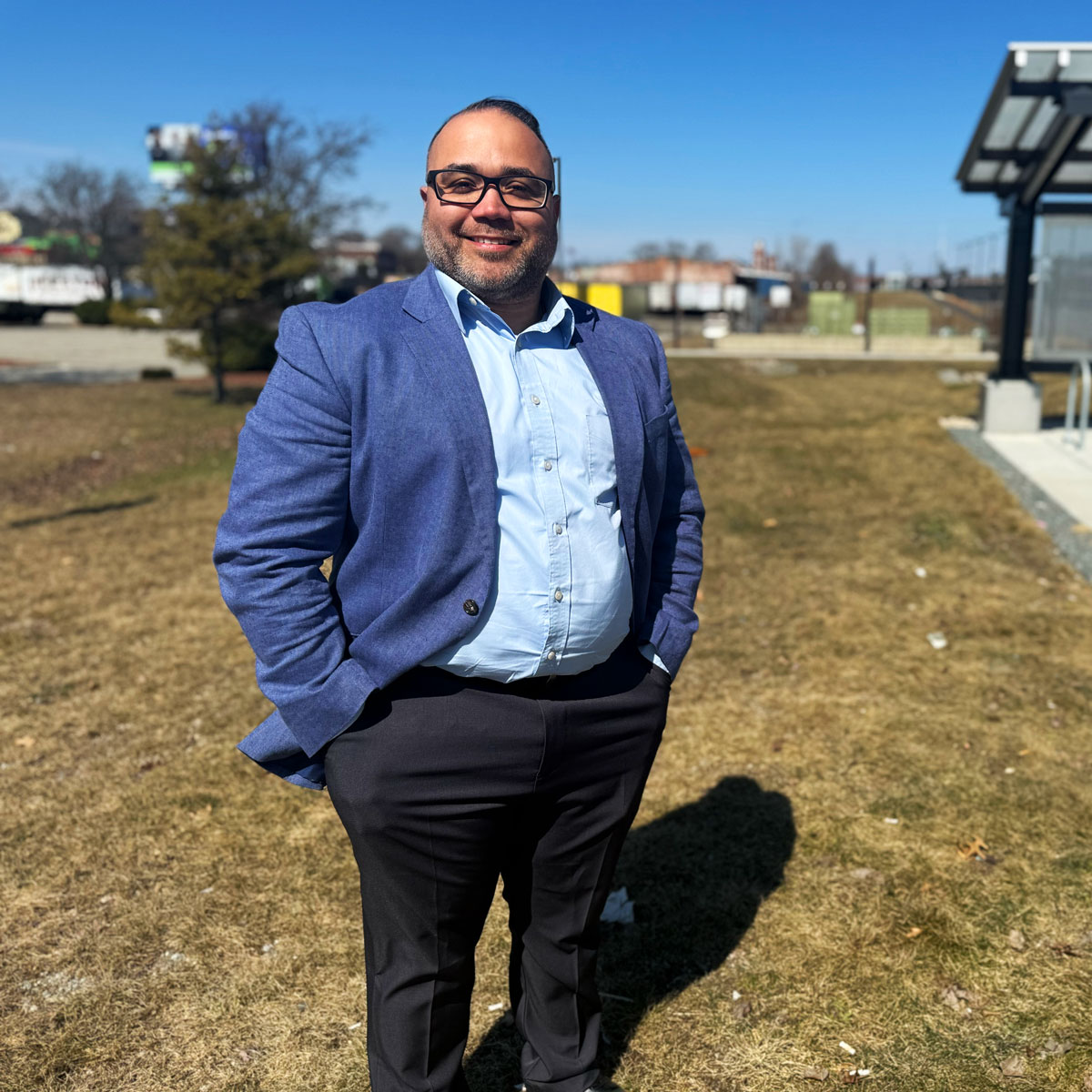
The guy who stood up at an Abdul El-Sayed town hall in Michigan and demanded he disavow the Muslim Brotherhood gave his name only as "Tommy." Turns out Tommy is Thomas Teepell, a former operations director for Republican Senator Josh Hawley and the son of one of the GOP's best-known political operatives. Just a regular concerned citizen who happened to wander in from the professional Republican class.
Just Tommy, Allegedly
Here's what happened, as seen in the video El-Sayed posted. At a Saturday town hall, an attendee who gave his name only as "Tommy" shouted from the crowd, asking whether El-Sayed, the Democratic Senate candidate, would disavow the Muslim Brotherhood. El-Sayed said, "Sure, yeah, absolutely," and then did something the heckler clearly didn't plan for. He asked the man why he assumed otherwise.
Tommy claimed he simply hadn't heard El-Sayed reject the movement, one of the Arab world's oldest and most influential Islamist groups. Under Trump, the U.S. has moved to designate certain chapters of the group as foreign terrorist organizations. So the question sounds almost reasonable if you squint and don't think about who is asking it, or why.
The Guardian reported that congressional staff records identify Tommy as Thomas Teepell, who joined Hawley's office as an intern in 2023 and climbed to operations director before leaving in February. The Handbasket first reported the identification. Which means "Tommy" had a last name, a résumé, and a senator's office on it, and he left all of that out when he stood up to ask his totally spontaneous question.
The Family Business
After Hawley's office, Teepell became political director for Philip Sarnecki's Kansas gubernatorial campaign. Sarnecki lost the Republican primary on August 4. So the young man's most recent professional achievement is helping lose a primary, and his follow-up act was heckling a Muslim candidate in another state.
Then there's the pedigree. Teepell is the son of Timmy Teepell, a Republican strategist and longtime adviser to Hawley and to former Louisiana governor Bobby Jindal. This is a kid raised inside the machine, trained by the machine, and employed by the machine, showing up at a Democratic candidate's event to ask a question that the machine has been trying to make stick for weeks.
Could he have attended on his own time, as a private citizen with strong feelings? Sure. Could he have mentioned that he spent years working for a sitting Republican senator? Also sure. He did neither.
El-Sayed Turned the Question Inside Out
Credit where it's due, because El-Sayed handled this about as well as anyone could. Over nearly five minutes, he pointed out that the question carried an implication of "dual loyalty," and he compared it to the doubts once raised about John F. Kennedy's Catholicism. He told the room he was running for the Senate and "happen[s] to be Muslim."
Then he flipped it. He asked Tommy whether he would disavow any attempt to read religious doctrine into American law. Tommy said he would not. El-Sayed told him it was Tommy who needed to understand the Constitution, the room cheered, and the man left.
Read that exchange again. The guy demanding a candidate disavow a religious movement refused to disavow importing religion into the law. You can't script that. Although, apparently, someone tried.
A Smear With a Long Paper Trail
This wasn't a one-off. Republicans have pushed the Brotherhood line against El-Sayed for weeks. His opponent, Mike Rogers, raised alleged ties during one of their debates. After El-Sayed told NBC's Meet the Press that neither he nor his family had any such ties, the conservative Washington Free Beacon dug up social media posts by his half-sister, University of Chicago professor Eman Abdelhadi, describing their mother's activism in the group in the 1970s.
There is no evidence El-Sayed was personally involved. He was born in the 1980s and was not raised by his birth mother. He called the suggestion that anyone in his family took part "an insane thing to assume." On Meet the Press, he said Rogers raised the issue because he "really wanted to repeat the word Muslim." Which, based on the evidence, is the whole point of the exercise.
And Then There's the President
Trump, naturally, has gone further, again without evidence. At a White House lunch he said El-Sayed was "100%" Muslim Brotherhood and called him a "fraud." On another occasion he described him as a "member" of the group.
Ahead of the weekend, Trump said El-Sayed's name is "Adulbabababababa Mohammed El-Sayed." He added: "So I was right. He's a jihadist." That is the sitting president of the United States, mangling a candidate's name like a kid doing an accent at recess and then declaring the man a jihadist on the strength of it.
So you have the president saying it loudly, the opposing campaign raising it in debates, a conservative outlet digging through a half-sister's old posts, and a former Hawley aide popping up at a town hall to ask it in person. Coordinated or not, the effect is the same: one message, many mouths.
It's a Close One
None of this is happening in a vacuum, because the race is tight. El-Sayed holds a narrow lead in the RealClearPolitics average, 48.1% to 45.5% over Rogers. The most recent survey, from InsiderAdvantage and taken October 9 to 10, had him ahead 48% to 46%. Most leads sit within or near the margin of error.
El-Sayed will campaign with Barack Obama in Detroit on Saturday, October 24, the first day of in-person early voting, at a rally that will also feature Democratic gubernatorial nominee Jocelyn Benson. Election day is November 3. When a race is this close, people reach for whatever tools they think will move a few thousand votes. This is the tool they chose.
The Dingo Take
Who benefits when a Muslim candidate gets asked, over and over, to prove he isn't a terrorist sympathizer? Mike Rogers does, in a race inside the margin of error. The Republican operatives who get paid to manufacture moments like this one do. And anyone who has figured out that the question itself does the work, because the answer never gets the same airtime as the accusation.
To be clear, the reporting establishes who Tommy is, not who sent him. Maybe Teepell woke up Saturday and decided to freelance. But a man with years inside a Republican senator's office and a father who has advised that senator for years does not stumble into this by accident, and he sure as hell doesn't forget to mention it. You can believe in coincidence. You can also believe the guy in the crowd asking about Muslim loyalty is a plain old curious voter. One of those requires a lot more faith than the other.
What I can tell you is how it played out. El-Sayed answered the question, then exposed what was underneath it, and the person asking couldn't even stand behind his own position on church and state. That's the whole story of this smear campaign in five minutes: the setup is cheap, the insinuation is ugly, and it falls apart the second the target refuses to flinch. Voters in Michigan get to decide whether they're buying it on November 3.
Comments