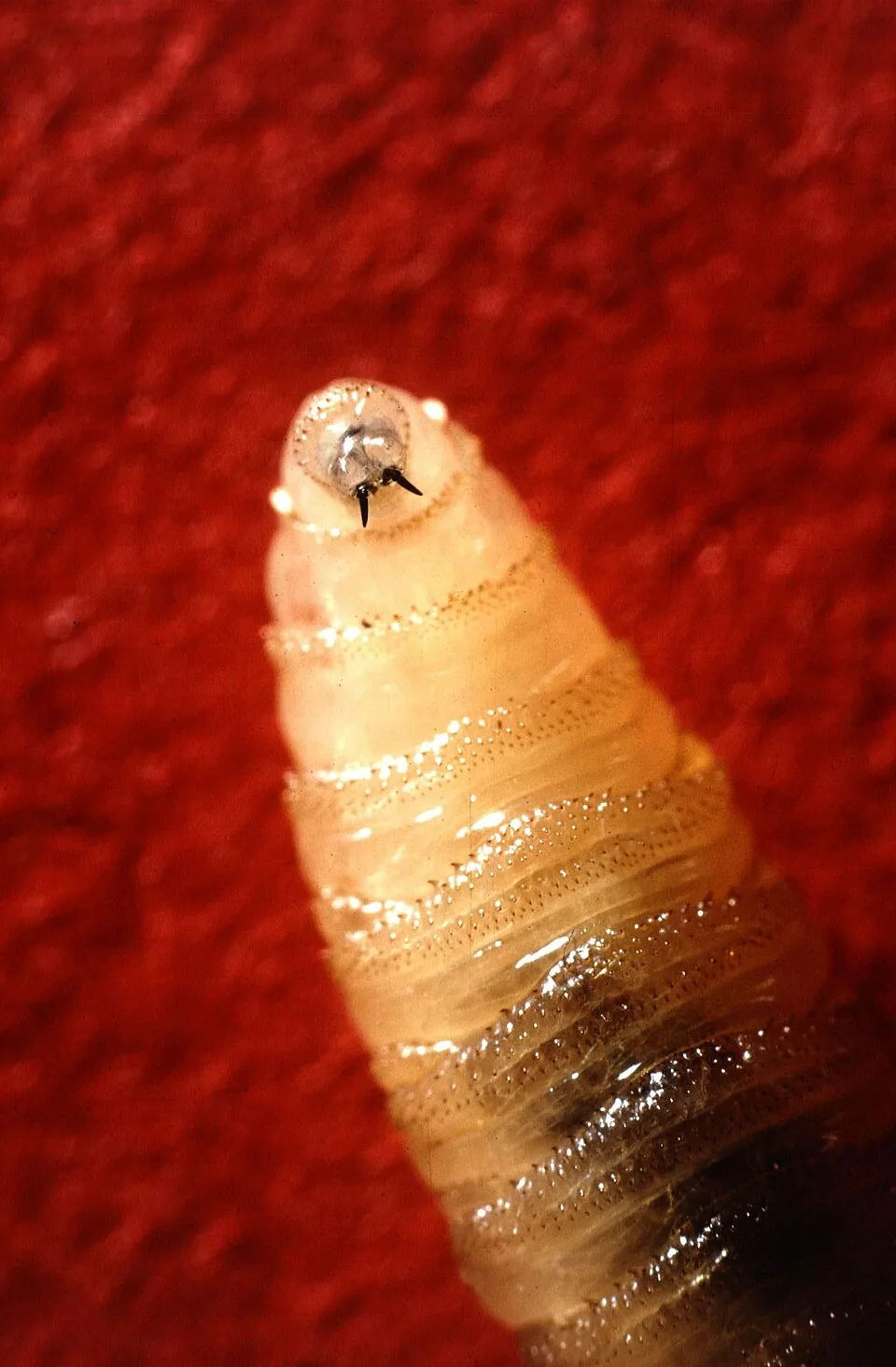
A flesh-eating parasite that the United States spent decades wiping off the map has now turned up inside a Texas elk, and it got there after a hunter shot the animal. The USDA announced Wednesday that the New World screwworm has been confirmed in American wildlife for the first time, which means the thing eating livestock alive is now free to eat whatever else is out there.
An Elk, A Game Ranch, And A Very Bad Wednesday
According to The Guardian, the USDA confirmed the detection in an elk in Pecos County, Texas. The animal was on a game ranch and was reported only after a hunter harvested it. Nobody caught this at the border. Nobody caught it in a routine inspection. A guy with a rifle found out.
The Texas Animal Health Commission is now modifying a previously established infested zone, which is the polite bureaucratic way of saying the zone got bigger. The USDA and the Texas Parks and Wildlife Department are running additional wildlife surveillance in the area.
And here's the thing. This is the first time the parasite has shown up in US wildlife. Until Wednesday, officials could at least say the problem lived on farms and ranches where somebody could count the animals. Elk do not check in.
What The Screwworm Actually Does To A Living Animal
Let's be specific, because the name undersells it. New World screwworm is a parasitic fly. It lays eggs in the open wounds or body openings of warm-blooded animals. When the eggs hatch, the larvae feed on living tissue. Living. Tissue. That description comes from the Centers for Disease Control and Prevention, as relayed by CBS News, and it is somehow worse than the nickname.
Livestock are the main victims, though the CDC says humans can be affected in rare cases. The first human case in the US was confirmed last year. The patient recovered and officials found no evidence of further transmission, so that is the good news, and it is the only good news in this story.
The USDA says the parasite does not affect food safety, but it can hurt meat production. Keep that in mind for the next section, because your grocery bill already knows.
Hunters Are Now The Early Warning System
Officials are asking hunters and landowners to watch for signs of infestation this season. Texas wildlife division director Alan Cain put it plainly in a statement: "We encourage all hunters and landowners to be vigilant for signs of New World screwworm while they are out in the field this season."
The warning signs are exactly as pleasant as you would expect. Visible maggots in wounds. Foul-smelling injuries. Animals that look weak or distressed. Open or enlarging wounds. Infestations around an animal's nose, mouth, ears, eyes or genital areas.
So the federal government's wildlife surveillance plan now includes thousands of people in camouflage inspecting dead elk for maggots. Please enjoy your hunting season. Anyone who spots something suspicious is supposed to report it immediately.
A Pest We Eradicated, Marching Back Up From Mexico
The United States got rid of this parasite decades ago. It did not stay gone by luck. It stayed gone because of a long, expensive, coordinated effort, and the pest has now surged north from Central America through Mexico anyway.
Washington responded by halting Mexican cattle imports for more than a year. Trade resumed in August at an Arizona port as part of a phased reopening plan. The halt tightened US cattle supplies and pushed beef prices to record highs for American consumers.
So consider the full ledger here. Americans paid record prices for beef to keep the parasite out, and the parasite showed up anyway. Nobody gets a refund.
Dozens Of Cases And Counting
The screwworm was first detected on US soil this year in June, when the USDA confirmed it in a 3-week-old calf in Zavala County, near the US-Mexico border. A three-week-old calf. That is where this chapter started.
Since then there have been dozens of cases in the US this year, including on a horse and on a dog. Cattle, a horse, a dog, and now a wild elk. The list of victims is climbing the ladder of species like it has somewhere to be.
The elk matters most because wildlife roams. A calf in a pen can be treated and tracked. An elk on a game ranch can walk off the property. Officials have set up surveillance, but surveillance is a word for watching something spread, not for stopping it.
The Dingo Take
Does anyone feel like the plan here was ever more than hoping? The US spent more than a year blocking Mexican cattle, ate record beef prices as the cost of doing business, reopened the border port in August, and the parasite still strolled into a Texas game ranch and set up shop in an elk. At some point the strategy has to be something other than asking hunters to sniff dead animals for foul-smelling wounds.
To be fair, a parasite does not care about politics, and the people at the USDA and Texas Parks and Wildlife are doing real work in a bad situation. But the public deserves a straight answer to a simple question. If a decades-old eradication victory can unravel this fast, what exactly was protecting it, and who decided that was enough?
Here is what you can do in the meantime. If you hunt, check the animal. If you own land, check the livestock. If you eat beef, brace yourself, because the price tag has already told you how this is going.




Comments