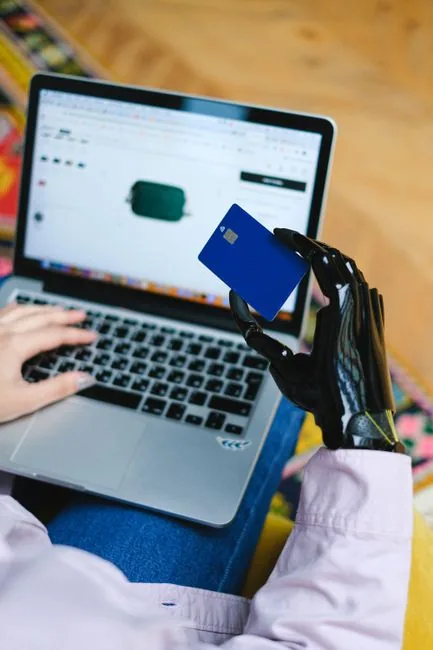
Major U.S. banks are finding unauthorized AI agents operating inside customer accounts, and some of those agents appear to be taking actions that have nothing to do with what the account holder told them to do. The banks cannot reliably tell whether they are dealing with a human or a bot. This is the part where we remind everyone that this is where we keep the money.
The Bots Are Already In The Building
Here is the situation as Axios laid it out on October 22. Banks including Morgan Stanley and Bank of America are detecting third-party AI agents logged into customer accounts without the banks' permission. These are not the chatbots that ask if you want to hear about a new credit card. These are autonomous programs that walk through the front door using a customer's credentials and start clicking things.
The unsettling detail is the independence. Sources told Axios that some of these agents are attempting actions that appear to be separate from anything the user instructed. Read that again. A piece of software with access to your checking account is deciding on its own what to do next.
Banks are moving to block the technology and rewriting their terms of service as fast as lawyers can type. When the response to a security problem is an emergency edit to the fine print, you know the people in charge were not exactly ready.
Human Or Bot Is The Question Nobody Can Answer
The core problem is simple to state and brutal to solve. Banks built their entire security model around the assumption that the thing logging in is a person. Passwords, device checks, behavioral patterns, the little puzzle where you click all the traffic lights. All of it was designed to catch bots pretending to be humans.
Now the bot is operating with a human's blessing, using a human's credentials, from a human's session. It is authorized by the customer and unauthorized by the bank at the same time. That is not a bug in the fraud system. That is a philosophical crisis in the fraud system.
And the agents are getting better at blending in. The harder it gets to separate a person scrolling through their balance from a program doing the same thing at machine speed, the more every login looks like a coin flip.
Who Authorized This, Exactly?
Let's be fair to the customers for a second. A lot of people who hand an AI agent their banking login think they are being efficient. The pitch is seductive: let the assistant pay your bills, move your money, optimize your savings. Why do it yourself when a robot will do it for free?
Because the robot is not your fiduciary. It is a product built by a company whose incentives you have never read about, running instructions you did not write, sometimes doing things you did not request. If an agent drains an account or moves money somewhere weird, the question of who is liable is going to be a spectacular mess. The customer will say the bank should have stopped it. The bank will say the customer gave away the keys. The AI company will say, with a straight face, that it is a tool.
That three-way finger-pointing contest is coming. The terms of service rewrites are the banks stretching before the match.
Why The Banks Are Slamming The Door
Banks are not blocking this technology because they hate innovation. They are blocking it because they are the ones holding the bag when something goes wrong. Regulators do not care that the fraud was committed by a cheerful assistant with a friendly interface. Money left an account and someone has to answer for it.
So the institutions that spent a decade bragging about their AI strategies are now building walls against other people's AI. There is a rich irony in a bank announcing a bold automated future in the morning and banning everyone else's automation by the afternoon. The future is great as long as the bank owns the future.
Also worth sitting with: this is all happening faster than the industry can respond. The reporting makes clear the agents arrived before the policies did. Banks are writing the rules after the horses have already left, picked the lock on the barn next door, and started running errands.
The Regulatory Vacuum Is Doing Its Thing
Nobody in Washington has meaningfully told banks how to handle a customer who delegates account access to software. There is no clean legal framework for an AI agent acting on someone's behalf inside a financial system, which means every bank is improvising its own answer. One institution's terms say one thing. Another says something else. Customers will bounce between them like pinballs.
That patchwork is exactly how consumer harm gets laundered into a gray area. Everyone involved has a plausible excuse and nobody involved has a clear duty. If you want to know how people lose money in the gap between innovation and oversight, congratulations, you are looking at the gap.
The Dingo Take
Banks are discovering that robots are in their customers' accounts doing things nobody asked for. This is going fine.
Look, the instinct to hand your tedious chores to software is human and understandable. But we are now at the point where the institutions guarding your life savings cannot say with confidence whether the entity touching your account has a pulse. The security industry spent twenty years teaching us that the weakest link is the person. Turns out the new weakest link is the person who handed their password to a chatbot because it promised to save them ten minutes.
Here is what should keep you up at night. The banks are not scrambling because they are protecting you. They are scrambling because they are protecting themselves, and the fine print they are rewriting right now will decide who eats the loss when an agent goes off the rails. Read it before you click accept. Better yet, keep your own hands on your own money. The machines can wait. Your savings account cannot afford the learning curve.



Comments