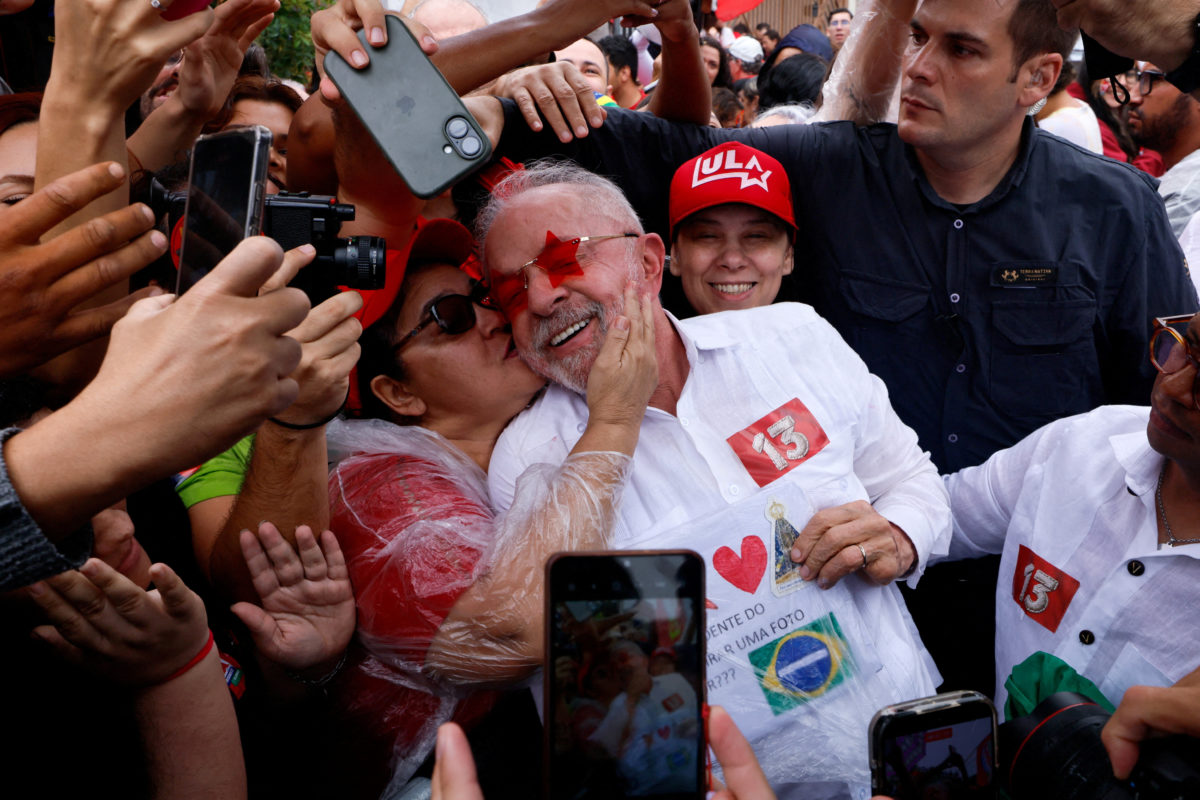
Luiz Inácio Lula da Silva, 80 years old and trailing after the first round, just won a fourth term as president of Brazil. He took 51.8 percent of valid votes to Senator Flávio Bolsonaro's 48.2 percent, and the stock market responded by setting a chunk of itself on fire.
A Comeback Nobody Should Have Needed
Here are the facts as CNBC laid them out. Lula lost the first round, then came back in the runoff and won by a margin of 3.6 points, according to Brazil's Superior Electoral Court. In a country of this size, that is a sliver. Call it a sliver with a flag on it.
The country split almost evenly, and it split along lines everybody in Brazil already understood. One half wanted the leftist elder statesman who has done this job before. The other half wanted a Bolsonaro, because the family brand still moves votes.
And Lula had to claw his way up to get there. Trailing after round one and winning the runoff is the political equivalent of being down two touchdowns at halftime and then just deciding to be better.
Trump's Rightward Shift Hits a Wall
The result blocks a rightward shift in Latin America that U.S. President Donald Trump has backed. That is how CNBC framed it, and it's worth sitting with. The American president had a horse in this race, and the horse lost.
Trump has spent years treating the hemisphere like a board game where every country is a property he's trying to flip to his side. Brazil is the biggest piece on that board. It is the largest country in South America, and its voters just told the project to take a number.
This was not a landslide, so nobody should write the victory-lap column yet. A 3.6-point win is a win, but it is not a mandate to do whatever you want. The other 48.2 percent of Brazil voted too.
Wall Street Lost Its Mind (Again)
Now for the part that will dominate the business news cycle. The iShares MSCI ETF tracking Brazilian stocks plunged nearly 20 percent following Lula's win. Twenty percent. That is not a dip. That is a trapdoor.
Investors apparently had strong feelings about which candidate they wanted, and they expressed those feelings the way investors always do, by dumping assets and calling it analysis. A move that large says plenty about who the market was rooting for, and it says it loudly.
It's also the kind of number that gets used as a cudgel. Expect every pundit who wanted Bolsonaro to point at that chart and call it a verdict. Remember that a market selloff is a verdict from the people who own the market, not from the people who live in the country.
The Congress Problem
Lula wins, and then Lula has to govern, which is where the fun ends. He is set to serve from 2027 to 2030 and will face a Congress where Bolsonaro's Liberal Party holds the largest bench in decades. Decades.
So the man who won the presidency does not control the room where the laws get written. The opposition party of the guy he just beat has the biggest caucus it has had in a generation. If you've watched American politics at any point in the last ten years, you know how that movie goes. Gridlock, hostage-taking, and a lot of speeches about how the other side is destroying everything.
And there is a little matter of the money. Lula inherits public debt that he must stabilize, which is a polite way of saying there is a hole in the budget and he gets to hold the shovel. Fixing it while negotiating with the largest opposition bloc in decades is a hell of a first-term agenda for a fourth-term president.
Eighty Years Old and Still Winning
Let's not skip over the age thing, because it's remarkable. Lula is 80. He is a leftist who has now won the presidency four times, and he did it this time after trailing in the first round. Plenty of people half his age can't get through a single campaign without melting down.
He will be 84 when this term ends. Brazil's voters knew that when they marked their ballots, and a majority of them decided it was fine. Say what you want about gerontocracy, but the man keeps showing up and keeps getting votes.
The contrast with Flávio Bolsonaro is the whole point of the runoff. Bolsonaro the younger is a sitting senator carrying a famous last name. Lula is carrying decades of a record that voters either love or hate, and enough of them loved it to get him over the line.
The Dingo Take
Lula won, and the markets threw a tantrum.
That tantrum is the most honest thing in this whole story. A nearly 20 percent plunge in a single ETF tells you exactly who stood to gain from a Bolsonaro victory and how much they were counting on it. The people who own the assets wanted one outcome, the voters picked another, and the assets paid the price for the disagreement. If you want to know whose side your financial system is on, check which result makes the number go down.
But don't get carried away. A 3.6-point margin, a hostile Congress with the biggest opposition bench in decades, and a debt problem that needs fixing is not a victory parade. It's a job interview that just got a lot harder. Lula beat the odds to get back in the building. Now he has to prove the building can function with half the country glaring at him from the other side of the aisle. Trump's friends in the region took a loss, and that's worth a little cheering. Just save the champagne until the budget passes.

Comments