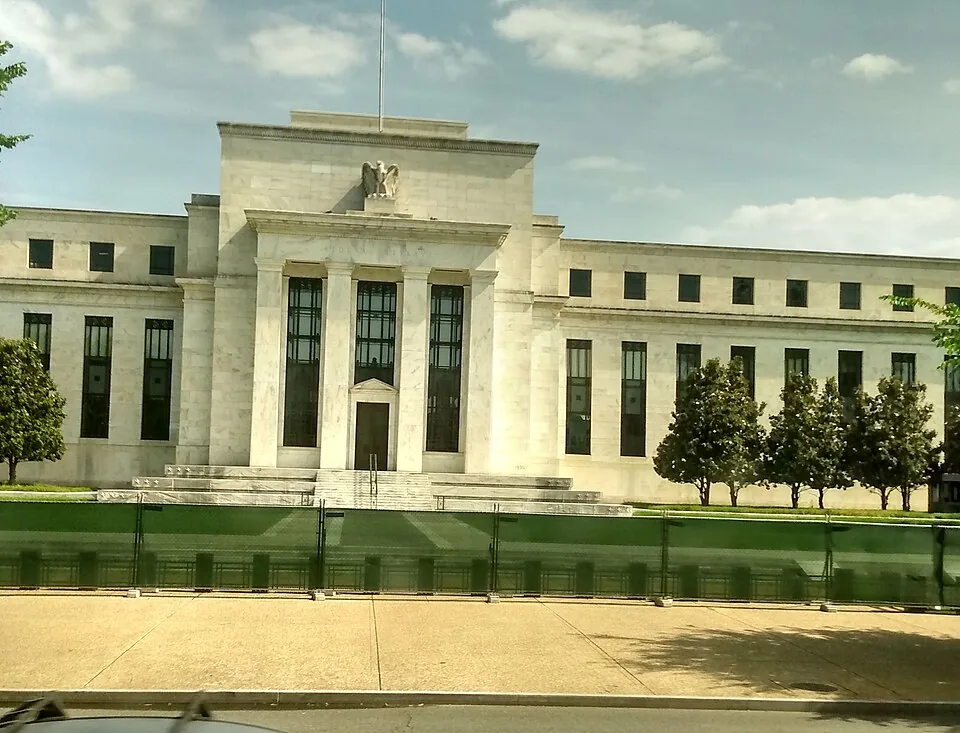
Inflation just jumped to 3.7 percent, up from 3.4 the month before, and the Federal Reserve is expected to respond by doing absolutely nothing. The central bank's brass insists this has nothing to do with the midterm elections six days away. The people actually paying for groceries and gas have a different theory about who made this mess.
The Numbers Say Hike, The Calendar Says Chill
Here's the setup, courtesy of NBC News. The Fed's rate-setting committee meets this week in Washington, and the widely held expectation is that it will keep benchmark rates steady on Wednesday. That's despite the September inflation reading, which climbed to 3.7 percent annually from 3.4 percent the month before. The Fed's own target is 2 percent. We are not close.
The Fed raised rates by a quarter point in September after a string of inflation readings well above target and no sign prices were coming down. Fed Chair Kevin Warsh was blunt about it at the time. "The plain fact is that inflation is too high and has been for too long," he said.
So the chair says inflation is too high. The data says inflation got higher. And the official plan is to sit tight. Make it make sense.
Wait-And-See Is Doing a Lot of Work Here
The Fed's public explanation is patience. Vice Chair for Supervision Michelle Bowman said on Oct. 14 that "inflation remains above our goal," but added, "We have some time to wait and see how financial conditions evolve before we take more action."
San Francisco Fed President Mary Daly said she doesn't feel any urgency to decide "with a limited set of information." Her words: "I think we have the time that we need."
That's the institutional vibe. The Fed is famously slow and deliberative, and officials point to the "stable prices" half of the dual mandate Congress handed them. Stable, apparently, includes a pace of decision-making that would embarrass a glacier. Prices, meanwhile, are not waiting for anyone's comfort level with the available data.
Wall Street Is Not Buying It
Not everyone is nodding along. Analysts at Deutsche Bank put it plainly: "The case for skipping [a rate hike in] October is not terribly compelling." That's banker for "this looks bad and you know it."
The same analysts also laid out the unspoken part. They wrote that the Fed "might prefer to stay out of the headlines for raising rates just ahead of a midterm election where affordability is the principal concern." Some analysts think holding steady is a real gamble given where inflation is heading.
The Fed has a long tradition of staying far away from politics. Raising rates days before an election could look politically motivated at best and could influence votes at worst. Fine. But notice the trap here. Holding rates steady in the face of rising inflation, right before an election, also looks like a decision shaped by the election. There is no neutral move left on the board.
Voters Already Know Who to Blame
Whatever the Fed does, voters have made up their minds. Pollsters keep hearing the same thing: rising prices, especially housing and energy, are the top concern heading into Tuesday. And people are clear about whom they hold responsible. They blame President Trump's war in Iran and his global tariff regime.
The most recent NBC News poll found Trump's approval at 27 percent on the cost of living. On the war with Iran, it's 29 percent. Those aren't the numbers of a president having a rough patch. Those are the numbers of a president whose signature economic moves have been tried and found expensive.
Control of both the House and the Senate is on the line. The party in power spent years promising that tariffs and a war would make everything great, and what voters got was a grocery receipt that looks like a ransom note.
A Central Bank Trying Not to Be the Story
The Fed's whole brand is being boring. Nobody is supposed to know what the Federal Reserve thinks about Tuesday's election, and the institution guards that blankness like a state secret. That's a sound principle. A central bank that tilts rates to help one party is a central bank that has stopped being a central bank.
But independence cuts both ways. If inflation is running hot and the committee's own chair has said it's been too high for too long, then the neutral thing to do is follow the data wherever it points, including into an unflattering news cycle. Flinching because the timing is awkward is its own kind of political calculation.
What's clear is that the Fed is stuck cleaning up a mess it didn't make. Tariffs push prices up. A war pushes energy prices up. The Fed can raise rates to cool all that, but it can't un-start a war or repeal a tariff. It can only choose how much pain to add on top.
The Dingo Take
Do you really believe the Fed's calendar is a coincidence? Maybe it is. Maybe a committee of very serious people looked at 3.7 percent inflation, a chair who just said prices have been too high for too long, and decided the right move was to wait a week. And maybe that waiting game is exactly what the Deutsche Bank analysts hinted at when they talked about staying out of the headlines. We can't see inside anyone's head. We can see the outcome.
Here's the part that should make everyone furious, regardless of party. The Fed is dodging a hard call because the economy has become so politically radioactive that even a boring interest rate decision can't be made without somebody screaming conspiracy. That's what happens when a president launches a war and a global tariff regime and then lets the bill land on everyone else. The consequences leak into institutions that were built specifically to stay out of the fight.
Voters have already done the math. Twenty-seven percent approval on the cost of living. Twenty-nine percent on the Iran war. Nobody needed a Federal Reserve statement to figure out who to blame. They'll show up Tuesday and say it themselves, and no committee vote on Wednesday is going to change what's printed on their receipts.



Comments