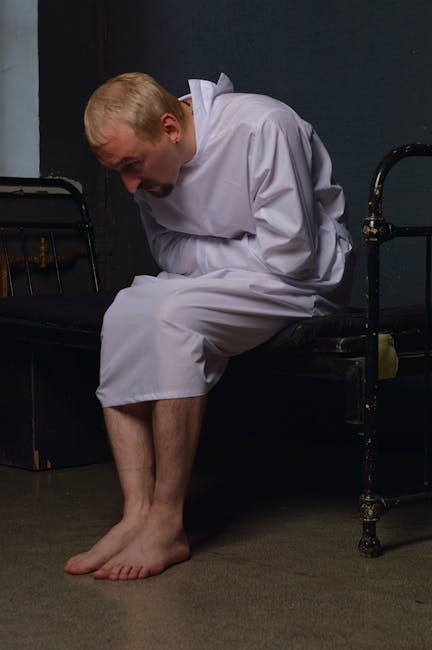
I. The inverted diagnosis
For most of the twentieth century, psychiatry treated homosexuality as an illness. The American Psychiatric Association classed it in the first DSM in 1952 as a sociopathic personality disturbance, and its trustees voted in December 1973 to remove it. The World Health Organization dropped it when the 43rd World Health Assembly endorsed the ICD-10 on 17 May 1990. The evidence had been sitting there for years. In the 1950s Evelyn Hooker studied 30 gay and 30 straight men, none of them in therapy, matched for age, IQ, and education. Her raters could not tell the groups apart on adjustment. The older view came from skewed samples of patients and prisoners.
Antithesis. The reversal was slower than "removed in 1973" suggests. The APA replaced the diagnosis with "sexual orientation disturbance," homosexuality left the DSM entirely only in 1987, and the 1973 membership vote was 5,854 to 3,810. Critics of the change say science should not be settled by ballot.
Synthesis. The slowness helps the argument. A category that took thirty-five years to leave the manual was tracking social attitudes more than data. It was a prejudice with a medical stamp on it, and it outlived its evidence in the minds of religious and secular people alike.
Once medicine stopped supplying a rationale, the stigma did not go away. The debate moved into the moral and political realms of religion, government, and the media. Today the belief that queer people are disordered survives mostly in two groups: the openly religious, and secular people who inherited the assumption and never looked at it.
II. The prophets, read clinically
Here is the irony I find hard to ignore. Many of the traditions used to condemn queer people were founded by figures whose inner lives would get clinical attention today. In 1987 D. Landsborough argued that Paul's ecstatic visions, and his physical state at his conversion, were manifestations of temporal lobe epilepsy. Ezekiel has drawn more of this attention than anyone. August Klostermann proposed catalepsy in 1877, Edwin Broome argued for schizophrenia in 1946, and Jaspers and others have considered the same possibility since. The evidence leans on the prophet lying speechless and bound for 390 days and then 40 days, and on the voice of God being read as a hallucination. David Halperin's 1993 psychoanalytic study was the last broad attempt of this kind.
Antithesis. The diagnoses are weak, and the sources say so. A review in The Psychiatrist found Broome-style evidence unconvincing and called robust evidence of schizophrenia in Ezekiel entirely lacking. It concluded that the book reads better as an account of mystical experience than of psychopathology. Halperin's attempt met strong opposition from Bible scholars and psychologists. Landsborough's Paul drew an editorial response in 1988.
Synthesis. I take the point, and the argument does not need the diagnoses to be right. It needs a dilemma. If a prophet's visions count as possible pathology, the authority behind the moral code is shaky. If we treat them as mystical experience and not illness, the same charity is owed to queer people, whom the profession has found to be healthy. Either way, the believer cannot read one group generously and the other clinically.
There is also the genetic fallacy, which cuts both ways. A tradition's odd origins do not by themselves refute its claims. By the same logic, nobody's orientation can be refuted by the fact that a hostile tradition dislikes it. What is left is the evidence, and on the one empirical claim at issue, that queerness is illness, the evidence is against the tradition.
Muhammad is the case with the longest paper trail. A hadith in Bukhari has Aisha passing on his own description of how revelation came. Sometimes it arrived like the ringing of a bell, which he found the hardest form, and once it lifted he remembered what had been said. Sometimes an angel appeared in the shape of a man and spoke. Aisha adds that she once saw it happen on an extremely cold day, and that his forehead was streaming with sweat afterward. Later writers built on those details. Medieval Christian writers raised the epilepsy charge as polemic, Gustav Weil argued it from Islamic sources in the mid-nineteenth century, and James Howden brought it into Western psychiatry in 1873. In 1976 Frank Freemon concluded that temporal lobe epilepsy was the most tenable diagnosis, while admitting that certainty is not possible. That became the established but not universal view in English-language psychiatric literature.
Antithesis. What makes its case weak is its history. The epilepsy charge began as an attack by Christian opponents. One neurological review of the reported episodes around revelation argues they do not fit epilepsy, pointing to features such as fear and anxiety, and another critique blames faulty Arabic-to-Latin translation in the early polemics. Muslims, of course, read these reports as revelation and not as symptom. The sources I found also argue about epilepsy, not schizophrenia, so I am not claiming a psychotic diagnosis for him.
Synthesis. The dilemma from Paul and Ezekiel carries over. If the reports are read clinically, a moral code rests on a contested diagnosis. If they are read as non-pathological, the charity given to the founder is owed to the queer believer too. The history adds a sharper irony. A psychiatric-style label has served as a weapon in religious rivalry, and the same move was later turned on queer people. I am not endorsing the weapon in either direction. The point is that "he is ill" has long been a way of dismissing people who stand outside a favored group.
III. Aristotle and Aquinas
The error is not only religious. A great deal of Western moral reasoning rests on Aristotelian teleology: every organ has a function, and departure from function is defect. That framework shaped his biology of sex. In Generation of Animals Aristotle calls the female a kind of disabled male, and scholars have asked whether he treats female offspring as a teleological failure. He also writes that offspring unlike their parents are in some way monsters, and that the first departure from type is the birth of a female. That is a hierarchy of human kinds with a normal center and a defective edge.
Aquinas carried the framework into sexual ethics. In the Summa Theologiae he says certain sins are against nature in the sense that nature is shared with other animals, and he names unisexual lust as contrary to the intercourse natural to all animals. Elsewhere he treats these acts as a distinct species of lust, the unnatural vice. He lists four such sins: masturbation, bestiality, homosexual acts, and acts that vitiate marital intercourse.
Antithesis. This tradition is not Aristotle's biology with a halo on it. Thomists defend teleology on philosophical grounds and have refined it. John Finnis's new natural law argues that non-marital, non-procreative acts damage the marital good, and it applies the same standard to heterosexual acts outside marriage. Critics, for their part, say the new natural lawyers' argument differs radically from Aquinas's reliance on natural teleology.
Synthesis. That dispute strengthens the thesis. If the natural-law case has to be rebuilt from human goods instead of animal function, then "against nature" was never doing the work it appeared to do. The new version also meets its own objection. Sterile married couples cannot perform procreative-type acts, yet no new natural lawyer condemns their unions. The defense has retreated from biology to a contested theory of marriage, which is a metaphysical argument and not a finding of science.
The biology it left behind has also moved on. Same-sex sexual behaviour has been recorded in more than 1,500 animal species. A 2019 paper in Nature Ecology & Evolution argues that a mix of same-sex and different-sex behaviour may be the ancestral condition of sexually reproducing animals.
Antithesis. Animal behaviour is not human identity. The authors use "same-sex behaviour" to avoid conflating the two. An outside researcher, Paul Vasey, finds the hypothesis plausible but notes that occasional same-sex behaviour fits easily inside a larger pattern of different-sex behaviour.
Synthesis. I am not arguing from animals to humans. The narrower claim is enough: "against nature" assumed an exclusive heterosexual baseline that the biology does not support. That puts the burden on the person calling queerness unnatural to define "natural" in a way that is not just their own culture's habit.
IV. The frustrated Platonist
Now the more speculative claim. Many people who hold these views are temperamentally Platonic idealists. They believe a higher order stands behind appearances and that the world does not explain itself. I think that intuition is old and respectable. Plato's own treatment of love complicates the use they make of it. The Symposium mostly concerns love between men, which reflects a social reality in classical Greece. Pausanias holds that such love is honorable when guided by philosophy and virtue. Aristophanes' myth gives attraction between men, between women, and between men and women one shared origin, and Diotima describes an ascent to the vision of the eternal Good. Desire is the first rung of that climb, not the thing that blocks it.
Antithesis. Plato is not a clean ally, and the Laws is the problem. In Book One the Athenian says that pleasure in male-female union for procreation is natural, and that it is contrary to nature when male mates with male or female with female. Richard Hays traces the "according to nature" and "contrary to nature" language about same-sex acts back at least as far as Plato. The Symposium has also long been controversial for its depictions of pederasty, which was a hierarchical mentoring practice and not the equivalent of a modern queer relationship.
Synthesis. The tension inside Plato makes the thesis stronger. The founder of the idealist tradition disagrees with himself, so no ready-made Platonic doctrine can settle the question. The believer is sent back to what the Symposium actually asks for, which is to climb the ladder through one's own inquiry. And the "against nature" vocabulary turns out to be a Greek philosophical import, the same one Paul's readers inherited. That fits my claim that these moral rules come bundled with an older cosmology and its prejudices.
My claim about the believer is this. They have the idealist impulse and not the means to follow it alone. Plato's student had to climb the ladder himself, by dialectic and a life of inquiry. It is easier to accept a ready-made package: a named deity, a codified text, and rules from someone who said he had seen the higher world. The prophet becomes a proxy who made the ascent so the believer does not have to. Without a modern vocabulary for transcendence, such as consciousness, ethics grounded in wellbeing, or the unity of the cosmos, the believer borrows an ancient culture's idiom, prejudices included.
Antithesis. This generalizes across very different people. Many believers hold their views in good faith, and a growing number of religious communities affirm LGBTQ people through theological reasoning of their own.
Synthesis. Those communities are the best evidence for the thesis. They show the idealist impulse can be separated from the borrowed prejudice, and that faith can ask what a rule is for and not only who handed it down. My claim concerns a tendency that some believers resist and many never examine. It is not a verdict on every believer.
V. Toward embrace
The people who call queer people mentally ill often rest their morality on foundations that fail their own test. Their sources include visionary experiences a modern clinician would at least discuss. Their picture of nature comes from a physics of purpose that science dropped long ago. And their diagnosis was taken apart decades back, partly by a researcher who went and studied gay men as they actually lived. I don't read this as malice. It looks more like an unfinished idealism, a real hunger for the higher, expressed through a framework too old to carry it.
Winning the argument is not enough, though. The idealist impulse deserves better than inheritance, and queer people deserve better than being treated as a problem to diagnose. Embracing the queer community is what the transcendence these believers say they want looks like in practice. Plato's ladder starts with love for particular people and moves toward the good. A community that has been told for so long that its love was sickness has been climbing that ladder in plain sight.
In practice that means a few things. Listen before judging, since queer people are the experts on their own lives, which is what Hooker understood. Offer belonging in families, congregations, workplaces, and friendships instead of mere tolerance. Retire "not normal," "unnatural," and "disordered," which are inherited assumptions that science has already set aside. For believers, let faith expand by asking of every rule whether it serves human flourishing or only preserves an old hierarchy. And keep care for people living with psychosis in view, because nothing in this essay's comparisons should be used to stigmatize them.
Antithesis. Welcome is a moral stance, not a scientific conclusion. The evidence on diagnosis settles one question and cannot oblige anyone to embrace anyone.
Synthesis. That is right, and I never claimed otherwise. Science removes the standard justification for exclusion, and the ethical case then rests on a premise both sides can share, that morality should serve human wellbeing. Applied to a community whose wellbeing has been damaged by stigma, that premise points one way.
Sources
Pages below were retrieved through web search on 9 November 2026. Several were read as search excerpts only, so check the originals before publishing.
- DSM and ICD history: Homosexuality and psychology (Wikipedia); It is now 50 years since gay people were "cured" (Psychology Today); When Homosexuality Stopped Being a Mental Disorder (Psychology Today)
- Hooker: APA research summary, citing Hooker 1957, Journal of Projective Techniques 21, 18-31
- Paul: Landsborough, "St Paul and temporal lobe epilepsy," JNNP 1987; 1988 editorial
- Ezekiel: Psychiatry in scripture: sacred texts and psychopathology (The Psychiatrist); Trauma and Post-Trauma in the Book of Ezekiel; Kaminsky's review of Halperin's Seeking Ezekiel
- Sahih al-Bukhari, Book 1 (Book of Revelation), Hadith 2 (also recorded in Sahih Muslim, Book 43, Hadith 116)
- Medieval Christian Polemics: Theophanes the Confessor, Chronographia (c. 815 CE)
- Orientalist Scholarship: Gustav Weil, "Mémoire sur le Mahométisme" / Journal Asiatique (July 1842) and Mohammed der Prophet, sein Leben und seine Lehre (1843)
- 19th Century Psychiatry: James Howden, "The Religious Aspect of Epilepsy," Journal of Mental Science, Vol. 18 (1873), pp. 482–497
- 20th Century Psychiatry: Frank R. Freemon, "A Differential Diagnosis of the Inspirational Spells of Muhammad the Prophet of Islam," Epilepsia, Vol. 17, No. 4 (1976), pp. 423–427
- Modern Historiography: Stephen Kent, "The Historical Debate About Muhammad and Epilepsy"
- Aristotle: PhilArchive paper on his developmental biology; Generation of Animals passages
- Nuqshan al-'Aql: Sahih Al-Bukhari (no. 2658 & 304) dan Sahih Muslim (no. 79)
- Aquinas: Summa Theologiae I-II q. 94; KU Leuven overview of Aquinas on sex; Paterson on Aquinas and Finnis; Finnis, "Law, Morality, and 'Sexual Orientation'"; Philosophical Disquisitions on new natural law
- Plato: Laws 636 (Perseus); Hays via Harvard Theological Review; Symposium overview; Symposium summary; 1000-Word Philosophy on the Symposium
- Animals: Monk et al. 2019, Nature Ecology & Evolution; Futurity/Yale coverage; the Vasey comment
About the Author
Michael (William Pratama) Wenas is an Indonesian web developer, musician, and independent researcher based in Bali, whose work spans technology, quantitative finance, experimental music, and esoteric/mystical themes.
He earned a bachelor's degree (S.Kom) in Information Systems from STIKOM Bali between September 2019 and March 2024. He is currently pursuing a Master of Science in Financial Engineering at WorldQuant University, a program he began in October 2025 and expects to complete in October 2027. He also completed a Green Digital Certification through INCO Academy in 2025.
He has also worked as a web developer for two social-progress organizations: the Coalition for Sexual and Bodily Rights in Muslim Societies (CSBR), starting May 2024, and GAYa Nusantara, starting January 2024, building accessible digital platforms for these groups. His internship history includes a data scientist role with Home Credit Indonesia via Rakamin Academy (Sep–Oct 2025), a software engineer internship at Wells Fargo (Aug–Sep 2025), and a cybersecurity analyst internship at Deloitte Australia (Jul–Aug 2025).
Visit his website: michaelwenas.biz.id
Comments