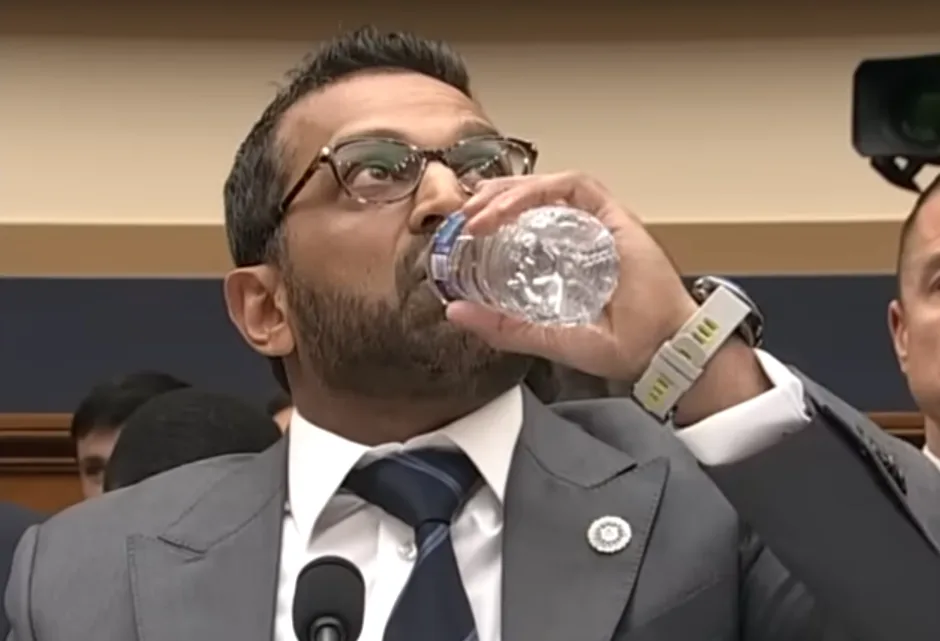
The Director of the FBI sued a magazine for defamation, and a federal judge has now responded by saying the Director misrepresented the magazine's argument, the court's own reasoning, and the legal standard that applies in his courthouse. That is a hell of a way to start a lawsuit you filed yourself. Judge Emmet Sullivan also froze most discovery, which means Kash Patel does not get to rummage through The Atlantic's reporting files while the court decides whether this case should exist at all.
A Sixteen-Page Smackdown
According to Axios, U.S. District Judge Emmet Sullivan ruled in favor of The Atlantic on Tuesday in Patel's defamation suit, and he did not bother dressing it up. "Plaintiff misrepresents Defendants' argument, the court's reasoning in Moldea, and the standard applicable in this District," Sullivan wrote in a 16-page ruling.
Read that sentence slowly. Three separate things, misrepresented. The other side's argument. The court's reasoning in a precedent. The legal standard governing the very courthouse where Patel chose to file. That is not a judge noting a minor disagreement over emphasis. That is a judge telling a plaintiff that his homework has been checked and it does not match the textbook.
Federal judges write in a register of studied politeness. "Misrepresents" is about as close as the genre gets to a slammed door.
What Freezing Discovery Actually Means
Discovery is the phase of a lawsuit where each side can demand documents, emails, notes, and testimony from the other. In a defamation case against a news outlet, that phase is where a plaintiff with a grudge and a budget can try to turn a lawsuit into a fishing expedition through a newsroom's files.
That is precisely what Sullivan's ruling blocks, at least for now. The Atlantic is shielded from demands for its reporting materials and confidential sources while the court considers throwing the whole case out. The order puts the legal horse back in front of the discovery cart: first decide whether there is a viable claim, then decide whether anyone gets to go digging.
For a magazine, this matters enormously. Sources talk to reporters because they trust that their names stay out of a federal plaintiff's hands. A lawsuit that could pry that trust open is not just a threat to one outlet. It is a message to every future whistleblower inside every agency that the person at the top might come looking.
The Moldea Problem
Sullivan specifically called out how Patel handled Moldea, a well-known D.C. Circuit defamation precedent that sits in the background of cases like this one. Without getting lost in the weeds, the Moldea line of cases is part of how courts in this District think about the protection afforded to published opinion and commentary, which is the kind of ground a news outlet stands on when it gets sued over a critical piece.
So here is the situation. The plaintiff leaned on a case, and the judge concluded the plaintiff described that case wrong. When you are suing a journalism outfit, the one thing you cannot afford is for the judge to decide you do not understand the law that governs your own claim.
This is not a ruling on the ultimate merits. Sullivan has not yet decided whether to dismiss. But a plaintiff who gets this kind of language at the discovery stage is walking into the next round with a limp.
The Director of the FBI, Personally Suing a Magazine
Step back and look at the shape of this thing. The man running the nation's top federal law enforcement agency filed a defamation suit against a news publication. Not a state official with a bruised ego. Not a private citizen with a reputation to protect. The sitting FBI Director, with the full gravity of that office attached to his name.
There is a reason powerful people are supposed to think hard before suing the press. The imbalance is baked in. They have the resources, the platform, and in this case a badge-shaped aura that makes every subpoena and every demand feel like it carries more weight than it should.
Defamation law exists so ordinary people can protect themselves from lies. It was never meant to be a pressure tool for those who hold the keys to the federal government's investigative machinery. When the plaintiff is the head of the FBI, the whole thing starts to look less like a legal grievance and more like a message.
What Happens Next
The case is not over. The court is still weighing whether to dismiss it entirely, and Sullivan's ruling on discovery is a procedural win for The Atlantic, not a final judgment. Patel can still try to salvage the claim.
But the early signals are not good for him. A judge who writes that a plaintiff misrepresented three distinct things in a single brief is a judge who is reading everything that plaintiff files with a skeptical eye. Every future citation will get double-checked. Every characterization of precedent will be held up against the actual text.
In the meantime, The Atlantic gets to keep its files closed, its sources protected, and its reporters reporting. That, more than any single line in the opinion, is the practical result of Tuesday's ruling.
The Dingo Take
You are being asked to believe that the head of the FBI, a man with the most powerful investigative apparatus on earth at his disposal, needed to sue a magazine to get his side of the story out. He has a podium. He has a press office. He has a federal agency's worth of platforms. Instead he picked a lawsuit, and a federal judge has now told him he got the law wrong.
Look at what the discovery fight was really about. Not who said what in print, but whether a government official gets to paw through a newsroom's confidential sources. That is the part that should keep you up at night. A plaintiff who wins a fishing license in a case like this does not need to win the lawsuit. The subpoena is the punishment.
Sullivan slammed that door for now. Good. But notice how easily it could have gone the other way, and how many outlets without The Atlantic's lawyers would have folded long before a judge ever got involved. The press is only free when it can afford to say no to the most powerful man in the room. Tuesday, one magazine could. Don't assume the next one will.


Comments