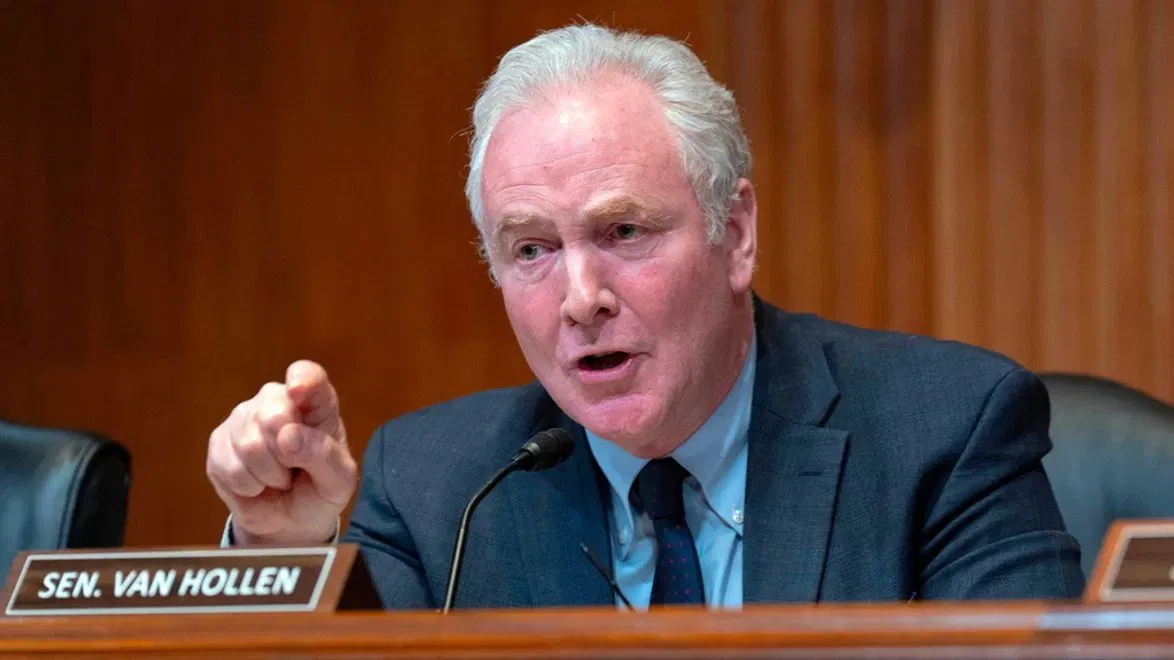
Democrats just flipped eight Senate seats and will walk into January with at least 55 senators, which by any normal standard means everyone gets a parade. Instead, Maryland Sen. Chris Van Hollen announced Thursday that he is challenging Chuck Schumer for the top job, per CNN. The party that just won big is now going to spend its victory lap arguing about who holds the steering wheel.
The Math Nobody Agrees On
The leadership vote is a closed-ballot affair set for December 1, and Schumer needs only a simple majority of his caucus to keep the gavel he has held since 2017. He says he already has it. "I have the votes to continue serving as Democratic Leader," he posted on X, adding that 55 seats and counting is "an amazing result."
Van Hollen says that's premature. He told MS NOW host Jen Psaki the race is "very much in flux" and that he has commitments from "more than 10" senators. He also admitted he's the "underdog," which is the most honest thing a politician has said out loud in months.
Here's the thing about a secret ballot: everyone gets to tell a reporter they're with you and then do whatever they want in the room. Several returning Democrats and most of the incoming freshmen have declined to publicly back Schumer. Declining to back the guy is not the same as voting against him, but it's not exactly a love letter either.
The Insurgent Is a 67-Year-Old Institutionalist
Let's appreciate the casting here. The anti-establishment standard-bearer is Chris Van Hollen, 67 years old, two decades in Congress, a former House Democratic assistant to the leader, and a former chair of both chambers' campaign arms. He is about as outsider as a lanyard.
But politics runs on contrast, and Van Hollen has earned his reputation with progressives the hard way. He flew to El Salvador to meet Kilmar Abrego Garcia, the Maryland resident who was mistakenly deported there, and drew the administration's fury for it. He has also called Benjamin Netanyahu a "wanted war criminal" and accused Israel's government of "ethnic cleansing" in Gaza, which in Democratic caucus terms is the equivalent of lighting a candle in a fireworks factory.
Abdul El-Sayed, the incoming Michigan senator, was the first to jump aboard. "He's willing to take risks when it matters," El-Sayed told NPR. Van Hollen was also the first Democratic senator to endorse El-Sayed in the Michigan primary, so this is less a mutual admiration society than a favor being returned with interest.
The Primary Grudge at the Center of It All
If you want the specific complaint, here it is. Van Hollen says Schumer and the Democratic Senatorial Campaign Committee meddled too much in Senate primaries this cycle. "We have two members in that room, newly elected senators, who would not be there if Schumer and the DSCC had had their way," he said Tuesday. He added that those members "sided with the crypto industry and AIPAC against these candidates."
That is a remarkable sentence to say about your own party's leader, in public, in the week after a landslide. It also explains why the freshman class is being so coy. Some of them won in spite of the leadership apparatus, and they remember who was on the other side.
Van Hollen's pledge is simple: stay out of primaries for open Senate seats, except in what he calls "very, very rare exceptions." Schumer, for his part, has spent years treating primaries like his personal quality-control department.
What Voters Actually Asked For
Van Hollen is framing his bid as a response to what he calls a "huge outburst of democracy" in the midterms. "The call was really to reject the status quo and to reject business as usual," he said. His pitch is to use the "full power" of the Senate to end the Iran war and lower the cost of living.
Schumer's camp has its own reading of the mandate. Sen. Angus King, the Maine independent who caucuses with Democrats, rushed out an endorsement praising Schumer's "aggressive plan for the new Democratic majority" and his "unique mastery of the Senate process." Schumer told reporters Tuesday there was "great unity" among Senate Democrats, a claim now being tested by a colleague running against him.
To be fair to Schumer, winning eight flips is a real résumé line. It's hard to argue the boss is failing when the scoreboard says 55. But liberals have complained for years that he doesn't fight Trump hard enough, and a big win doesn't erase a grudge. It just gives it a bigger room.
The 2028 Shadow Over Everything
Nobody in this fight is operating on a single timeline. Van Hollen told CNN on Saturday that seeking the leader job was "not my focus," noting he was also interested in running for president. By Thursday he was running for leader. That is what the kids call a pivot.
Schumer is 75 and may face a primary challenge in 2028 if he runs for reelection, potentially from Rep. Alexandria Ocasio-Cortez. So this December vote is not just about who runs the Senate caucus. It's a preview of an argument the party is going to keep having, about age, about Israel, about whether to fight or to manage.
Van Hollen's prospects look dim on paper. Schumer needs a majority, claims he has it, and has already collected an endorsement. But this is a secret ballot, and secret ballots are where confident predictions go to die.
The Dingo Take
"More than 10." That's how many Democratic senators Chris Van Hollen says are already with him, in a caucus that will have at least 55 members come January. It's not a number that scares a sitting leader. It's also not nothing, and Schumer's habit of insisting he has the votes before anyone has voted is the kind of confidence that tends to age like milk.
Here's what actually bothers us. Democrats just won a sweeping victory, and the first order of business is a leadership brawl with the Iran war and the cost of living still sitting right there on the table. Van Hollen is right that voters wanted change. Schumer is right that 55 seats is a hell of a number. Both of them are going to have to explain why the party's big moment is spent on an internal cage match.
We won't pretend to know who wins on December 1. Secret ballots are where senators go to say what they actually think, and a lot of them have been suspiciously quiet. If Schumer survives, he'd better start fighting like the voters who just handed him a majority expect. If he doesn't, Democrats will have picked a new leader because the old one couldn't stop picking fights with his own side.



Comments