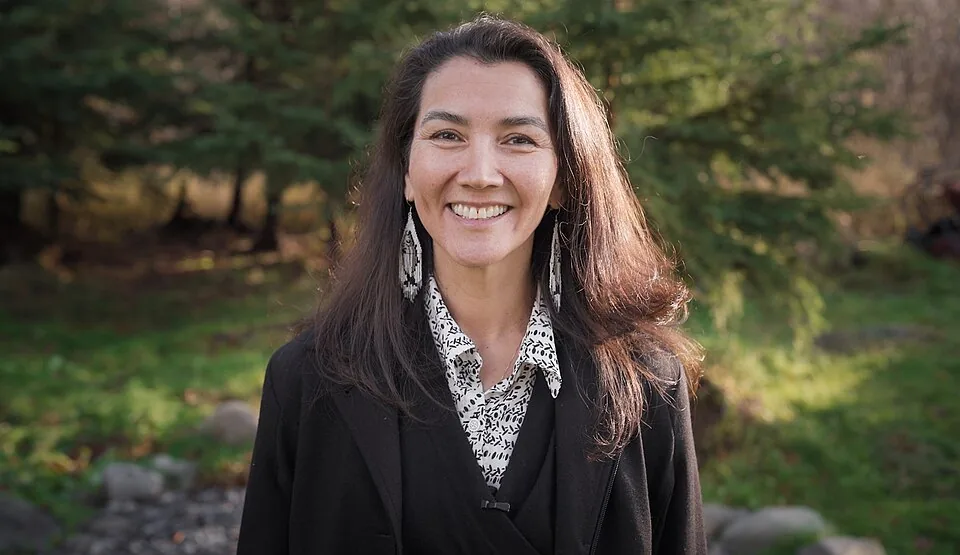
Every other Senate race in the country has been called. Alaska is the last one still hanging, and the guy who's behind is a two-term Republican incumbent whose spokesman is telling reporters, with a straight face, that they're "still waiting for every ballot to be counted." Mary Peltola leads Sen. Dan Sullivan by nearly four points, and the New York Times says she's on track to win.
Explain Like I'm 5 · 48-second video

Narrated and captioned. Made by The Dingo Daily from this article.
The Last Race Standing
Here's where things stand. Peltola, a Democrat and former congresswoman, had 49.8 percent of the vote in incomplete results as of Friday night. She led Sullivan by nearly four percentage points. A New York Times analysis found she is on track to eventually prevail.
This is the only Senate battle still uncalled in a midterm cycle the Times describes as featuring sweeping Democratic victories. Sweeping. Not narrow, not scrappy, not "a few bright spots." And then there's Alaska, sitting in the corner with its tally sheet, refusing to let anyone close the book.
The race is uncalled, but nobody is pretending the trend line is mysterious. Peltola widened her lead in the latest release. That's the direction the numbers are moving, and they're not moving toward the incumbent.
Why It's Taking So Long
Before anyone starts typing "rigged" into a social media box, let's walk through why Alaska is slow. It isn't a conspiracy. It's logistics, and the logistics are boring.
Part of the delay comes from the time the state allows for mail ballots to be received and counted. Alaska is enormous, remote, and full of places where a ballot doesn't exactly zip to the elections office by next-day air. Giving those ballots time to arrive and get counted is the whole point. Voters in a fishing village shouldn't have their voices dropped because the mail plane was grounded.
The other part is the state's ranked-choice system, which brings us to the part that's about to make a lot of people on cable news very confused.
Ranked-Choice, Briefly
Peltola and Sullivan didn't just face each other. They faced two other candidates after emerging from a nonpartisan primary in August. That's the Alaska system: everyone runs together in a primary, the top finishers advance, and the general election uses ranked-choice tabulation.
If neither candidate wins an outright majority, the race gets decided next week by ranked-choice tabulation. Last-place candidates drop off, their voters' next choices get reallocated, and the process repeats until someone clears the bar.
Peltola sits at 49.8 percent, which is a rounding error away from a majority. That doesn't guarantee she crosses the line in the first count, but it means the margin she'd need from reallocated votes is tiny, and the incumbent has a much steeper climb.
The Sullivan Camp Plays for Time
Sullivan's spokesman, Nate Adams, gave the statement you give when you're behind and don't want to say so. After the latest results dropped on Friday night, he said: "We're still waiting for every ballot to be counted. And we'll see what happens from there."
Look, that's not wrong. Counting every ballot is exactly what should happen. Nobody should be calling for ballots to be thrown out or for the process to be cut short. If Sullivan's team wants to wait for the full count, good. So does everyone else.
But notice the tone. There's no swagger, no claim that late ballots will rescue him, no confident prediction. It's the language of a campaign watching a lead it doesn't have get a little bigger every time the state hits refresh.
A Cycle That Went One Way
Zoom out for a second. This is a midterm cycle where Democrats racked up wins across the board, and Alaska was supposed to be one of the places the Republican incumbent could breathe easy. It's a deep-red state. Sullivan has served two terms.
Instead, he's trailing a former congresswoman in the one race the networks can't yet close. Peltola has run statewide in Alaska before and knows how to build a coalition in a place where the usual partisan assumptions don't always hold.
If she pulls this off, it'll be the cherry on a cycle that has already been a rough one for the party in power. The only suspense left is whether it takes one round of counting or the ranked-choice math next week.
The Dingo Take
Sullivan is losing. The numbers say it, the Times analysis says it, and his own spokesman's non-answer says it louder than any press release could.
The delay isn't a scandal. It's a big, remote state counting mail ballots and running a ranked-choice system that its own voters chose. If you're tempted to see something sinister in the wait, remember that the people most likely to benefit from the wait are the ones currently ahead. Nobody stalls a count they're winning. They stall it when they're praying for a miracle.
So here's the move: let them count. Every ballot, every round, every reallocation. If Peltola gets there, and the math says she's headed that way, she gets there clean. And a two-term incumbent in a red state finds out what the rest of the map already learned this cycle.




Comments