Twenty-four hours after Donald Trump sat down with Vladimir Putin in Shenzhen and greeted him as a friend, Russian missiles and a drone crossed into NATO territory in southeast Poland. Polish Prime Minister Donald Tusk called it "an intentional provocation" of the alliance, while Russia launched more than 400 drones and 110 missiles at Ukraine in one of the largest attacks of the war.
Explain Like I'm 5 · 37-second video

Narrated and captioned. Made by The Dingo Daily from this article.
Two Missiles, One Drone, and a Whole Lot of Nerve
Here are the facts, per CBS News. Poland's defense minister said three Russian weapons, believed to be two missiles and a drone, entered Polish airspace in the southeast on Friday. Fighter jets scrambled. Patriot batteries lit up. Nobody was hurt, which is the only reason this is a tense news story and not a historic catastrophe.
Poland is a NATO member. That matters because of Article 5, the clause that says an attack on one of the 32 allies is an attack on all of them. Nobody is saying that button has been pushed. But Russian munitions landing on the soil of a country the alliance is sworn to defend is the kind of thing that used to get everyone's full attention.
Tusk did not hedge. "We know that what landed on Polish soil came from Russia," he said, adding that his NATO partners share his assessment: "it does not look like an accident." When the prime minister of the country being buzzed tells you it wasn't a navigation error, believe him.
The Timing Is Not Subtle
Drones have wandered into Polish and other NATO airspace repeatedly since the full-scale invasion began in February 2022, so a stray weapon alone wouldn't be unprecedented. The location and timing are what make this one ugly.
Thousands of troops from 11 European countries in the Coalition of the Willing are currently in Poland for a major exercise, framed as training for a possible post-war mission in Ukraine. The weapons landed about 60 miles west of the Ukrainian border, in the same region. Polish Defense Minister Władysław Kosiniak-Kamysz said it is "hard to regard it as a coincidence" that the violation lines up with those drills in both time and place.
That reads less like a fluke and more like a message. Russia is telling the countries rehearsing for a future in Ukraine that it knows exactly where they are standing.
The Biggest Barrage Hits While Trump's Handshake Is Still Warm
Zelenskyy said Russia fired more than 400 drones and 110 missiles at Ukraine overnight, including cluster munitions, calling it one of the largest attacks since the war began. At least eight people were killed and more than two dozen wounded across Kyiv and nine other regions, according to Ukrainian Prime Minister Serhii Koretskyi.
The targets were not military bunkers. Bridges in the capital, a water supply facility, office buildings, a hospital in Kharkiv, residential buildings from Sumy to Lviv, and energy infrastructure all took hits. Some nuclear plants had to reduce power generation. Russian weapons also struck the Austrian embassy and landed near the Netherlands embassy in Kyiv, which is why France demanded a UN Security Council meeting.
Zelenskyy also described the tactics as "particularly vile." The missiles came in waves with 20 to 30 minute pauses, timed to make it harder to put out fires and dig people out of the rubble. That is not collateral damage. That is a design choice.
Ukraine Is Out of Interceptors, and Everyone Knows It
Ukraine shot down 79 of the 110 missiles. It stopped none of the 27 ballistic missiles. Zelenskyy blames a shortage of interceptors, and he says he has spent months begging the Trump administration to help restock them, warning that the gap is being paid for in civilian lives.
Sit with that for a second. The country being bombed has told Washington, plainly and repeatedly, what would save lives. The missiles with no answer are the ones that kill people in apartment buildings. Eight people are dead this morning, and the interceptor shortage is not a mystery or a surprise. It is a known problem with a known fix.
What Trump Got for Calling Putin a Friend
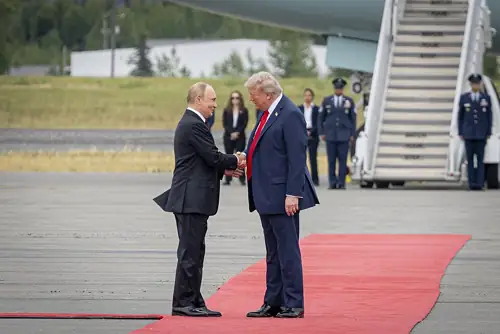
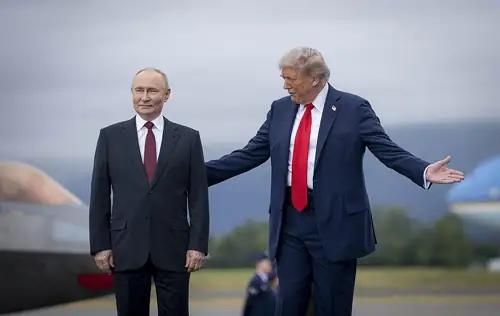
Trump met Xi Jinping and Putin on Thursday in Shenzhen, China, greeted Putin warmly, and called him his friend. The 90-minute meeting, which CBS described as having achieved little, covered the Ukraine war, which Trump has long said he wants to end through negotiations.
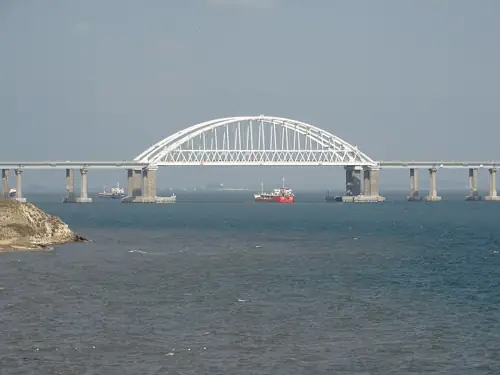
Within hours, Putin ruled out direct talks with Kyiv, citing a Ukrainian strike earlier this week that badly damaged the bridge linking Russia to occupied Crimea. "We will respond to these strikes," Putin said. "I want everyone to know this. I believe that our retaliatory actions will be far more painful than what the Kiev regime did to the bridge."
Then came the response. More than 500 weapons into Ukraine, and a few into a NATO country for good measure. Zelenskyy said Putin's attempt to "redraw the world" at that summit was a failure and that Russia is compensating for its "military and diplomatic impotence" with terror. He may be right about the failure. The dead in Ukraine still don't care how the summit scored.
NATO Responds the Way NATO Responds
The alliance did the standard things. Polish F-16s, Swedish Gripens, and a Dutch refueling tanker went up. Ground-based air defenses across the alliance were alerted. NATO Secretary General Mark Rutte spoke with Tusk, called the airspace violations grave, and said the incident is "clearly dangerous" and a consequence of Russia's war. He promised solidarity and a continued effort to "deter and defend."
Poland's investigation is ongoing, and NATO's top commander in Europe, U.S. Air Force Gen. Alexus Grynkewich, is in close contact with Polish defense leaders. All of that is appropriate. It is also the same measured language we have been hearing for four years while the strikes keep getting bigger.
The Dingo Take
Thursday: the president of the United States sits across from Vladimir Putin in China, grins, and calls him a friend. Friday: Russian weapons land inside a NATO country and the largest air assault in months pounds Ukraine. That is a twenty-four hour turnaround on the value of Putin's goodwill, and it should embarrass anyone who thought a warm handshake was a strategy.
Trump has spent years promising he can end this war by talking to the guy who keeps starting new chapters of it. The meeting produced nothing, Putin walked out and declared there would be no direct talks, and then the missiles flew. Meanwhile Ukraine has been asking for interceptors for months, and the ballistic missiles that no one can stop are the ones doing the worst damage. You do not need a foreign policy degree to connect those dots.
Poland and its allies are handling this with more steadiness than the situation seems to deserve. But steadiness is not a plan either. If Russian missiles keep landing in NATO countries and the response is always a strongly worded statement and a few jets in the air, Putin will keep learning exactly how much each escalation costs him. Right now the answer looks like very little.

Comments