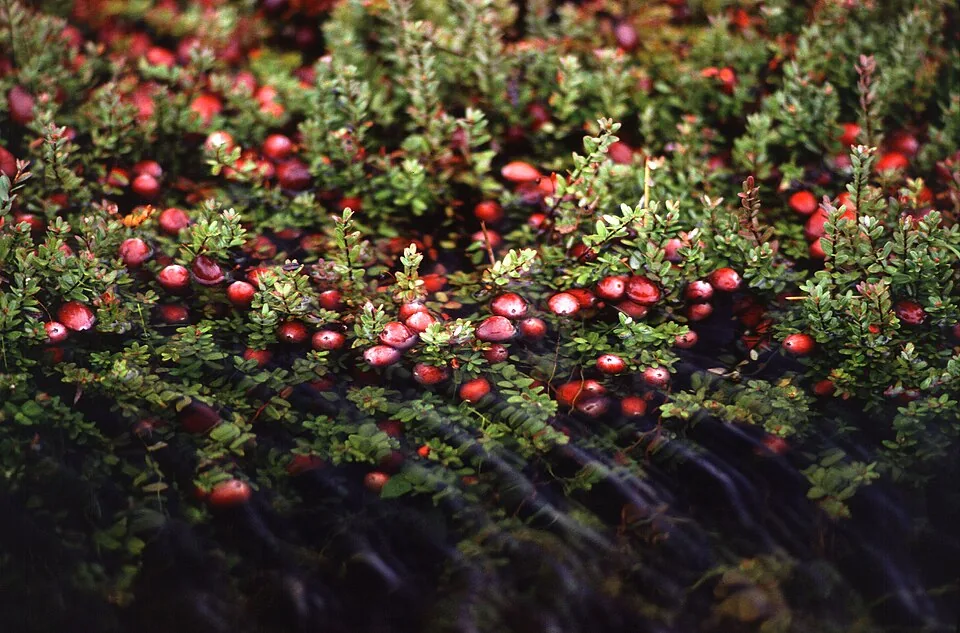
The cranberry, one of the few fruits native to North America and the quivering red cylinder on your Thanksgiving table, is now literally cooking on the vine. Heatwaves are scalding berries before harvest, humid rains are rotting them, and warming winters are stripping away the ice that protects the plants. According to The Guardian, scientists are racing to breed new varieties that can survive the planet we've built for them.
Explain Like I'm 5 · 50-second video

Narrated and captioned. Made by The Dingo Daily from this article.
The Berry That Bakes Before You Can Pick It
Start in Massachusetts and New Jersey, where record-breaking summer heatwaves are triggering something called fruit scalding. That is a polite agricultural term for berries baking on the vine before anyone gets a chance to harvest them. Imagine spending a year tending a crop, only to have the sun finish it off like a forgotten casserole.
The heat is only half the problem. Heavy rainfall and rising humidity during the growing season create stagnant, moisture-rich conditions that fungal pathogens absolutely love. The result is crop rot, and the reporting describes it as devastating. So the berries get cooked from above and rotted from below. Nature is running a two-front war on a fruit that mostly just wants to be sauce.
Wisconsin's Ice Blanket Is Melting
Wisconsin grows more than 60% of the nation's cranberries, so what happens there matters to everyone who has ever opened a can with ridges on it. Growers there protect their vines through winter by spraying water over them and building up several inches of ice, a natural thermal blanket against bitter cold and damaging wind.
That system depends on winter being cold and staying cold. It increasingly isn't. Data from Climate Central shows winters in the upper Midwest are among the fastest-warming in the nation, and cranberry-growing regions now see an average of 14 more warm winter days than they did in 1970. That triggers erratic cycles of thawing and freezing.
Amaya Atucha, a fruit scientist at the University of Wisconsin-Madison, pointed to recent years when unusually warm February temperatures melted the protective ice sheets early. Then came sudden deep freezes. The vines were left standing there with no blanket and no warning. "If you don't protect them, they do get cold damage," she said.
Checking the Weather Ten Times a Day
Nicole Hansen has farmed cranberries in Wisconsin for nearly three decades. She told The Guardian she checks the weather five to 10 times a day, "because everything we do is controlled by the weather." Think about what that means. A professional with 30 years of experience is refreshing a forecast like a teenager waiting on a text, because the rules she learned no longer hold.
Her operation is a choreographed mix of machines and manual labor. At harvest, the beds are flooded, specialized machines shake the fruit loose, and the buoyant berries float to the surface to be corralled. Contrary to popular belief, cranberries don't actually grow underwater. They grow on low-lying vines in dry soil. The flooding is just how you get them out. It's a beautiful system, and it's built on a climate that is currently being renegotiated without her input.
Scientists Are Using AI to Breed a Tougher Berry
The response, so far, is adaptation. Researchers are using artificial intelligence to identify and breed new, resilient cranberry varieties that can withstand extreme weather and disease. Growers are bringing in drones to apply fertilizer precisely and to monitor temperatures across their marshes and bogs.
This is genuinely clever work, and the people doing it deserve credit. Breeding a hardier fruit is exactly the kind of problem-solving we should want. "When you have a system that works and then out of nowhere you change the rules of the game, then you need to adjust," Atucha said.
But notice who is doing the adjusting. It's the scientists and the farmers, the people who did the least to cause any of this, scrambling to engineer around a problem someone else created.
Who Changed the Rules, Exactly?
"Out of nowhere" is a generous phrase, and it comes from a scientist being diplomatic. The rules didn't change out of nowhere. The Guardian is clear that the erratic weather hitting growers is driven in large part by the human-caused climate crisis. This was predicted, modeled, and warned about for decades.
The cranberry is a small, almost silly example, which is exactly why it works. You can wave off a melting glacier as far away. It's harder to wave off the thing on your table next to the turkey. When a holiday staple needs AI and drones to survive, the abstract has become very concrete.
The Dingo Take
Berries are cooking on the vine in Massachusetts. Ice blankets are melting in Wisconsin. Scientists are deploying artificial intelligence to design a fruit that can survive the weather we gave it. Anyone who still thinks climate change is a problem for polar bears and coastal property owners should have to explain it to a cranberry farmer.
Here's the thing. The farmers and researchers in this story are doing the grown-up work. They are adapting, innovating, and checking a forecast ten times a day because nobody else is going to save the crop. Hansen, still wading into a marsh on a perfect autumn morning, still calling it a great way to raise a family, is about the most admirable person in this story. She shouldn't have to be this resilient.
Adaptation is necessary. It is also not a plan. You cannot breed your way out of a warming planet one fruit at a time, and a policy of "the farmers will figure it out" is not a policy. So enjoy the cranberry sauce this Thursday. Appreciate it. It is currently fighting for its life, and it didn't start the fire.



Comments