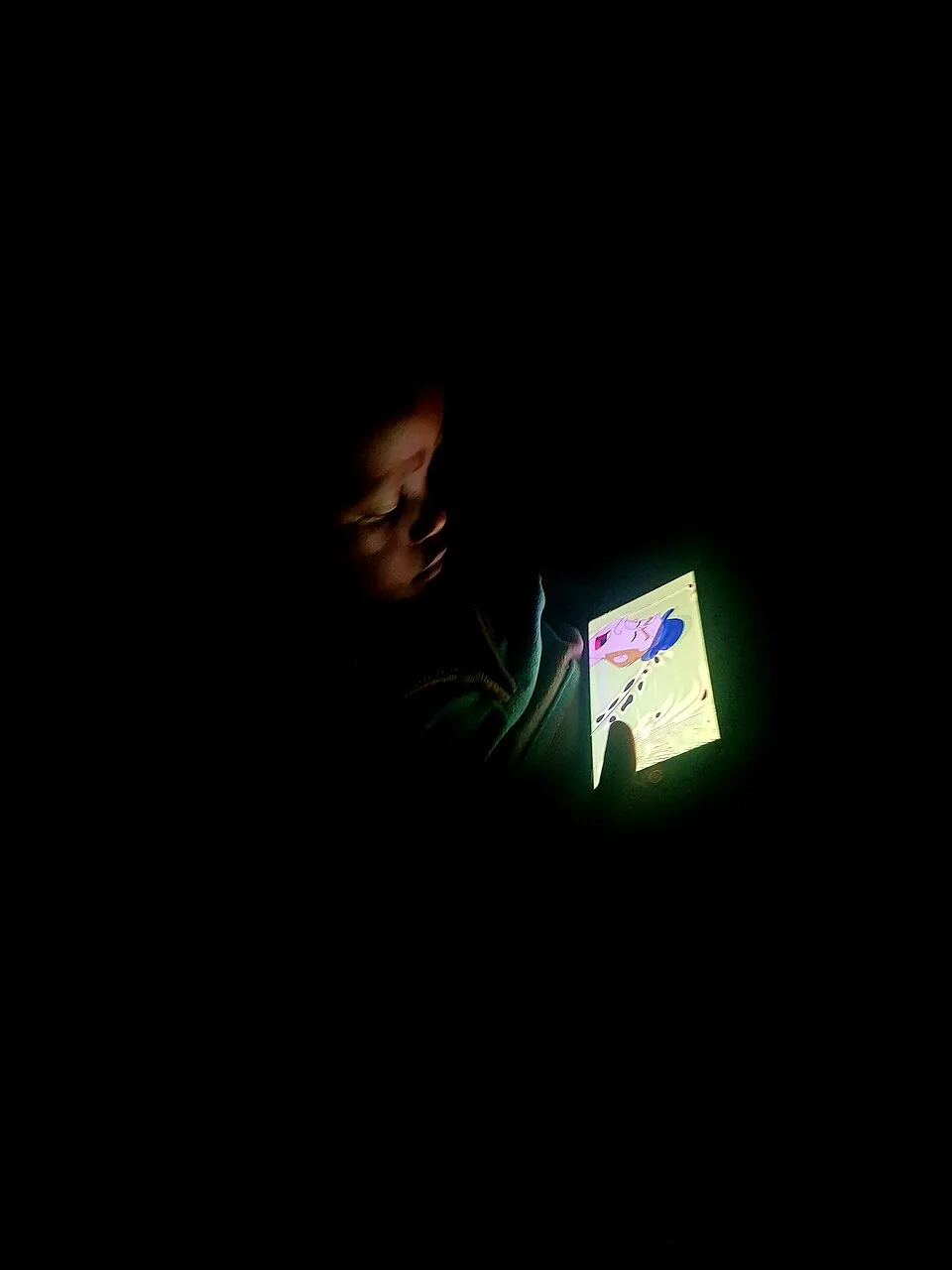
Researchers followed 502 children from age 1 to 8 and found that screen time during infancy and right around the start of elementary school tracked with worse academic performance at 9 and weaker working memory at 10.5. Two ages stood out: 1 and 6. If you have ever handed a toddler a tablet so you could finish one (1) email, this one is going to sting a little.
Explain Like I'm 5 · 37-second video

Narrated and captioned. Made by The Dingo Daily from this article.
The Study Followed Real Kids for Real Years
The research comes from Inserm and the National University of Singapore, published in the World Journal of Pediatrics and relayed by ScienceDaily. It draws on 502 children in the Growing Up in Singapore Towards healthy Outcomes birth cohort, which goes by the extremely tortured acronym GUSTO. Someone really wanted that acronym.
Parents reported their kids' screen habits at six different points between infancy and middle childhood. Years later, the researchers measured how those kids did academically and how well their working memory held up.
That design matters. A lot of earlier screen time research looked at children at a single moment, or only at kids already in school, or never bothered to track habits across early childhood. That is part of why the field has been such a swamp of contradictory headlines. Following the same kids over time is how you start untangling it.
Why Ages 1 and 6 Keep Popping Up
Here is the strange part. More screen time at age 1 was associated with worse outcomes later. Screen time at ages 2 and 3 showed no significant links. Then the associations came roaring back at age 6, right when formal schooling starts.
The authors said the effect sizes at age 1 were the largest of any time point they examined. They described infancy as a window of heightened sensitivity, when the developing brain is especially vulnerable to screens crowding out learning interactions. They also said they were surprised by the age 6 rebound, and that it means screen use later in childhood still matters.
So no, you do not get to coast through the toddler years and assume the damage window closed. The study suggests developmental needs keep shifting well past the diaper stage, and so do the risks.
What Working Memory Actually Does
Working memory sounds like jargon, so here is the plain version. It is the brain's ability to hold information in your head and do something with it. Following a teacher's instructions. Solving a math problem. Understanding a sentence while you are still reading the end of it.
A kid with weaker working memory has a harder time with all of it, all day, every day. This is not a nice-to-have skill. It is the load-bearing wall of learning.
The study found weaker working memory at age 10.5 among kids with more screen exposure during those two sensitive windows. Years after the screen habit formed, the gap was still showing up.
The Likely Culprit Is What Screens Replace
The researchers point to a plausible mechanism, and it is not that screens emit some mystical brain-rot ray. It is displacement. Every hour a baby spends staring at a glowing rectangle is an hour not spent talking with a caregiver, playing pretend, or mashing their hands into the physical world to see what happens.
Those are the experiences that build language, attention, memory, and problem-solving. A screen can sit in the corner of that process. It cannot do the job of a human being babbling back at you.
This is also why the authors say future work needs to look at the quality of content, the types of devices, and whether parents watch and interact with kids during screen time. A show you watch together and talk about is not the same as a tablet propped against the stroller.
Before Anyone Panics, the Caveats
We are going to be straight with you, because the facts are non-negotiable around here. This study shows associations, not proof of cause. The researchers say so themselves. Screen time may be driving worse outcomes, or something else about those households may be doing it, and the data cannot fully separate the two.
The authors also note that one extra hour of daily screen viewing probably will not produce a noticeable difference in any individual child. The point is about populations. Shift the average a little across millions of kids and you get more children struggling than you otherwise would.
That is the real takeaway. Their principle is that less is better, and the guidance already exists. The World Health Organization and the American Academy of Pediatrics generally recommend avoiding screens for the first 18 to 24 months and keeping it under an hour a day for ages 2 to 5. Many young kids blow well past that.
The Dingo Take
Who exactly is supposed to enforce a screen limit on a one-year-old when the parent is exhausted, underpaid, and holding the only device that buys them twenty minutes of peace? That is the question this study dumps in your lap, and it is a lot less comfortable than a lecture about iPads.
Because the guidance is not new. Avoid screens early, keep them under an hour for the preschool years. Everyone has heard it. Plenty of families ignore it, and a lot of them are not ignoring it out of laziness. Childcare costs a fortune, work does not bend, and a glowing screen is the cheapest babysitter on earth. Telling parents to do better without fixing any of that is telling them to feel guilty on a budget.
Still, the findings are worth taking seriously, with the usual honesty about what they cannot prove. Two windows, infancy and the start of school, look like the moments where it counts most. Talk to the baby. Put the tablet down at the dinner table. Watch the show with your kid instead of next to them. None of this is dramatic, and none of it costs money, which is exactly why it will be ignored right up until someone figures out how to sell it as a subscription.





Comments