Amanda Smith, a 36-year-old nurse and mother from London, Ontario, has not taken an insulin injection in nearly two years. Not because her Type 1 diabetes went away. Because she received a single infusion of lab-grown cells that now do the job her pancreas stopped doing years ago. According to Science Aim, ten out of twelve patients in the same trial got the same result.
What Actually Happened in That Trial
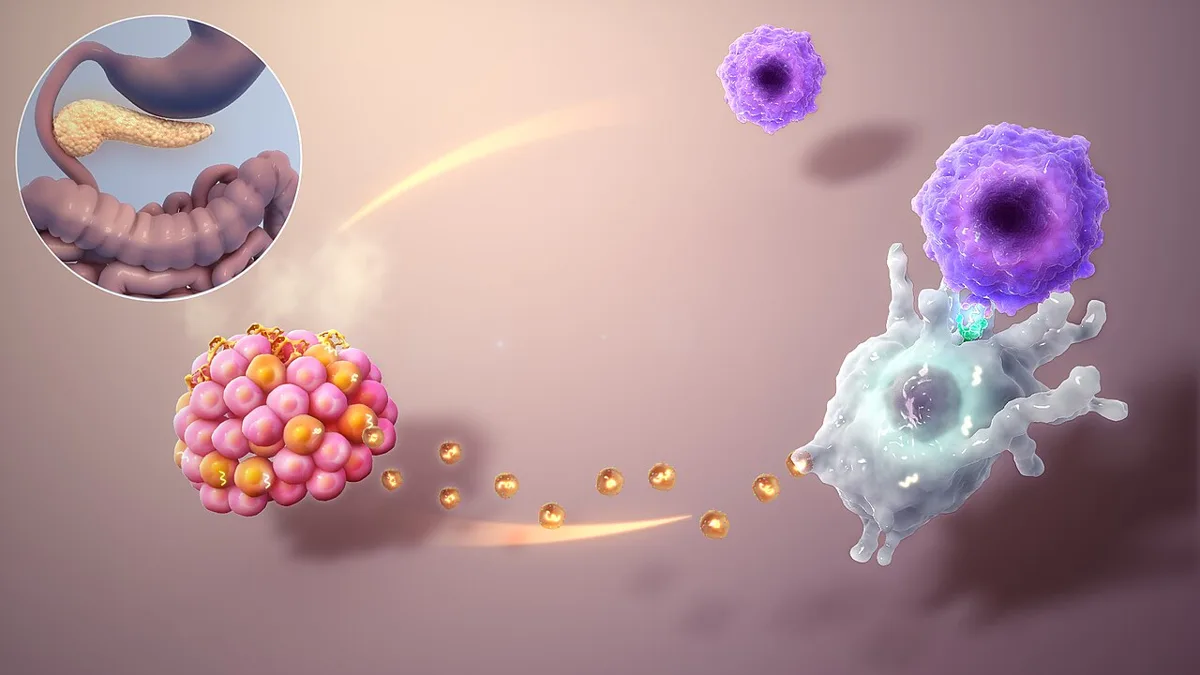
The study, called the FORWARD-101 trial, was published in the New England Journal of Medicine and presented at the American Diabetes Association's 85th Scientific Sessions in Chicago. Vertex Pharmaceuticals developed the therapy, which they call zimislecel. Researchers gave participants a single infusion of 0.8 billion lab-manufactured pancreatic islet cells, the same type of cells a healthy pancreas uses to produce insulin in response to rising blood sugar.
Those cells were delivered directly into the portal vein, the large vessel that carries blood from the gut to the liver, where they were expected to settle in and start working. All twelve participants in the full-dose group showed successful engraftment. The cells took up residence and began producing insulin the way the body is actually supposed to produce it, rising when blood sugar rises and falling when it comes down.
At the one-year mark, ten of the twelve patients, 83%, were completely off exogenous insulin. The other two still needed some, but saw a dramatic reduction. Across the entire group, the mean daily insulin dose dropped by 92%. Every single participant achieved an HbA1c below 7%, which is the standard clinical target for good blood sugar control, and kept their blood sugar in the healthy range for at least 70% of each day.
The Part That Should Stop You Cold
This was not a trial of people with garden-variety Type 1 diabetes. These twelve participants had long-standing, hard-to-manage cases. They had all experienced at least two severe hypoglycemic events in the year before enrolling, sudden dangerous crashes in blood sugar that can cause seizures, loss of consciousness, or death. This is the population that lives in constant fear of collapsing without warning.
From day 90 onward, not one participant experienced another severe hypoglycemic event. Not one. For people whose daily lives were organized around the threat of sudden collapse, that outcome is not just a clinical data point. It is a completely different existence.
"I remember being scared and excited, and it's history now," Smith told researchers of the day she stopped taking insulin, August 1, nearly two years ago. She was a nurse. She knew what the numbers meant. She knew exactly how strange it was to put the insulin away.
This Idea Is Actually 25 Years Old
Here is something the breathless coverage of this story tends to skip: the science behind zimislecel did not arrive from nowhere. Its roots go back to Canada in the late 1990s, when researchers in Alberta developed what became known as the Edmonton Protocol. That technique took insulin-producing islet cells from deceased organ donors and transplanted them into people with severe Type 1 diabetes.
It worked remarkably well. According to the University of Alberta, more than 2,500 patients worldwide were treated using that method, and roughly 80% were able to stop insulin injections entirely, at least for a period of time. The Edmonton Protocol was proof of concept. It showed clearly that the body could accept transplanted islet cells and put them to work.
But it hit a wall it could never get past. Two or three donor pancreases were typically required to treat a single patient. Donor pancreases are not something you can manufacture. There were never enough, and there never would be. The Edmonton Protocol was a door opened just wide enough to see what was on the other side, with no way through for most people who needed it.
Why This Time Is Different
Zimislecel is what is called an allogeneic therapy. The cells do not come from a donor's body. They are grown in a laboratory from pluripotent stem cells, which are cells capable of becoming virtually any cell type in the human body. Researchers guided those stem cells to become fully differentiated pancreatic islet cells. Manufactured. Reproducible. Not dependent on a waiting list or a matching donor.
That is the piece that changes the math entirely. The Edmonton Protocol could never scale because human pancreases are finite. A lab-grown cell therapy, if it works at this level of consistency, can in principle be manufactured to meet demand. The supply constraint that killed the Edmonton Protocol's potential does not apply here in the same way.
All participants did receive immunosuppressive therapy alongside the infusion, which is not a trivial thing. Type 1 diabetes is an autoimmune condition, meaning the immune system already destroyed the body's original insulin-producing cells. Without suppression, it would do the same to the new ones. That means trading daily insulin management for daily immunosuppression, a real tradeoff with real risks, including higher susceptibility to infection and certain cancers. Two participants died during the study period, though researchers determined both deaths were unrelated to zimislecel and consistent with long-standing diabetes complications. The therapy's overall safety profile was otherwise in line with what is expected from the procedure and the immunosuppression regimen.
Where Things Stand Right Now
The FORWARD-101 study is a Phase 1/2 trial with twelve participants in the full-dose group. That is a small number. It is important to say that clearly. This is not an approved treatment. It has not been tested at scale. We do not know what five years of follow-up will look like for these patients, though the trial is designed to run that long.
What we do know is that the results were consistent and striking enough to get presented at the American Diabetes Association's flagship scientific conference and published in the New England Journal of Medicine simultaneously, which is not how journals treat preliminary noise. The global medical community sat up and paid attention at once.
Vertex Pharmaceuticals is continuing the trial. The five-year follow-up data will matter enormously. What happens to engraftment over time, whether immunosuppression requirements change, what the long-term safety picture looks like with a larger population, all of that is still being worked out. But the one-year data is what it is, and what it is happens to be extraordinary.
The Dingo Take
Let's be honest about what kind of news story this is. We are drowning in a daily flood of political catastrophe, institutional rot, and manufactured outrage, and somewhere in the middle of all of it, a nurse in London, Ontario, quietly stopped needing insulin because scientists figured out how to grow the cells her immune system destroyed. Amanda Smith has been insulin-free for two years. Her pancreas did not heal. A laboratory built her a replacement for the part that broke. That is not a metaphor. That actually happened.
The media environment we live in is genuinely terrible at covering science news. Stories like this get one day of breathless headlines and then disappear under the next political fire drill, which means most people will never understand what the Edmonton Protocol was, why zimislecel is different, or why the manufacturing piece is actually the whole story. The Edmonton Protocol showed this could work over two decades ago. The problem was always supply. You cannot grow a donor pancreas. You can, apparently, grow the cells you actually need in a lab. That distinction is everything.
This is still early. Twelve patients is not a population. Immunosuppression is not nothing. The five-year data will tell us far more than the one-year data does. But if you have been watching medical research long enough to know how rarely something this clean comes out of a Phase 1/2 trial, you understand why Chicago's convention center got very quiet when these numbers went up on the screen. Pay attention to this one.



Comments