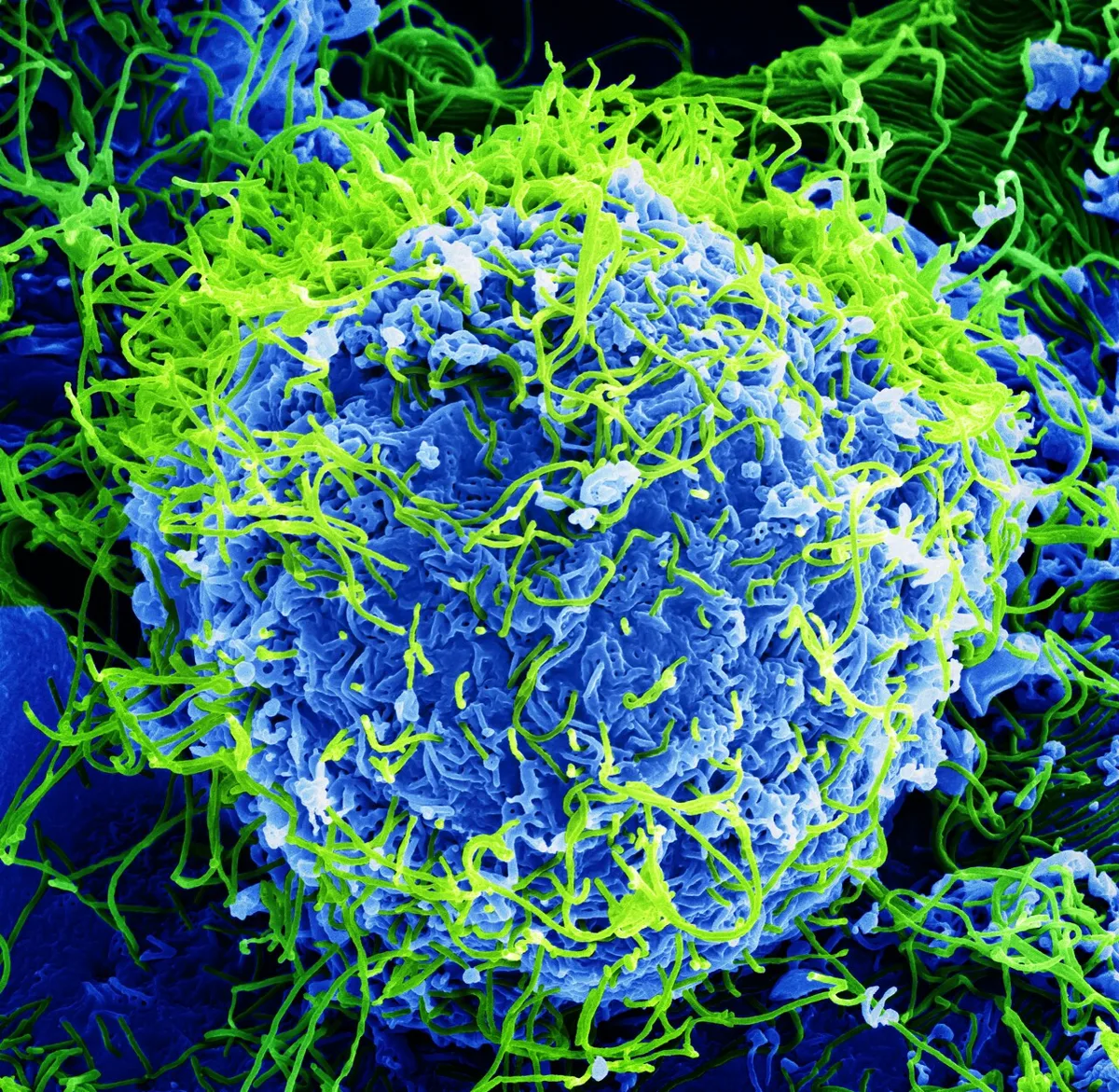
At least 140 people are dead from an Ebola outbreak in the Democratic Republic of Congo, and that number is almost certainly an undercount. Aid agencies are scrambling to get help to overwhelmed health workers on the ground. The New York Times is reporting that the true toll may be significantly higher than what official figures are capturing.
What We Know, and What We Don't
Here's the thing about outbreak numbers in conflict-affected, under-resourced regions: they are always a floor, never a ceiling. The New York Times reports the confirmed death toll stands at at least 140, but in a country the size of Western Europe with fractured health infrastructure and active armed conflict in its eastern territories, confirmed means very little. People die in villages where no health worker ever arrives to record it.
Ebola is not a new story in Congo. The country has suffered more Ebola outbreaks than any other nation on earth, including a catastrophic 2018-2020 outbreak in the northeast that killed over 2,200 people and became the second-deadliest Ebola epidemic in recorded history. Congolese health workers and communities have been living with this threat, on and off, for decades. The outside world tends to notice only when the death count gets high enough to break through the algorithm.
Health Workers Are the First Line and the First Victims
Aid agencies are racing to support health workers in Congo right now, according to the Times. That framing matters. Health workers are the most exposed people in any Ebola outbreak. They are the ones drawing blood, inserting IVs, holding the hands of dying patients. Without proper protective equipment, without training, without enough staff to rotate through the brutal physical and psychological demands of Ebola care, they die too. And when health workers die, the system collapses faster than the virus spreads.
This is the cruel math of outbreak response in under-resourced settings. You need trained people to contain the virus. The virus kills trained people. Aid agencies trying to plug that gap are working against a clock that started ticking weeks or months before the international community showed up.
Why the True Toll Is Almost Certainly Much Worse
When the Times notes that the true death toll "may be far higher" than 140, that is not hedging. That is how epidemiology works in places like eastern Congo. Surveillance systems require roads, communication networks, trust in government institutions, and enough health workers to actually go find cases. Congo has none of those things in reliable supply across its entire territory.
People who die at home, in remote villages, in areas controlled by armed groups, in communities that have learned to distrust outside health interventions after years of being failed by them, do not get counted. The 140 figure is what managed to surface. The real number is sitting in the dark.
The Global Attention Economy Is Not Covering Itself in Glory Here
As of this writing, an Ebola outbreak killing people at an accelerating pace in one of the world's most vulnerable countries is not exactly dominating cable news chyrons or social media feeds in the West. This is not an accident. It is a pattern. Outbreaks in Africa get serious international attention when they threaten to become global threats, and not a moment before.
The 2014-2016 West Africa Ebola epidemic, which killed more than 11,000 people, only triggered a genuine international emergency response after cases appeared in the United States and Europe. Before that, for months, it burned through Guinea, Sierra Leone, and Liberia while the global response remained sluggish and underfunded. We do not seem to have learned much.
What an Actual Response Looks Like
Containing Ebola requires contact tracing at scale, safe and dignified burial practices, community trust built through respectful engagement, medical countermeasures including vaccines and treatments, and enough money and personnel to sustain all of that for months. The tools exist. The rVSV-ZEBOV vaccine, marketed as Ervebo, has been shown to be highly effective against the Zaire strain of Ebola. Treatments like mAb114 and REGN-EB3 have significantly reduced mortality when administered early.
The question is never whether we know how to fight Ebola. It is whether the international community will fund and staff a response at the speed and scale the situation demands, before the numbers get too large to ignore. Given current trajectories of foreign aid cuts across Western governments, including brutal reductions to USAID under the Trump administration that have gutted global health emergency capacity, the answer to that question is not reassuring.
The Dingo Take
One hundred and forty confirmed dead, an undercount by definition, in a country that has been through this nightmare more times than any nation should have to endure. The Democratic Republic of Congo does not have a shortage of suffering. It has a shortage of the world giving a damn on a consistent basis rather than in sporadic bursts of crisis-driven attention.
The Trump administration has spent the better part of 2025 and 2026 systematically dismantling the United States government's capacity to respond to exactly this kind of situation. USAID has been gutted. Global health funding has been slashed. The people whose entire professional lives were devoted to detecting and containing outbreaks before they become catastrophes have been fired or defunded. We are not ready for what comes next, and 'what comes next' is already happening in Congo right now.
This is the part where we are supposed to say something hopeful. We do not have anything hopeful. We have 140 confirmed dead, a true toll that is higher, health workers dying alongside their patients, and an international community that is less equipped to respond to this than it was two years ago. Pay attention. Tell people. That is the whole ask.

Comments