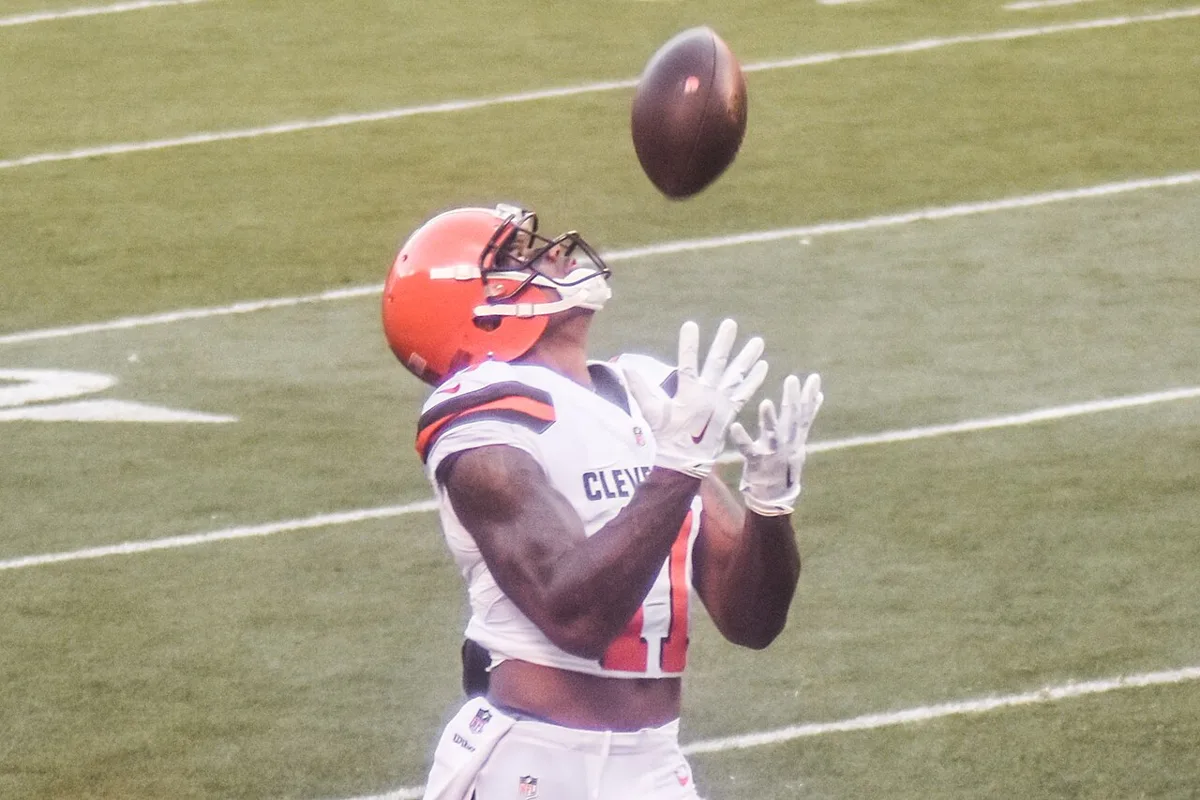
Here's a sentence you don't want written about you: police pulled you over, noticed you were lying in the backseat breathing heavy in an 'odd' manner, spotted a rifle on the floor, and then watched drugs fall out of your wallet while you were looking for your concealed carry permit. That is, according to WPXI citing a criminal complaint, exactly what happened to former NFL receiver Terrelle Pryor on May 24th in Pennsylvania.
The Stop, The Rifle, The Wallet, The Powder
Pennsylvania police pulled over a black Mercedes with tinted windows for speeding. Standard enough. What they found inside was considerably less standard.
Pryor, 36, was a back-seat passenger, and according to WPXI's reporting on the criminal complaint, he was lying there in a way police described as 'odd,' breathing heavily. That alone gets your attention. Then there was the rifle on the floor of the car.
When Pryor went to dig out his concealed carry permit from his wallet, he allegedly also surfaced a bag of white powder that police believe was MDMA. The New York Post reports he was charged with drug possession. It is genuinely hard to think of a worse sequence of events to set off during a routine traffic stop.
A Career That Started With Real Promise
To understand the full weight of where Pryor is now, you have to remember where he started. He was a legitimate phenomenon at Ohio State, a quarterback with size and speed that most programs would have killed for. He left the program rather than serve a suspension for selling memorabilia and trading autographs for tattoos, which, as the New York Post points out, happened in the era before NIL deals existed. The punishment aged poorly the moment college athletes started signing endorsement contracts.
He went in the third round of the 2011 NFL Supplemental Draft, bounced around as a backup quarterback with the Raiders for three seasons, and then found a second life when the Browns converted him to wide receiver in 2016. That first season as a receiver he put up over 1,000 yards. Legitimately impressive. The kind of reinvention story that gets written up as inspiration.
It did not last. He played his final NFL games in 2018, splitting time between the Jets and Bills. Eight games total. That was it.
The Years Since Have Been Rough
The post-NFL chapter for Pryor has been genuinely grim. In 2019, the New York Post reports, he was both stabbed and arrested following a domestic incident. Those two things happening in the same episode tells you something about the chaos involved.
Two years after that, he faced charges of simple assault, harassment, and damaging property. And now, in May 2026, a speeding stop produces a rifle, heavy breathing in the backseat, and MDMA falling out in front of a police officer during a permit check.
That is three serious law enforcement encounters in roughly seven years. The pattern is hard to look away from.
The NIL Thing Is Worth Sitting With for a Second
It probably gets lost in the noise here, but the context around why Pryor left Ohio State deserves a moment. He was suspended for selling his own memorabilia and trading autographs for tattoos. That is it. That was the infraction that derailed his college career and sent him into a supplemental draft instead of a traditional one.
College athletes today can monetize their name, image, and likeness freely and legally. Pryor did what was essentially the same thing a decade before the rules caught up, and he paid a real professional price for it. That does not excuse anything that has happened since. But it is worth knowing that the thing that first knocked his trajectory sideways would not even raise an eyebrow today.
The Dingo Take
Look, nobody is piling on Terrelle Pryor for what happened to his football career. Plenty of guys flame out after one good season, and reinvention from quarterback to receiver is genuinely hard. That part of the story is just football.
But 'the MDMA fell out of my wallet while I was looking for my gun permit' is not a footnote. That is the headline. And when it comes after a stabbing-plus-arrest incident and an assault charge in the span of a few years, you are not looking at bad luck anymore. You are looking at someone in serious, sustained trouble who probably needed help before this arrest and definitely needs it now.
Pryor is 36. Whatever comes next legally, the more pressing question is whether anyone around him is paying attention. The criminal justice system is not a treatment program, and processing someone through it for drug possession is not the same thing as actually helping them. He has had enough run-ins at this point that the 'isolated incident' framing stopped working a while ago.


Comments