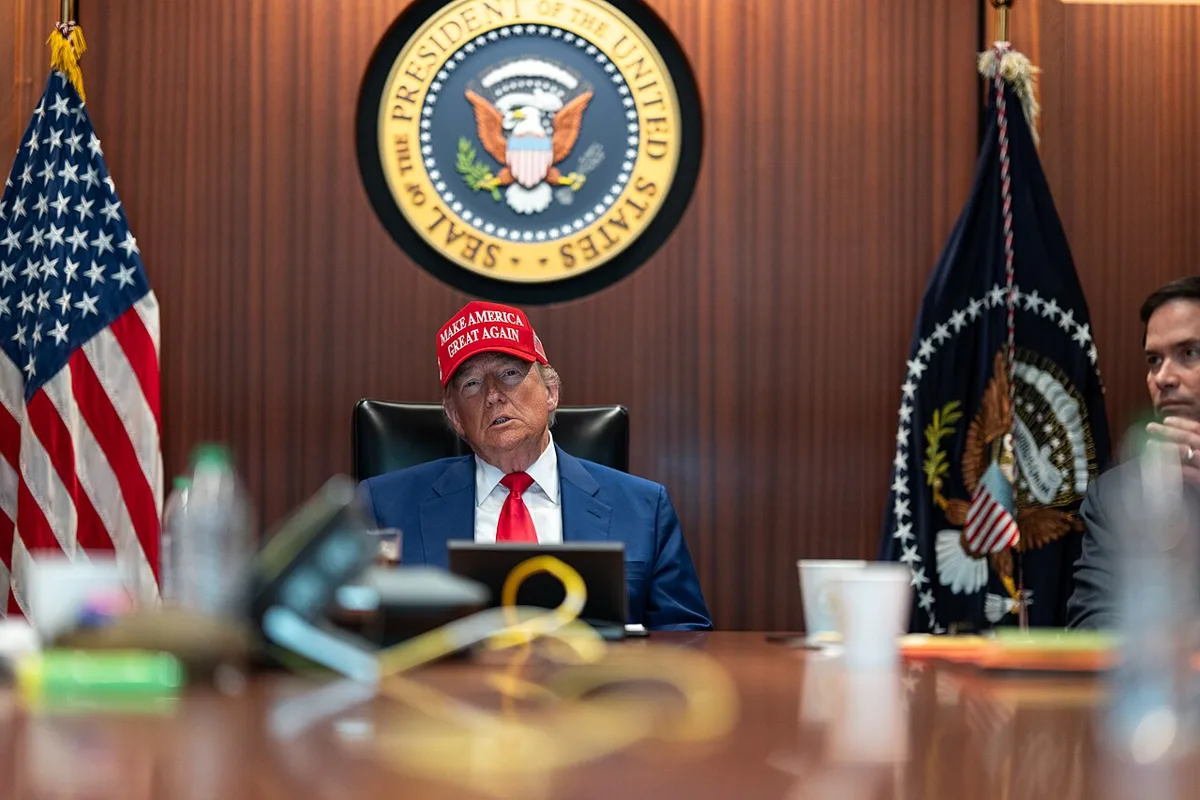
Someone apparently walked an unauthorized recording device into the most secure room in the United States government and hit record during top-secret White House meetings. According to Axios, senior Trump administration officials believe New York Times reporters Maggie Haberman and Jonathan Swan obtained actual audio from inside the Situation Room for their forthcoming book, 'Regime Change.' If true, this is not a leak. This is a hole in the hull of the ship.
What Axios Is Reporting
The scoop comes from Axios, which says top White House officials are genuinely alarmed that Haberman and Swan got their hands on recordings of Situation Room meetings. Independent recording devices inside the Situation Room are explicitly forbidden. That is not a suggestion. That is a hard rule in one of the most carefully controlled environments on the planet.
The administration's fear, according to an official Axios spoke with directly: 'We're afraid some of our most sensitive conversations were being recorded. And we have no idea which ones.' Read that again. They don't know which meetings. They don't know how long it was happening. They don't know what was captured.
Axios also reports that verbatim accounts of several Situation Room meetings appeared in excerpts from 'Regime Change' connected to the Iran policy discussions, which is apparently what set off alarms inside the West Wing in the first place. Verbatim. Not paraphrased. Not summarized. Word for word.
Why the Situation Room Is a Big Deal
The Situation Room exists specifically because the government needs one place where the most sensitive national security conversations can happen without any possibility of interception. It is swept for bugs. It is staffed by dedicated intelligence personnel. Access is tightly controlled. The whole premise of the room is that what happens inside it stays inside it.
Presidents have made decisions in that room that altered the course of history. Military operations. Hostage negotiations. Nuclear posture reviews. The kill order for Osama bin Laden was issued from a room built on the exact same principle. The entire security architecture of American national security policy depends on leaders being able to speak freely in that space.
So when an administration official tells Axios they have 'no idea which conversations' were recorded, that is not a communications problem. That is a potential catastrophe. Foreign adversaries would pay almost anything to know what was said in those rooms. The fact that a book publisher might have it first is not exactly reassuring.
Haberman and Swan Have Done This Before
Here is the thing about Maggie Haberman and Jonathan Swan: they are two of the best sourced reporters covering this White House, and they did not get that way by being polite. Haberman's previous Trump book, 'Confidence Man,' was full of material that left the administration furious and denial-free because the sourcing was airtight. Swan's one-on-one interviews with Trump became legendary precisely because he pressed on specifics and got actual answers.
Their collaboration on 'Regime Change' has been anticipated inside Washington for months. The title alone tells you something about the framing. The fact that it apparently contains verbatim Situation Room dialogue tells you considerably more.
The White House has a long history of accusing journalists of misrepresenting conversations, inventing quotes, and operating in bad faith. What they cannot do particularly well is claim fabrication when the journalist apparently has the tape.
So Who Did It
This is the question that has to be eating the Trump administration alive right now. Somebody in that room, or with access to that room, either brought in a recording device themselves or facilitated getting one in there. The Situation Room does not have a guest entrance. The people present at those meetings are a very small, very senior group.
The list of people with physical access to Situation Room meetings on Iran policy is not long. Senior Cabinet officials. National Security Council staff. The president himself. You are not exactly dealing with a crowd when you start pulling the thread on who could have done this.
That is before you even get to the question of motive. Somebody wanted these conversations on record badly enough to risk federal prosecution. In this administration, at this particular moment, the list of people with grievances deep enough to do something like that is longer than anyone in the West Wing would probably like to admit.
The Legal Exposure Here Is Enormous
Recording Situation Room meetings without authorization is not a gray area. It almost certainly violates the Espionage Act, depending on what was captured and how it was transmitted. It could implicate statutes covering unauthorized recording of classified proceedings. The person who did this, if identified, is looking at serious federal criminal exposure.
The reporters themselves occupy a more complicated legal position. Journalists generally have strong First Amendment protections for publishing classified information they receive. The person who handed it over does not enjoy the same protection. This distinction has been litigated many times, and the government has consistently gone after sources harder than outlets.
Expect a leak investigation. Expect subpoenas. Expect the Justice Department to make noise about this, loudly, because an administration that has shown no reluctance to prosecute perceived enemies will not quietly absorb the news that someone was recording the president's most sensitive national security meetings.
The Dingo Take
Let's be honest about the full absurdity of the situation here. The Trump administration spent years screaming about leakers, launching investigations, demanding loyalty, and prosecuting anyone it could get its hands on for unauthorized disclosures. And now, according to Axios, someone apparently walked a recording device into the Situation Room and ran it during meetings about Iran policy. Not a paraphrase. Not a reconstruction from memory. Audio. The most locked-down room in American government apparently had a microphone in it that nobody authorized.
The 'we have no idea which conversations' quote is the one that should follow every person in that building around for the rest of their careers. That is an admission that the security posture of the Trump White House is so thoroughly compromised that senior officials cannot even tell you how exposed they are. In any other administration, a revelation like this would trigger a full-scale counterintelligence review, congressional hearings, and at least three separate investigations running simultaneously. Here it will probably end up as a segment on cable news between the other seventeen ongoing disasters.
Haberman and Swan have built their reputations on being the reporters this White House cannot spin, cannot shame, and cannot outlast. 'Regime Change' has not even dropped yet and it is already rewriting what we thought we knew about how this White House operates. Whatever is on those recordings, whoever put them there, and whatever they captured, the administration's own panic tells you everything you need to know about whether the contents are going to be flattering.



Comments