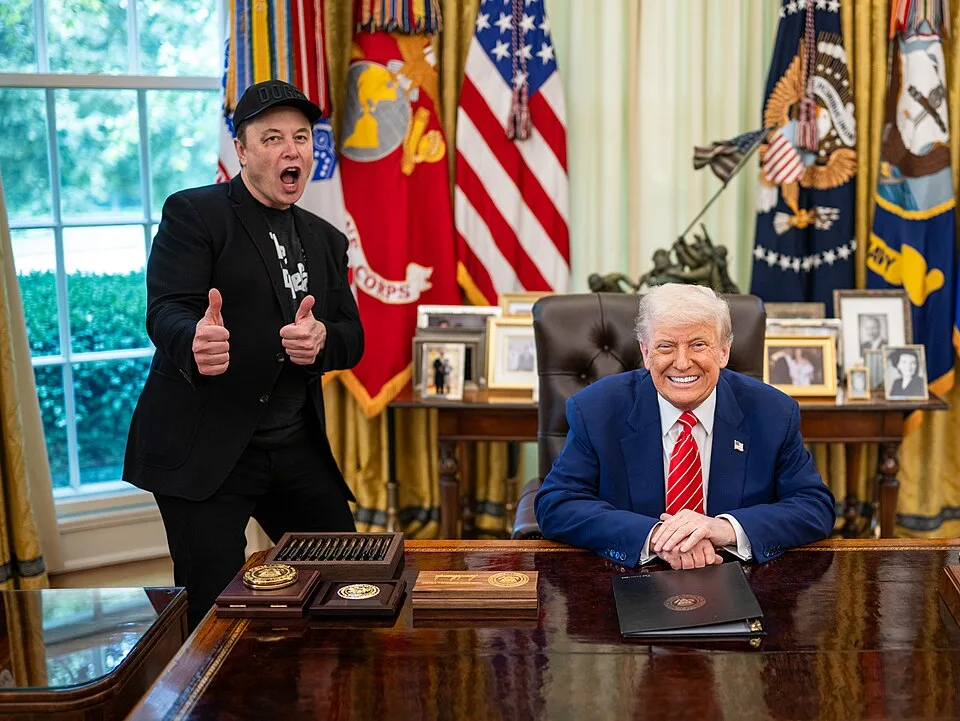
Donald Trump announced that Elon Musk has restored Ukraine's Starlink access, using the phrase "Bottom line, he put it back." That is a strange thing to say about a restriction your own administration has repeatedly insisted it never ordered. You cannot put back what nobody took away.
Two Men, One Switch, Zero Accountability
Here's the sequence, as reported by BBC News. Ukraine's internet connectivity through Starlink, the satellite system owned by Musk's SpaceX, got throttled. Ukraine relies on it for battlefield communications and for early warning systems when Russian missiles are inbound. When the speed dropped, Ukraine's offensive drones and interceptors lost their teeth.
Then Trump, hours after Zelensky said the service had not been fully restored, told reporters Musk had fixed it. Asked about a report that he personally pressured Musk to do so, Trump wouldn't be drawn in. His answer was the now-famous "Bottom line, he put it back."
Notice what just happened. The most powerful man on Earth confirmed that the richest man on Earth controls whether an allied country can defend itself from missiles. And he said it like he was describing a guy who returned a borrowed lawnmower.
The Official Story Has a Hole You Could Fly a Drone Through
The White House has said, repeatedly, that it did not order access to be restricted. Musk has denied being behind the slowdown. Last week he said the US government ultimately controls access to Starshield, the military-grade version of Starlink that Ukraine uses for some of its operations, and that the system was designed for the Pentagon.
Read that again. Musk is saying the government might be behind it. The government is saying it didn't do it. And now the president is saying Musk put it back.
So who took it away? Nobody, apparently. The speed just fell on its own, the way a missile defense system does when no one wants to be responsible for it. Three parties are pointing at each other, and the only thing everyone agrees on is that the switch exists and someone flipped it.
Why Would Anyone Throttle This?
The timing is not subtle. The connectivity restrictions arrived as Trump pressured Zelensky to stop hitting Russian oil refineries, which Trump has argued are driving up prices. Midterm elections are next month. Gas prices matter to people who vote.
Trump has also waived some sanctions on Russia and agreed a deal to import Russian diesel for the US market. Ukraine and its European allies have criticized that move, and you can see why. America is buying fuel from the country invading its ally while that ally's drones go dark.
We should be careful here. Nobody has publicly established who gave the order, and the White House denies there was one. But the pattern is hard to miss: pressure on Kyiv to ease off Russian oil, then Kyiv's best tools suddenly stop working, then a cheerful announcement that everything is fine now.
The Wall Street Journal Phone Call
Shortly after Zelensky spoke, the Wall Street Journal reported that Trump called Musk and asked him to lift the restrictions. According to officials cited in that report, Trump told Musk he was frustrated that Starlink speeds were still capped at around 160 km/h. The paper reported the system worked more normally shortly after the conversation.
BBC News has not confirmed that report and has contacted the White House and SpaceX for an explanation. Trump declined to discuss it directly. But "he put it back" lands awfully close to a confirmation, whatever he meant by it.
If the story is true, the chain of command is a president dialing a private citizen to ask him to please let a war ally use its own military communications. That is not a government. That is a favor economy with a defense budget.
Zelensky Is Still Waiting on a Callback
Zelensky said the speed had not yet been restored to 400 km/h and that his team was working on it. He said he was waiting to hear from Secretary of State Marco Rubio, who had promised information within 48 hours or so.
Think about the position that puts him in. The leader of a country under missile attack is waiting on a voicemail to learn whether his drones will work. Ukraine first reported an interruption to US intelligence sharing on 14 October. A Zelensky adviser told the BBC that Ukrainians are dying because of the restrictions on intelligence sharing.
That last part deserves its own line. People are dying. Not metaphorically, not in a think-tank scenario. The warning systems that tell Ukrainians to get to shelter and the drones that stop incoming strikes depend on a signal that a billionaire and a president have been trading back and forth like a hot potato.
The Dingo Take
Start with the Ukrainians who were told to wait. A soldier whose drone froze mid-mission, a family in Kyiv whose alert came late, a commander who watched interceptors go dark while two men in America argued about who had the remote. They did not get a press conference or a pithy quote. They got latency.
Now look at what the people with the power are offering. The White House says it didn't order anything. Musk says maybe the government did. Trump says Musk fixed it and walks away. Everyone is describing the same switch and nobody owns the hand that moved it. If an ally's air defense can be throttled and un-throttled by a phone call between a president and a tech owner, with no one willing to say who did what or why, then we have outsourced foreign policy to a private company and then lost the receipt.
And yes, the midterms are next month. Yes, the refineries, the diesel deal, the sanctions waivers. We can't prove the order, and we won't pretend to. But we can say this plainly: a war ally should never be one cranky phone call away from going blind. Somebody should have to answer for that, under oath, with a name attached. Instead we got "bottom line, he put it back." That is not an answer. That is a shrug with a satellite.



Comments