A thousand people showed up outside a synagogue in northwest London on Sunday to protest a real estate fair, got into physical confrontations, and left 14 people in handcuffs. This is not a hypothetical about where rising antisemitism leads. This is just a Sunday in Britain in 2026.
What Actually Happened Outside That Synagogue
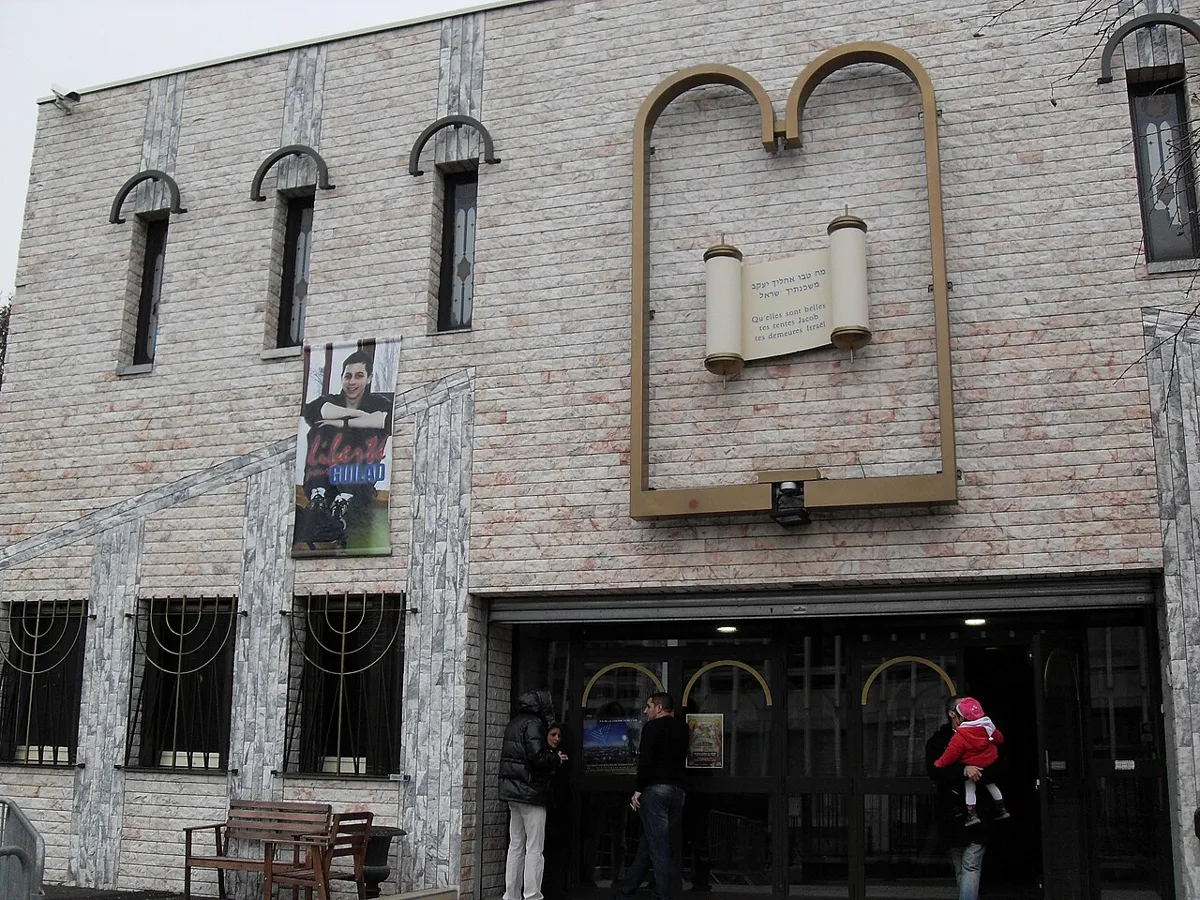
The demonstration took place outside Edgware United Synagogue, which was hosting a fair for properties in Israel. The Palestinian Youth Movement led the protest, according to The Guardian, drawing roughly 1,000 people. London police allowed it to proceed but arrested individuals accused of violence or public-order offenses.
Here is a detail that should not get buried: at least one of the people arrested was not a protester against Israel. According to the New York Post, citing news agencies, at least one person arrested was protesting the anti-Israel protesters themselves, and said they were confronted at the rally. So the people who showed up to push back against a demonstration outside a synagogue ended up in handcuffs too. Make of that what you will.
The Board of Deputies of British Jews condemned the protest before it even started, calling on police to prevent it from taking place entirely. Their acting president Adrian Cohen did not mince words: protesting at a synagogue "based on false pretenses seems to be little more than an excuse to harass and intimidate members of the Jewish community."
The 'False Pretenses' Question
The protesters said they were demonstrating against the sale of properties in Judea and Samaria, the Israeli-controlled West Bank territories. That is a legitimate political grievance that millions of people hold, including plenty of Jewish people. Nobody serious is arguing that criticism of Israeli settlement policy is inherently antisemitic.
But the Board of Deputies said the event organizers publicly refuted claims that the fair was marketing real estate over the Green Line. Cohen's statement went further, criticizing MPs and other public figures for "inflamed tensions through partial and misleading commentary" without acknowledging the organizers' clarifications. If the premise of the protest was factually wrong, a thousand people showed up to a synagogue on bad information and nobody with a platform corrected them first. That is a failure of something, even if you are generous about intent.
This is not the first time this has happened in London, either. The New York Post reports that last year, police moved a similar anti-Israel rally away from St. John's Wood Synagogue in central London, after which the Campaign Against Antisemitism noted the demonstration simply continued around the corner anyway.
The Numbers Behind This Are Genuinely Alarming
Here is the context that makes Sunday's scene feel less like an isolated incident and more like a symptom. The Campaign Against Antisemitism declared antisemitism "a national emergency" last week after 255 antisemitic incidents were recorded in May alone, up from 148 in April. The Community Security Trust recorded an average of 308 antisemitic incidents per month across all of 2025.
The total number of antisemitic incidents in the United Kingdom in 2025 reached 3,700, according to CST, a 4 percent increase from 2024. A report from Israel's Ministry for Diaspora Affairs documented 121 physical assaults against Jewish people in Britain in 2025, in a Jewish population of roughly 300,000. That gave the UK the highest per-capita rate of real-world antisemitic assaults among countries with large Jewish communities, according to that report.
To put a finer point on it: Britain, a country that fought a world war against the ideology that produced the Holocaust, is now the world leader in physically attacking Jewish people per capita among major Jewish diaspora communities. That sentence should be uncomfortable to read.
Why the Location Matters So Much
There is a reason the Board of Deputies, Jewish community groups, and even police treated this differently from a protest outside, say, the Israeli embassy on Kensington High Street. The embassy is a government installation representing a state and its policies. A synagogue is a house of worship for a religious community.
Choosing to demonstrate outside a synagogue sends a message regardless of what the placards say. It tells the people inside, and the community around it, that their physical place of religious practice is fair game as a political target. Whether that is the intent or not, that is the experience. And when that choice gets made in a country logging 3,700 antisemitic incidents in a year, it does not happen in a vacuum.
The Dingo Take
Look, protesting Israeli government policy is legal, it is legitimate, and plenty of people across the political spectrum do it. But the choice to do it outside a synagogue in northwest London, based on claims the event organizers say were false, while physical confrontations break out and 14 people get arrested, is not a good-faith exercise in political speech. It is at minimum a catastrophic failure of judgment, and at maximum something considerably darker.
Britain has a serious antisemitism problem right now. Not a talking-point problem, not a culture-war problem that one side is inflating for political points. A 3,700-incident, highest-per-capita-assault-rate-in-the-world problem. When that is the backdrop, the people organizing these synagogue-adjacent demonstrations have an obligation to ask themselves what message actually lands on the ground. Intentions are not the whole story. Results matter.
The people who showed up Sunday may genuinely believe they were protesting a political event that happened to be hosted at a synagogue. Fine. But if your protest ends with 14 arrests, physical confrontations, a Jewish community body calling it harassment and intimidation, and the broader country watching antisemitic incidents spike month over month, at some point you have to ask who this is actually helping. The Palestinian people trying to build an international coalition for their rights? Or every bad actor in Britain who wants cover for something uglier?



Comments