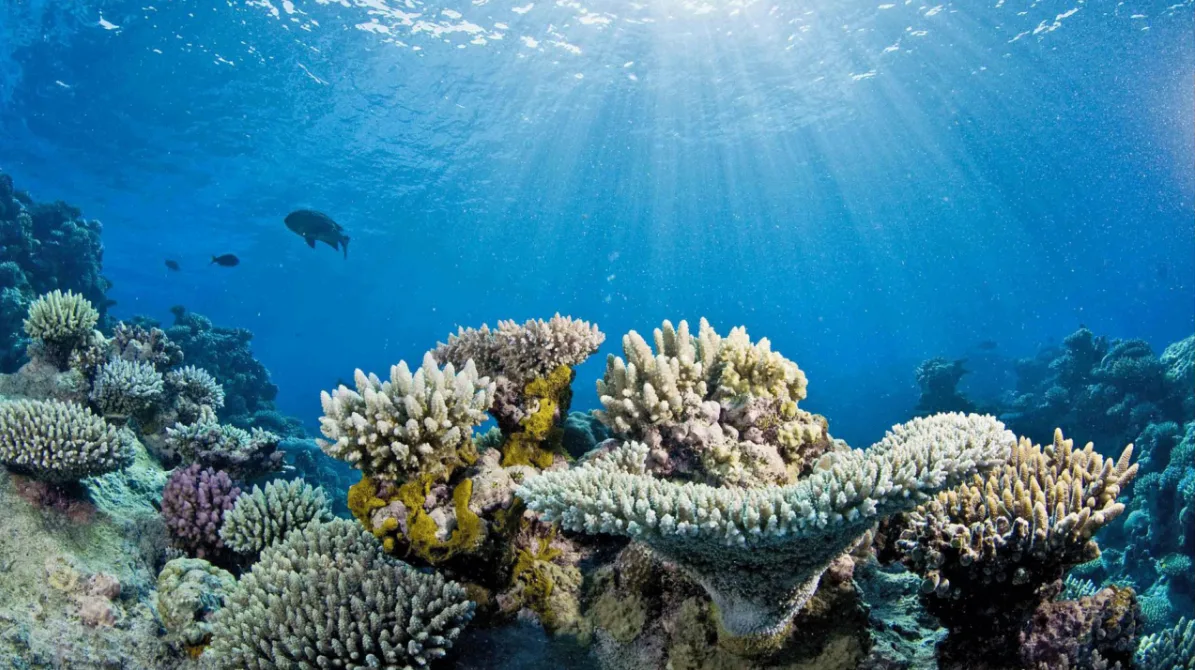
Glaciers are disintegrating. Icebergs are hauling their rocky guts into the ocean. And somewhere on the floor of the Arctic sea, a coral is making itself at home on a rock that shouldn't be there. Climate change is still a catastrophe. It's just a catastrophe with occasional, deeply weird footnotes.
The Most Unlikely Rock Delivery Service on Earth
Here's the setup. Glaciers in northeast Greenland and the Russian Arctic have been coming apart at the seams since the early 2000s. As they break off into the ocean, they take a lot of hitchhikers with them: rocks, sediment, debris, all the material those glaciers scraped up while grinding across land for thousands of years. These icebergs then drift into the Fram Strait, that stretch of ocean between Greenland and the Norwegian archipelago of Svalbard, and when they eventually melt, all that rocky cargo drops straight to the sea floor.
According to a study published in Nature, this process is called dropstone deposition, and it has been happening for geological ages. What's new is the pace. Researchers at the Alfred Wegener Institute found that the volume of rocks being deposited has been climbing sharply, in direct lockstep with accelerating glacier loss. The icebergs are getting more frequent. The loads are getting heavier. The Arctic seafloor is getting rockier.
The Detective Story Hidden in 40 Years of Weather Logs
The researchers needed proof that this rock-dumping was actually increasing over time and not just random variation. The answer came from the most unglamorous possible source: decades of routine weather observations logged by the crew of the German research icebreaker Polarstern. Sailors noting whether they could see icebergs nearby. Basic stuff. Nobody's Nobel Prize material at the time.
Lead author Thomas Krumpen, a sea ice physicist at the Alfred Wegener Institute, says those logs turned out to be the missing piece. When the team went back through roughly 40 years of that data, the pattern jumped out. Icebergs have been appearing more frequently in the Fram Strait since the early 2000s, in larger clusters, consistent with a climate-driven trend rather than random drift. The Economic Times reports that satellite tracking then let the team trace many of those icebergs back to the same destabilizing glaciers in Greenland and the Russian Arctic, tying the whole chain together.
Why Corals Care About Any of This
The Arctic seafloor is mostly soft mud. That sounds boring because it is boring, ecologically speaking. Corals, sponges, and many other invertebrates need something hard to anchor onto. They can't just plant themselves in sediment and hope for the best. So for most of the deep Arctic seafloor, those species simply weren't an option.
When a dropstone falls and settles, it becomes what amounts to a tiny rocky island in an ocean of mud. A foothold. A starting point. Researchers analyzing seafloor photographs from a long-term monitoring site in the Fram Strait detected an increase in dropstones between 2015 and 2017, consistent with increased iceberg traffic in the area. WHOI marine biologist Kirstin Meyer-Kaiser, a co-author on the study, says the Arctic seafloor community will likely continue changing in slow motion as warming continues. Deep-sea ecologist Thomas Soltwedel, also of the Alfred Wegener Institute, puts some cold water on any premature optimism though: his team has spent 25 years monitoring the same site and has only seen a handful of new species actually move in. This is not fast food. This is geological patience.
Before You Go Thanking Climate Change for the Reefs
Let's be very clear about what this is not. It is not a silver lining. It is not evidence that melting glaciers are secretly fine. It is one genuinely fascinating and complicated consequence of a crisis that is still very much a crisis.
Lead researcher Krumpen is direct about the problems that come bundled with this finding. More icebergs in Arctic shipping lanes means a higher collision risk for cargo ships, cruise vessels, and oil and gas operations. Those are not hypothetical concerns; ask the Titanic how iceberg encounters usually go. And the ecological shift cuts both ways. New species moving in could outcompete the organisms that already live there. As fishing fleets push further north chasing warmer waters, these newly rocky patches of seafloor could become fishing grounds too, layering human extraction pressure on top of an ecosystem already absorbing the shock of rapid change.
How Far a Glacier's Collapse Actually Travels
What the study drives home, and what Bodil Bluhm, a marine biologist at UiT The Arctic University of Norway, calls a striking example of planetary interconnection, is just how far the effects of a single collapsing glacier can reach. A glacier calving a thousand kilometers away sets off a chain of events that ends with a coral polyp attaching itself to a rock on the deep ocean floor. Nobody planned that. Nobody designed it. It just happens because everything is connected to everything else in ways that take decades to trace.
The researchers say similar dropstone dynamics could be playing out in other rapidly warming regions, including Alaska and West Antarctica. The planet is reshuffling its pieces. Some of those reshufflings produce something almost beautiful. Most of them do not.
The Dingo Take
There is a version of this story that gets weaponized by bad-faith commentators within about 48 hours: 'See? Climate change is making new coral reefs! Calm down!' We can already hear it. Do not fall for it. The researchers who published this work are not saying that. They are saying a catastrophic process has one bizarre and unexpected side effect, buried under a list of other consequences that are genuinely terrible. That is not good news. That is complicated news, and there is a difference.
What the study actually reveals is something worth sitting with: the scale of human influence on this planet is so vast that it is restructuring ecosystems we have never seen and can barely reach. A glacier retreats in Greenland and a sponge finds a new home 2,000 meters underwater in the Fram Strait. That chain of cause and effect is almost incomprehensible. It should produce awe. It should produce humility. It should produce a serious reckoning with the fact that we set all of this in motion and we do not fully know where it ends.
The Arctic seafloor is changing in slow motion, and we will not live to see most of what we have started. The rocks are falling. The corals are coming, eventually, at whatever pace geology allows. And somewhere above all of it, on the surface, the ships are arguing about shipping lanes. Same as it ever was.



Comments