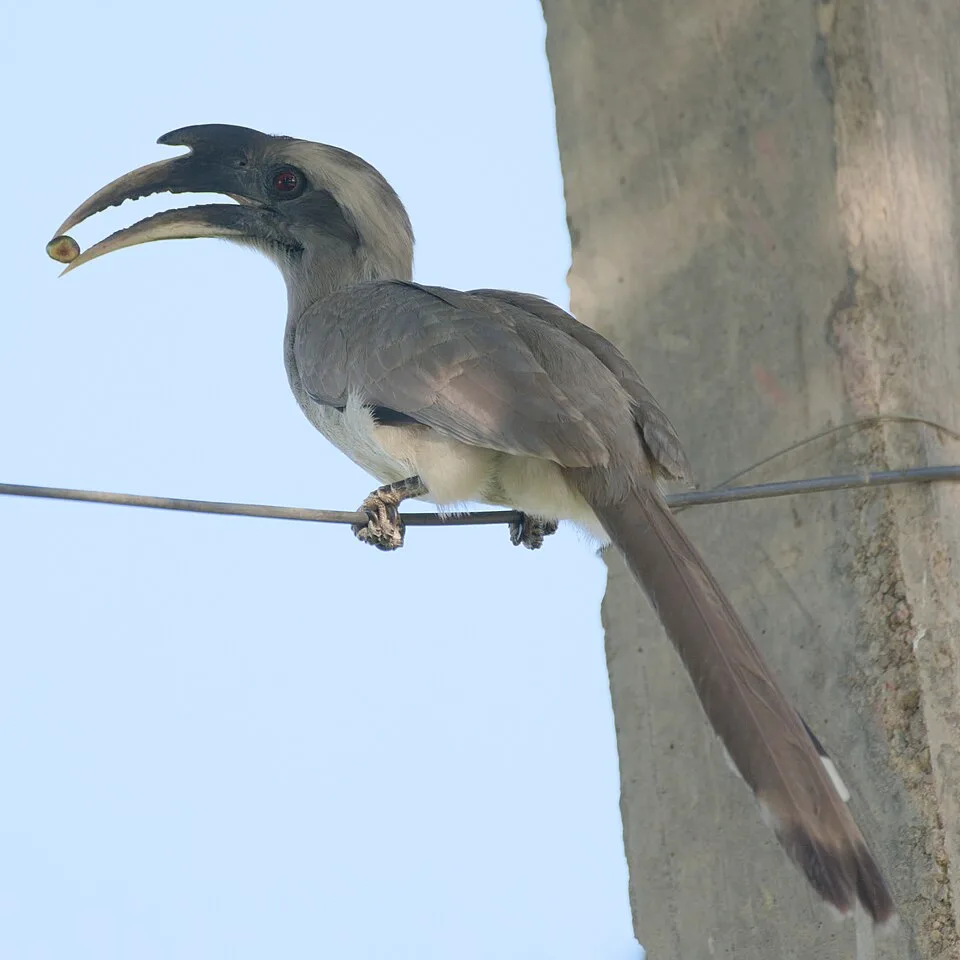
A bird that hadn't nested in one of India's most famous wildlife reserves since the 1960s just bred successfully for the fourth year running, without any human intervention required. Forty Indian grey hornbills are now living, eating, and raising chicks inside Gir National Park in Gujarat, a place that hadn't seen a single nesting pair in over half a century. Good news is rare enough that when conservation actually works, it deserves more than a footnote.
Gone for 50 Years, Back for Good
Gir National Park is no backwater reserve. It's an internationally recognized protected area stretching 540 square miles across West India, famous for being the last refuge of the Asiatic lion. And yet, as the Good News Network reports, even this celebrated park hadn't seen a grey hornbill nest since the 1960s.
The Indian grey hornbill is technically listed as 'Least Concern' by the International Union for Conservation of Nature, which sounds reassuring until you realize that classification can shift fast. The bird has highly specific habitat requirements that make it a canary in the coal mine for broader ecosystem health. When the forest goes, the hornbill goes first. When it comes back, it means something real has been fixed.
What It Actually Takes to Bring a Bird Back
This wasn't a case of releasing some animals and hoping for the best. The reintroduction program launched in 2021 required years of groundwork before a single hornbill was placed in Gir. The birds need large, mature native trees old enough to develop hollows that can fit a 24-inch bird inside. They need abundant fruit trees nearby. You can't just plant a sapling and wait a season.
Conservationists had to spend years restoring and actively protecting habitat inside the park before conditions were even close to suitable. That means patient, unglamorous work with no guarantee of payoff. The Better India reports that the strategy has now paid off completely, with the population reaching the point where it can breed in a self-sustaining manner, no future reintroductions required.
Forty Birds and a Functioning Ecosystem
The current population stands at 40 individuals and is still growing. Four consecutive years of successful breeding confirms this isn't a fluke. The birds are finding mates, raising chicks, and doing it all without a safety net of human support. That's the goal of every reintroduction program, and most of them don't get there this cleanly.
Indian conservationists describe the grey hornbill as one of the subcontinent's key indicator species. Its return doesn't just mean 40 more birds in a park. It signals that the trees are old enough, the fruit supply is rich enough, and the forest as a whole has recovered enough to support a species that can't fake it. The hornbill's presence is basically the ecosystem giving a thumbs up.
Why This Matters Beyond One Species
Conservation wins like this don't happen in isolation. A restored habitat that can support hornbills is a habitat that will support dozens of other species quietly benefiting from the same mature trees, the same fruit supply, the same protected forest understory. The hornbill is the headline, but it's the whole system underneath that's doing the real work.
It also pushes back against the creeping fatalism that surrounds extinction news. The drumbeat of species loss is relentless and real, but Gir's hornbills prove that targeted, science-driven habitat restoration can reverse local extinctions when there's the will and patience to see it through. Fifty years of absence, undone by four years of serious effort.
The Dingo Take
Look, we spend a lot of time in this space cataloguing the ways humans systematically wreck the natural world for profit, convenience, or sheer inattention. So when a story lands that goes the other direction, we're going to sit with it for a minute. Forty Indian grey hornbills are raising chicks in a forest where their species hadn't existed for fifty years. That's not a press release. That's evidence that the damage isn't always permanent.
What makes this one stick is the specificity of what it took. Not a viral campaign, not a celebrity endorsement, not a pledge at a conference. Years of quiet habitat work, protecting trees that were already old, waiting for the forest to get ready before asking the birds to trust it. That's unglamorous, slow, expensive conservation done correctly.
The hornbill is back. The forest earned it. That's worth knowing about.




Comments