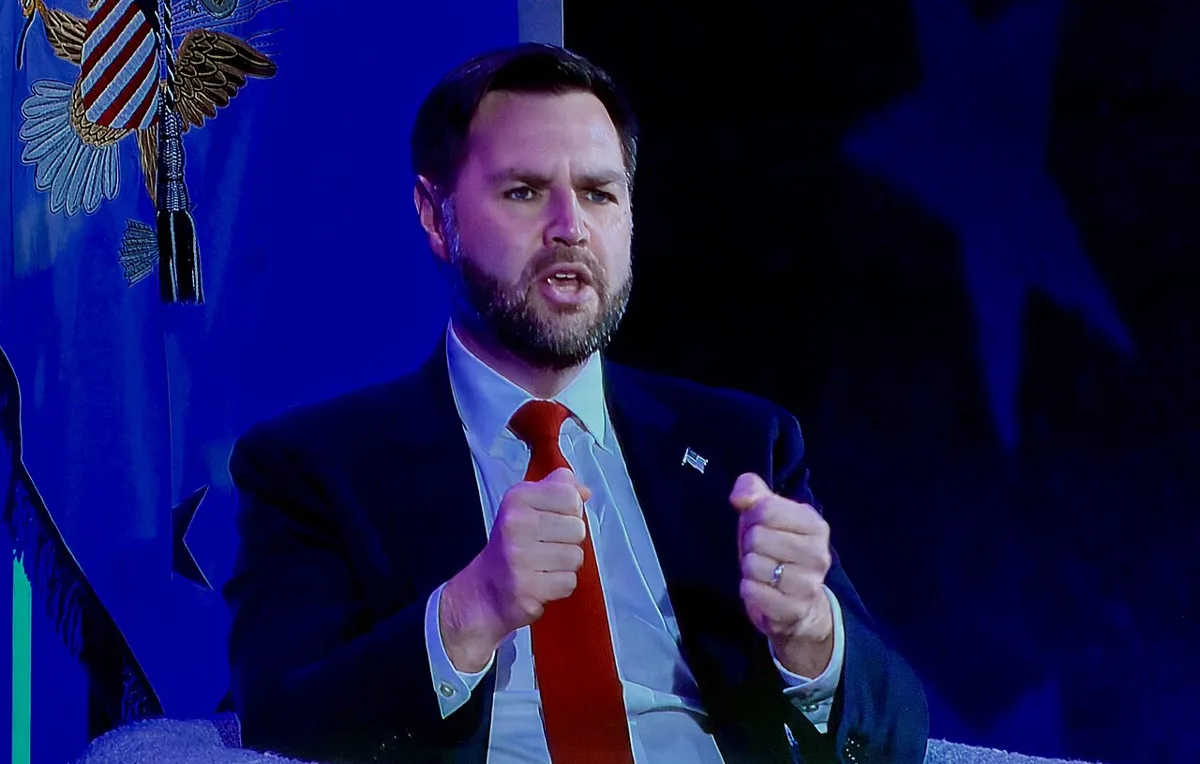
The U.S. and Iran announced a major nuclear deal on Sunday, and by Monday morning the two sides were already telling completely different stories about what's in it. Iran's Revolutionary Guard says the deal includes $24 billion in frozen funds. JD Vance went on CBS and said that number "just doesn't appear anywhere" in any text they've discussed. The full agreement hasn't been released yet, so right now we have two countries, one deal, and two wildly incompatible versions of reality.
What Vance Actually Said
Vance appeared on CBS Mornings on Monday and flatly denied that Iran would receive billions of dollars in assets under the new agreement. "When people say that billions of dollars of assets will be released, that's not true," he told the hosts. He framed the deal as an offer of long-term economic prosperity contingent on Iran meeting its nuclear obligations, not an immediate cash transfer.
When pressed specifically on the $24 billion figure, Vance said it "just doesn't appear anywhere in any of the texts that we've talked about with the Iranians." He acknowledged the administration is open to unfreezing assets at some point, but described the bigger prize as "unsanctioning" the Iranian economy wholesale, provided Iran makes durable commitments on nuclear compliance. He also blamed hardliners in Iran for "misrepresenting the deal" to sell it to their domestic audience.
Vance promised the Trump administration will release the full text of the agreement this week, saying "we want the American people to see it." That would be a welcome development, given that right now the American people can't confirm a single thing either side is saying.
What Iran Actually Said
Here's where it gets uncomfortable. Iran's Islamic Revolutionary Guard Corps said Monday that under the agreement, the country will receive $24 billion in frozen funds during a 60-day final negotiation period, and that half of that money must be made available before final negotiations even begin, according to CBS News reporting.
That's not a vague claim. That's a specific number, a specific timeline, and a specific sequencing demand. The Revolutionary Guard isn't exactly known for underselling its victories, but they're also not known for inventing $12 billion pre-payment requirements out of thin air and announcing them publicly on day one of a deal.
So either the Revolutionary Guard is fabricating specific financial terms to appease hardliners at home, which is possible, or JD Vance is going on morning television and denying terms that are actually in the agreement, which is also possible. Or, and this is the option that should terrify everyone, both sides genuinely believe different things about what they agreed to.
The Text Nobody Has Seen
The Trump administration has not released the terms of the agreement. That's the whole problem sitting at the center of this story. As of Monday morning, the public, Congress, and apparently some portion of the governments involved are working off competing press releases and morning show appearances.
Vance said the full text is coming "this week," adding that "sometimes with these agreements, there are some diplomatic protocols, some technical things to work out." That's a very diplomatic way to describe a situation where your counterparty is announcing $24 billion payment terms you claim don't exist.
Technical talks are reportedly set to begin Friday. Which means between now and then, the two sides will be sorting out details like how exactly Iran's enriched uranium stockpile gets destroyed, what role U.S. forces might play in that process, and, presumably, whether there's a $24 billion line item that one of the parties forgot to mention to the vice president.
The Nuclear Part, Which Is Supposedly the Whole Point
Vance described the deal as one that "ensures that Iran will never have a nuclear weapon" while also reopening the Strait of Hormuz, which is a genuinely significant pair of outcomes if they hold. He said the administration is working with the U.N.'s nuclear watchdog, the IAEA, and the Iranians to destroy Iran's enriched uranium stockpile.
On enforcement, Vance didn't rule out using U.S. military assets to confirm Iran's compliance, but said he didn't think that would be necessary. "Whether we play an observer role or whether we play a more active role, these are the sorts of things that we'll figure out in technical talks," he said. So the method by which one of the most consequential arms control commitments in recent history gets verified is also, at this point, TBD.
To be fair, all of this is early. Deals at this scale take time to finalize and the technical details being unresolved at the announcement stage is not unusual. What is unusual is announcing a deal while your counterpart simultaneously announces a completely different deal.
The Hardliner Blame Game
Vance's explanation for the $24 billion discrepancy is that hardline elements within Iran are misrepresenting the deal to sell it domestically. "One of the things these hardliner elements in their country are going to do is misrepresent the deal, so that they can sell it to certain elements of their domestic audience," he said on CBS Mornings.
That's a coherent theory. Iranian domestic politics are genuinely treacherous, and a deal that looks like a capitulation without economic compensation would be impossible to defend inside the country. It's entirely plausible that Iranian officials are inflating the financial terms for internal consumption.
But here's the thing: that explanation only works if the Iranian government is lying to its own people about receiving $24 billion. If that's what's happening, the Trump administration just announced a nuclear deal with a government that is, by their own vice president's account, immediately and publicly misrepresenting it. That is not a great foundation for a 60-day negotiation period.
The Dingo Take
Let's be honest about what we're watching here. The United States and Iran announced a nuclear deal on Sunday. By Monday morning, the two countries were on television describing two different deals. No text has been released. The enforcement mechanism is undecided. The financial terms are in active dispute between the parties. And the whole thing is scheduled to be signed later this week.
This could still work out. Deals are messy. Announcements outpace details. Final texts resolve ambiguities that early statements create. It's possible Vance is right and the Revolutionary Guard is running domestic spin, and the actual signed document will show a $24 billion figure nowhere in it. It's possible. Watch for that text when it drops.
But if you were hoping that the Trump administration had figured out a clean, clearly-communicated, mutually-understood agreement with the Iranian government over one of the most dangerous weapons programs on the planet, Monday morning was not encouraging. The deal is either good and being lied about, or bad and being denied, or genuinely confused and nobody knows. All three of those options are bad. We'll find out which one it is when someone actually releases the paper.



Comments