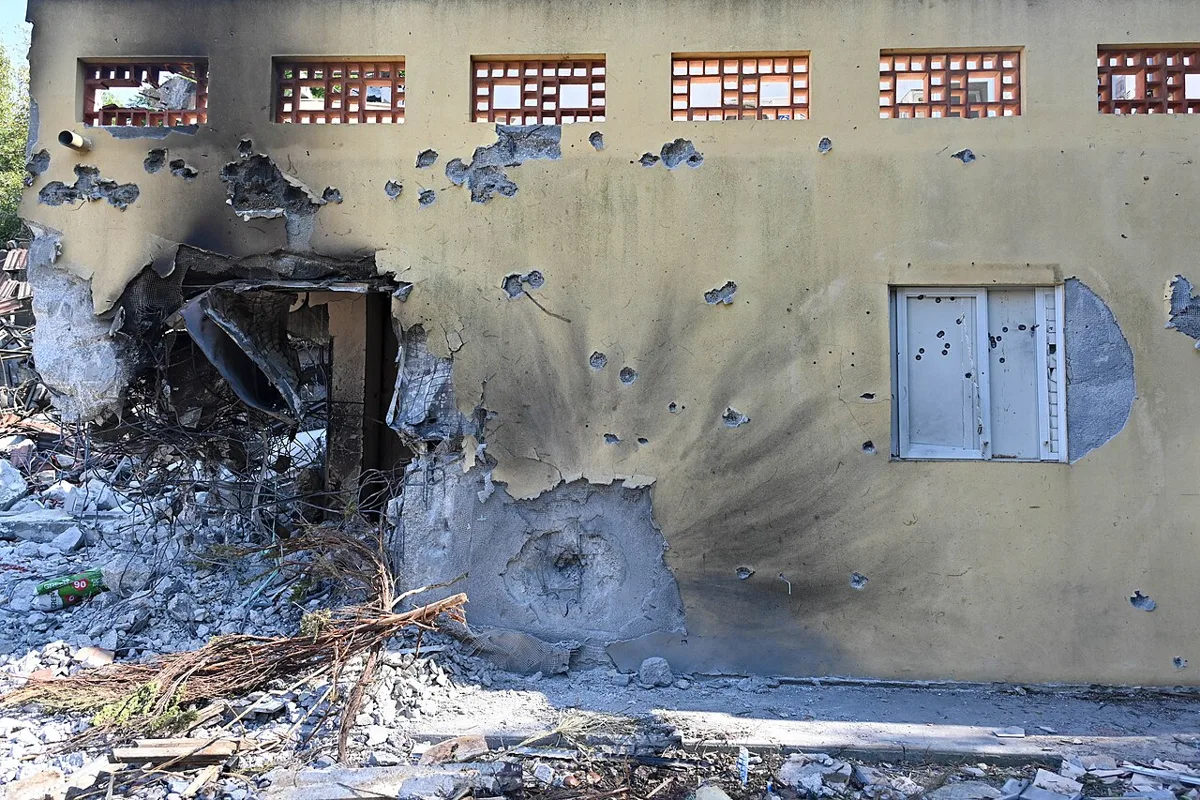
The United States spent what we can only assume was considerable diplomatic energy brokering a ceasefire deal with Iran, and Israel's ambassador to Washington just went on NPR and told the whole arrangement to go to hell. Not in those words, but close enough. The Trump administration's signature foreign policy achievement of the week has a very loud, very public problem, and that problem is that one of the two countries whose behavior the deal is supposed to govern has zero interest in complying with half of it.
What the Ambassador Actually Said
Israel's ambassador to the United States, Yechiel Leiter, sat down with NPR's Steve Inskeep on Monday morning and made the Israeli position about as clear as it gets. "We're not going to withdraw from South Lebanon, and the madmen of Tehran have no business poking their nose into this," Leiter said, in a quote that will age in very interesting ways depending on how this whole thing plays out.
This is not some rogue official going off script. As NPR reports, Israeli Defense Minister Israel Katz said the same thing earlier this week, stating that Israel would not retreat from Lebanon, Syria or Gaza, and I'm quoting here, "despite all the existing pressures and those that may yet come." That's a direct shot across the bow of every government currently pressuring Israel to pull back, including, apparently, the one in Washington.
Iran Heard Something Very Different
Here is where things get genuinely interesting, in a this-might-fall-apart way. Iran's deputy foreign minister told reporters that the ceasefire deal applies "on all fronts," specifically including Lebanon. So Iran thinks Lebanon is in the deal. Israel thinks Lebanon is not in the deal. These are not compatible positions.
Ambassador Leiter addressed this directly, insisting the Trump administration had been "crystal clear" that any agreement with Iran "has nothing to do with our withdrawal from South Lebanon." Which either means the U.S. made two very different promises to two very different parties, or someone is misreading a document, or someone is lying. None of those options are great.
The Ceasefire That May Not Cease Much
The deal in question is a proposed 60-day ceasefire that the Trump administration is billing as the on-ramp to larger negotiations over Iran's nuclear program and other festering regional disputes. The idea, as best as can be pieced together from the reporting, is that you stop the shooting, reopen the Strait of Hormuz, and then talk about the harder stuff later.
The problem with "talk about the harder stuff later" is that you have to actually stop the shooting first. And Israel's ambassador just told a national radio audience that Israel will continue occupying southern Lebanon regardless of what any deal says. That is not a ceasefire. That is a partial ceasefire at best, and a fiction at worst, and Iran knows it.
The Body Count That Got One Sentence
Steve Inskeep asked Leiter about the humanitarian cost of Israel's offensive against Hezbollah in Lebanon. Lebanese health authorities put the toll at roughly 3,700 people killed and about 1 million people driven from their homes. That is not a small number. That is a country's worth of displacement in a country that was already struggling.
Leiter's response was brief: "The people we've killed are Hezbollah terrorists." He then added, "We don't target civilians." NPR reports both statements without editorial comment, as is appropriate. We will simply note that 3,700 dead and a million displaced is a lot of collateral for a war that, per the ambassador, is producing zero territorial concessions.
What Israel Says It Needs to End This
Leiter did outline what a long-term agreement would need to look like from Israel's perspective. Iran can never obtain a nuclear weapon. Verification has to happen "at any time, anywhere, under any circumstances." Those are maximalist demands, and they're not necessarily unreasonable demands, but they are demands that Iran has historically rejected when framed that way.
The ambassador's framing suggests Israel sees the current military pressure as leverage to extract those commitments, and sees withdrawal from Lebanon as throwing that leverage away before the negotiation is complete. Whether that logic holds, or whether it's being used as cover for indefinite occupation, is a question that 60 days of ceasefire talks are unlikely to resolve.
The Dingo Take
Let's just say the quiet part out loud. The Trump administration announced a deal. Iran announced a deal. And Israel went on morning radio to announce that the deal does not apply to approximately half of what Iran thinks the deal covers. This is either diplomatic malpractice of a genuinely spectacular order, or it's exactly what everyone privately expected and the "deal" was always more of a vibe than an agreement. Neither explanation reflects well on anyone calling this a breakthrough.
The specific fault line here, Israel's occupation of southern Lebanon, is not some minor technicality. It is the central grievance that Hezbollah has built its entire political identity around for decades. Iran backing Hezbollah is the whole reason Iran is in this conversation at all. Telling Iran the deal excludes Lebanon while telling the American public you've achieved a ceasefire is not diplomacy. It's a press release with a fuse.
Meanwhile, 1 million Lebanese people are still displaced. Three thousand seven hundred people are dead. And the ambassador's answer to that is essentially: they had it coming. At some point, someone with actual leverage is going to have to say that a ceasefire means something, or admit that it doesn't, and stop making the rest of us pretend otherwise.



Comments