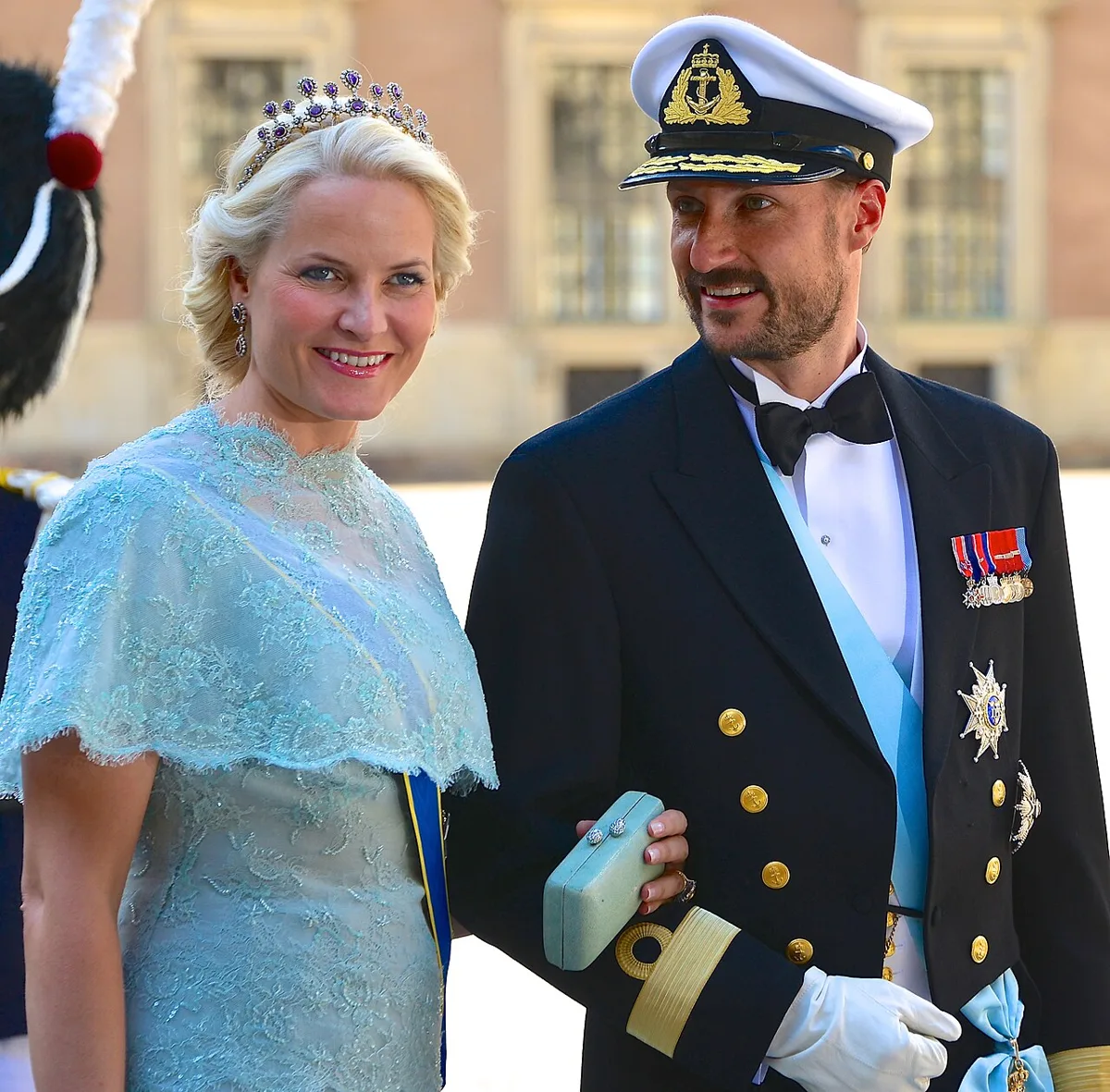
Crown Princess Mette-Marit of Norway underwent a successful lung transplant this week, which would normally be the only thing anyone was talking about. Except her son was also convicted of rape and domestic violence and sentenced to four years in prison, three days earlier. Norway's royal family is not having a great June.
The Transplant, Which Is Actually Good News
The New York Post reports that Oslo University Hospital confirmed the 52-year-old crown princess came through the surgery successfully and is now recovering. She will remain hospitalized for several weeks, according to Professor Are Holm, who provided a statement on behalf of the palace.
Mette-Marit was diagnosed with pulmonary fibrosis back in 2018. It is a progressive, chronic disease that scars the lungs and slowly chokes off oxygen uptake. There is no cure. The only real endgame, if you get bad enough, is a new set of lungs from someone else.
By early June, Oslo University Hospital was saying publicly that her condition had deteriorated so significantly she likely had about a year left without the transplant. Crown Prince Haakon had already flagged in December that the family was watching her struggle more and more to breathe. So yes, this surgery was genuinely the good news.
About That Son
The Post also reports that Marius Borg Hoiby, Mette-Marit's 29-year-old son from a relationship before she met Crown Prince Haakon, was convicted on Monday of rape and domestic violence. He received a four-year prison sentence.
Hoiby is not a member of the royal family in any formal sense, but his trial dominated Norwegian headlines for months. He is the crown princess's child from before her highly publicized romance with Haakon began at a music festival in 1999. The trial, and now the conviction, landed right on top of an already anxious period for the monarchy.
To be clear: a lung transplant and a son's rape conviction in the same week is not a scheduling conflict you plan around. This is just what happened.
The Epstein Problem Is Still Sitting There Too
If you thought that was the full list, the New York Post notes that Mette-Marit has also had to apologize to the king and queen for her past contact with Jeffrey Epstein, whom she previously described as a friend. She cut ties with Epstein years before his 2019 death, but the association surfaced publicly this year and did not exactly help the royal household's standing.
Three separate scandals. One royal family. One very bad stretch of months.
Norwegian Prime Minister Jonas Gahr Stoere had praised the crown princess for her openness about her pulmonary fibrosis diagnosis, saying her transparency could help others with similar conditions. That goodwill is now doing a lot of heavy lifting.
What the Polls Are Saying About All This
Support for retaining the Norwegian monarchy dropped to a record low of 60 percent in February, according to a Norstat survey conducted during Hoiby's trial, as the Post reports. It recovered slightly to 64 percent by May, which is the polling equivalent of someone catching their balance after tripping on a curb.
Sixty-four percent still sounds like a majority, and it is. But for a monarchy that has generally coasted on warm public affection for decades, watching support for your entire institutional existence scrape historic lows because of a combination of lung disease, rape convictions, and a dead sex offender is not a comfortable place to be.
The palace said the next health update on Mette-Marit will only come when she is discharged. The crown prince and princess thanked the public for the kind messages they have received. Under the circumstances, that is a remarkably composed thing to say.
How She Got Here in the First Place
It is worth remembering that Mette-Marit's place in the Norwegian royal family was itself a story once considered scandalous. She was 25, a commoner, an unmarried single mother when she met Crown Prince Haakon at a music festival in 1999, according to the Post. The Norwegian press lost its mind.
She won people over anyway. That is genuinely the kind of arc that used to feel like it ended with warmth and admiration and maybe a commemorative postage stamp. The version of her story that exists in 2026 is considerably more complicated.
She is, right now, in a hospital bed in Oslo with new lungs. Her son is headed to prison. Her monarchy is polling at two-thirds support. And she is apparently still finding time to thank people for their kind messages.
The Dingo Take
Here is the thing about this story: the transplant is genuinely, straightforwardly good news. A woman who was told she had roughly a year to live without intervention got the surgery she needed and came through it. That matters. That is the part we should probably lead with when we talk to each other like humans.
But we also cannot pretend the rest of it is not happening. The son's conviction is not a minor footnote. Rape and domestic violence are not tabloid noise. The Epstein connection is not ancient history when it forces a member of a royal family to issue a formal apology to the monarchs above her. The monarchy polling at its lowest recorded support is a real institutional signal. All of these things are true simultaneously.
The Norwegian royal family is not America's circus, so we are not going to pile on for sport. But there is something genuinely striking about watching an institution built on continuity and stability get hit from this many directions at once, while the woman at the center of it is lying in a hospital recovering from having her lungs replaced. Whatever happens next in Oslo, it is not going to be boring.




Comments