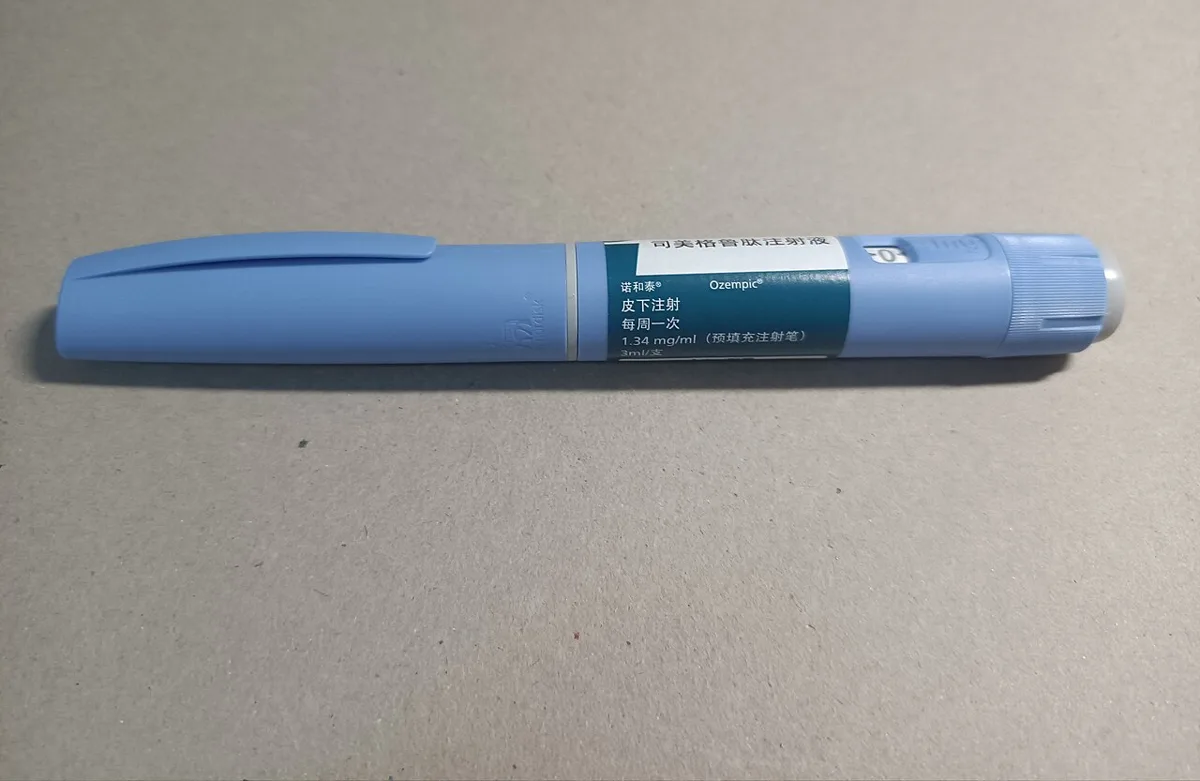
Here's the pitch for Ozempic that nobody put in the commercials: you lose weight, and then apparently you also stop moving. A new study set to be presented at the Endocrine Society's annual meeting in Chicago this week found that adults taking GLP-1 medications for obesity significantly reduced their physical activity after starting treatment. Not a little. Measurably, consistently less.
The Numbers Are Not Great
The study, which the New York Post reports is the first of its kind, pulled data from 753 people with obesity who started a GLP-1 medication like semaglutide or tirzepatide, the active ingredients in Ozempic, Wegovy, and Mounjaro. Researchers linked their records to fitness tracker data, which is about as close to objective as health research gets.
Before starting treatment, participants averaged 5,047 steps a day and 28 minutes of moderate-to-vigorous physical activity. After starting the drugs, those numbers dropped to 4,487 steps and 22 minutes. That's a 560-step daily reduction and a full six minutes less of actual effort, from people who were already not exactly training for a triathlon.
The biggest declines were in men and in people dealing with joint or muscle pain. Age, heart failure history, and prior strokes didn't meaningfully change the results. So the drugs are working on weight. The people taking them are just also, quietly, doing less.
Why This Is Actually a Problem
The kicker here is not that people are lazy. The kicker is what GLP-1 drugs actually do to your body. Study lead Dr. Sajana Maharjan of HSHS St. John's Hospital in Springfield, Illinois noted in an Endocrine Society press release that these medications reduce both fat mass and lean muscle mass. Both. The drugs don't distinguish between your gut and your quads.
That means if you're losing weight on Ozempic and not actively working to preserve muscle, a meaningful chunk of what you're losing isn't fat. It's the stuff that keeps you functional, mobile, and metabolically healthy as you age. Maharjan's conclusion was blunt: exercise "cannot be optional for people taking these medications."
Dr. Peter Balazs, a hormone and weight-loss specialist in New York and New Jersey, added some biochemical context in an interview with Fox News Digital. Being in a sustained calorie deficit can actually push the body into energy conservation mode, lowering metabolic rate. Throw in the nausea, fatigue, and gastrointestinal fun that GLP-1 side effects are known to cause, and you have a cocktail of reasons why someone might sit on the couch instead of going for a walk.
The Assumption Everyone Made Was Wrong
The intuitive logic seemed airtight: lose weight, feel better, move more. Less load on your joints. More energy. Greater confidence. That was the story a lot of people told themselves and heard from enthusiastic prescribers. The study found no evidence that it actually works that way.
According to Maharjan, despite assumptions that weight loss from GLP-1 medications would lead to increased physical activity, the data simply did not support it. The weight came off. The movement did not go up. Those two things turned out to be entirely separate variables.
This is not a small detail. GLP-1 medications are now among the most widely prescribed drugs in the United States. Millions of people are taking them right now under the belief that the medication is doing the heavy lifting, which in a literal sense it sort of is, but the long-term metabolic picture is considerably more complicated than the TikTok testimonials suggest.
The Doctors Who Are Doing It Right
To be fair, not everyone in the clinical world is handing out prescriptions and sending patients home. Dr. Amanda Kahn, a board-certified internist and longevity specialist in New York, told Fox News Digital she disagrees with the study's broad conclusions because they don't match what she sees in her practice. When GLP-1 therapy is prescribed thoughtfully, she argues, with serious attention to nutrition, resistance training, body composition monitoring, and lab work, patients can lose weight while getting stronger and more motivated.
Kahn's approach is more demanding. She tracks body composition. She monitors protein intake. If a patient is losing too much muscle mass or can't exercise or is developing nutritional deficiencies, she will hold or adjust the medication. She calls these issues a "monitoring problem, not a medication problem."
The problem is that Kahn's level of oversight is not what most patients are getting. Balazs stressed that resistance training and regular daily movement aren't optional add-ons, they are essential to preserving lean muscle, maintaining metabolic health, and making weight loss mean something past the number on the scale. The question is how many of the millions of people currently on these drugs are getting that message in any meaningful way.
What the Study Can and Can't Tell Us
The researchers are appropriately upfront about the limitations here. This was a retrospective, observational study. It can show an association between starting GLP-1 treatment and reduced physical activity. It cannot prove the drugs caused the decline. It's also working with a cohort that was mostly middle-aged women, which may not reflect the full population of GLP-1 users.
Factors the study couldn't account for include what participants' exercise habits looked like before starting treatment, how motivated they were going in, and what kind of guidance, if any, they received from their physicians. Those are significant gaps. A person who was already sedentary before Ozempic is going to read differently in this data than someone who was active and then tapered off.
But the core finding is hard to explain away. The study used objective fitness tracker data, not self-reported exercise logs, which people famously lie about to themselves and everyone else. The numbers went the wrong direction. That's worth paying attention to.
The Dingo Take
The GLP-1 gold rush has been one of the defining health stories of the last few years, and it has been covered with a kind of breathless optimism that the pharmaceutical industry's marketing budget certainly didn't discourage. Ozempic works. Wegovy works. People lose real weight. Nobody serious disputes that. But the coverage has consistently undersold the complications, the muscle loss, the rebound risk when people stop, the fact that the medication is a tool and not a finish line.
This study is a data point in a larger argument that prescribing these drugs without serious, ongoing clinical support is not medicine. It's vending machine healthcare. You take the drug, the weight goes down, the insurance gets billed, nobody asks hard questions about what your body composition looks like six months in or whether you've touched a resistance band in your life. That is apparently what a lot of patients are getting, and it explains why researchers keep finding outcomes that don't match the glossy promise.
If you're on one of these medications and your doctor has never once mentioned exercise as a non-negotiable component of the treatment, that is information. It may be time to find a doctor who has actually read the research on what these drugs do to muscle mass, because losing weight while quietly dismantling your body's structural foundation is not a win. It's just a different kind of problem with better before-and-after photos.





Comments