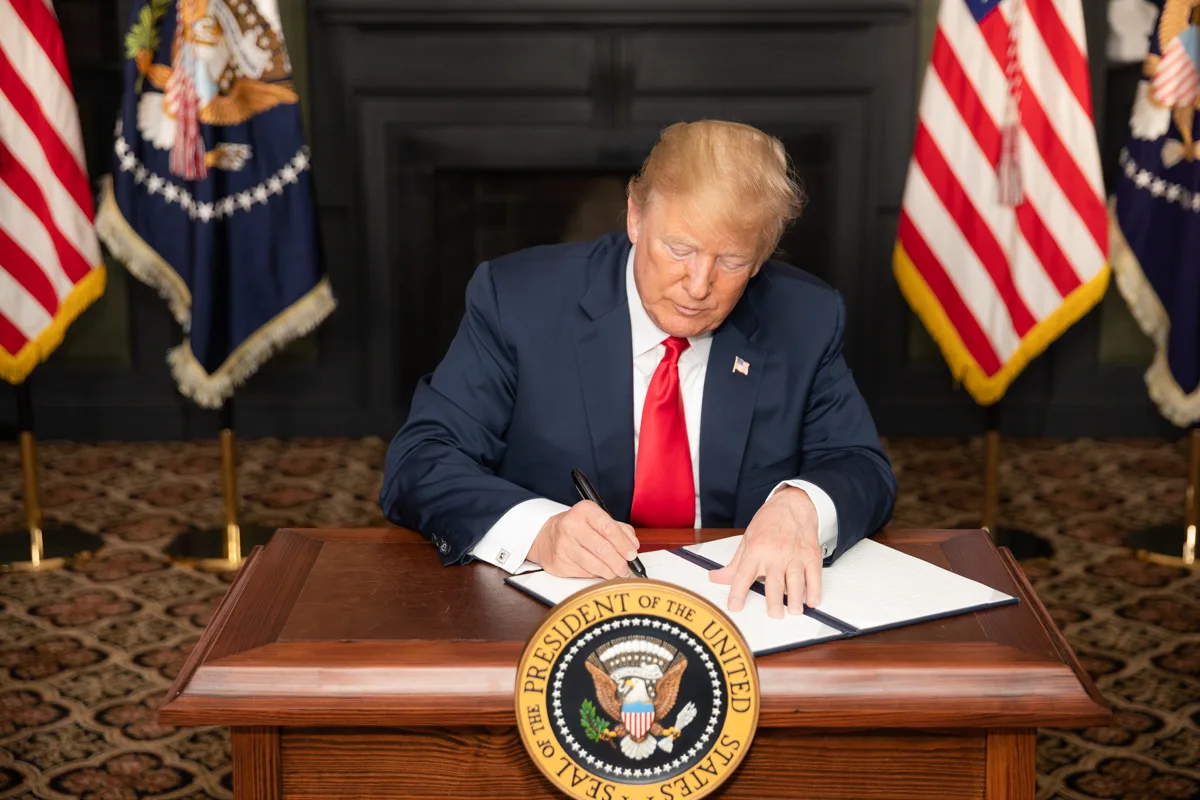
Donald Trump stood at a G7 podium in France on Wednesday and declared a massive win over Iran. The actual text of the deal he was celebrating, however, is a page and a half long and leaves out nuclear weapons, missiles, Hezbollah, and apparently any serious plan for any of those things. Other than that, tremendous victory.
What the Deal Actually Says (Spoiler: Not Much)
According to BBC News, the US-Iran memorandum of understanding signed electronically on Wednesday essentially does two things: it reopens the Strait of Hormuz, and it sets a 60-day clock for both countries to try to figure out all the hard stuff. That's it. That's the deal.
The only concrete nuclear commitment in the text is that Iran agrees to 'downblend' its stockpile of highly enriched uranium under IAEA supervision. A senior US official called this a 'significant concession.' And fine, maybe it is. But the how, the when, and the verified proof of any of it? All of that gets worked out later, presumably by people who have less than two months to do what the Obama administration took 20 months to accomplish.
Trump has told anyone who will listen that this deal guarantees Iran will never buy, develop, or produce a nuclear weapon. The BBC reports the actual text of the agreement does not say that. What the text commits to and what Trump is telling people the text commits to are, at present, different documents.
The $300 Billion Number Trump Forgot to Mention
Here is a fun detail from the agreement that did not make it into Trump's press conference remarks. According to BBC News, the text states the US will work 'with regional partners to develop a definitive mutually agreed plan with at least USD $300 billion' for Iran's reconstruction.
Three hundred billion dollars. For Iran. In a deal being sold to the American public as tougher than Obama's because Trump promised not to send Iran any money.
A senior US official assured reporters on a background call that the deal does not commit the US to paying Iran a single cent. The BBC notes the actual language is, to put it charitably, opaque, and appears to leave the door open for eventual payments as part of a negotiated settlement. So the official position is that the words on the page don't mean what the words on the page appear to mean. Solid.
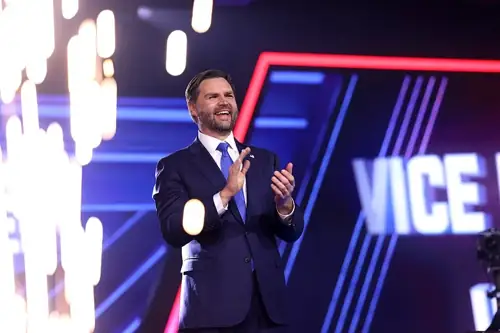
This matters politically because JD Vance and Trump built their MAGA coalition in part on furious opposition to exactly this kind of arrangement. The anti-interventionist base is not going to love a $300 billion reconstruction fund for a country the US just finished bombing, regardless of which regional partners technically sign the checks.
Hezbollah Got Two Mentions and a Shrug
At the start of the war, Trump said stopping Iran from funding regional proxy groups like Hezbollah was a top priority. Israel, which joined the US in launching the conflict and has fought its own separate war with Hezbollah in Lebanon, made the same point loudly and repeatedly.
The BBC reports that the ceasefire extension does cover Hezbollah. But the group barely appears anywhere else in the agreement, and there is nothing in the text committing Iran to ending its support for Hezbollah or any other regional proxy. That negotiation, like the nuclear specifics and the missile program details, is apparently scheduled for the 60-day sprint that starts after a formal signing in Geneva on Friday.
Iran's missile program, which Trump and Israeli Prime Minister Benjamin Netanyahu both flagged as a priority, also gets essentially no treatment in the agreement. The whole document is a page and a half. A strongly worded letter to a landlord is longer than this.
Sixty Days, or We Go Back to Bombing
The memorandum sets a 60-day deadline for a comprehensive final agreement, but the BBC notes it also includes language allowing that deadline to be extended if necessary. Read: both sides already know 60 days might not be enough and built themselves an exit ramp.
Trump, for his part, did not exactly project overwhelming confidence in his own deal at the G7 press conference. 'If it doesn't get done in 60 days, it's all right,' he said. 'We go back to bombing.' That is a sitting American president discussing the potential resumption of a war with a shrug and an 'it's all right.' As presidential reassurances go, it has a certain quality.
Both countries confirmed the memo is signed and in effect. A formal signing ceremony is scheduled for Friday in Geneva. Whatever emerges from that ceremony, the actual work of preventing a nuclear-armed Iran, dismantling its proxy network, and constraining its missiles still lies entirely ahead.
The Dingo Take
Give Trump credit for one thing: he got Iran to the table, got a ceasefire, and reopened the strait. That is not nothing. People who reflexively dismiss any development involving this administration do themselves and their credibility no favors. A shooting war with Iran pausing is better than a shooting war with Iran continuing.
But the gap between what Trump is claiming this deal is and what the BBC reports the deal actually contains is genuinely alarming. Not because Trump oversells his wins, which is a known and documented feature of his presidency, but because the stakes here are nuclear weapons. You do not get to bluster your way through a nuclear verification regime. The IAEA does not accept vibes as a substitute for centrifuge counts. If the 60-day negotiation collapses and Trump decides to go back to bombing, the world will be exactly where it started, except now both sides have tested each other's appetites and Iran knows the Americans are itching for the exit.
The Obama administration spent 20 months on the original Iran deal, with a full diplomatic apparatus, experienced negotiators, and no self-imposed deadline driven by a president who said 'we go back to bombing' at a press conference. The Trump team has 60 days, a page-and-a-half framework, and a base that is going to lose its mind the moment someone explains the $300 billion reconstruction fund on Fox News. Good luck. Genuinely. Good luck.



Comments