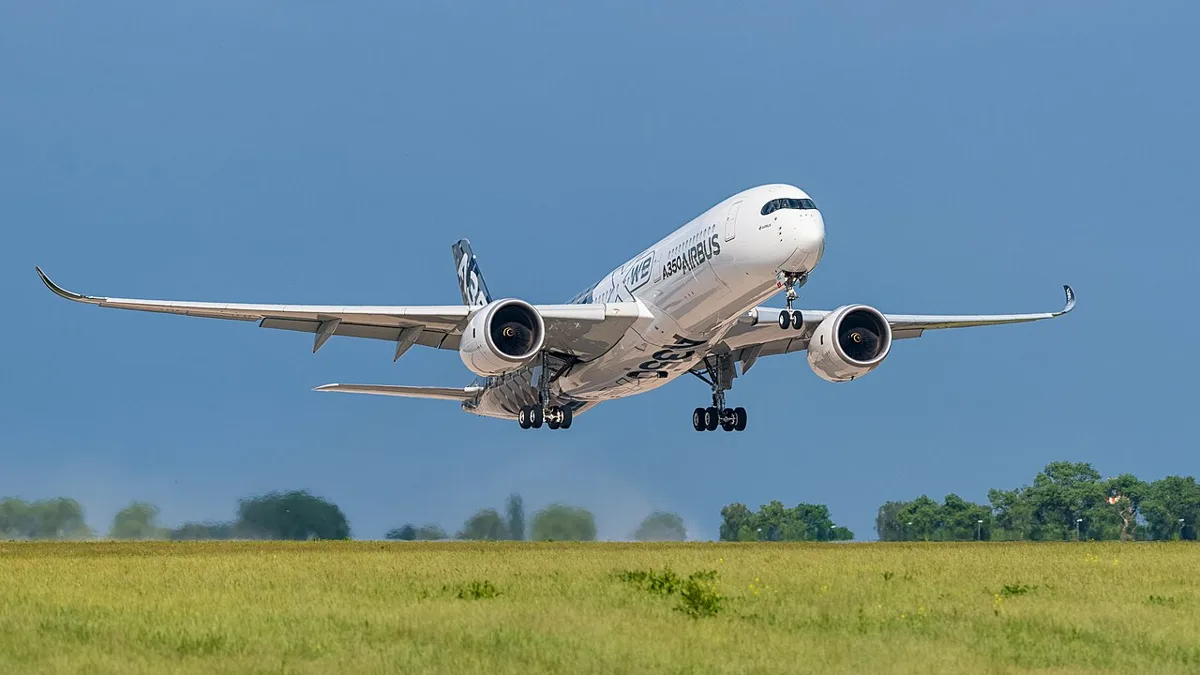
Jet fuel prices have fallen more than two dollars a gallon since their April peak, which is genuinely good news for the airline industry. Whether any of it becomes good news for you, the person trying to book a flight without taking out a second mortgage, is a completely different question with a very predictable answer.
The price drops. The fares don't.
Here is the situation as NPR laid it out on Wednesday. When the Iran war sent fuel costs spiking this spring, airlines did exactly what you'd expect: they raised ticket prices and piled on fees. Now the average price of a gallon of jet fuel is down to $2.80, according to tracking firm Argus. That's the lowest it's been since the war started more than three months ago.
And the airlines are going to... hold on to those higher prices for as long as humanly possible. Average airfares are still up more than 20% compared to this time last year, per several tracking firms NPR cited. They've dipped slightly in recent weeks. Slightly. As in, you'll barely notice it.
Michael Boyd, a longtime aviation industry consultant, put the industry's thinking in terms even a fourth grader could follow. "If people will pay it, why would you take it back?" he told NPR. "I mean, if people are willing to pay an extra $5 to check a bag and there's no pushback, don't be silly." Hard to argue with the logic. Also hard not to want to flip a table.
A billion dollars in losses, and other reasons you should feel sorry for Delta
To be fair, the airlines do have a case to make here, even if it's not a particularly sympathetic one. U.S. airlines lost a billion dollars collectively in the first quarter of the year, according to the Department of Transportation. The International Air Transport Association, which represents airlines globally, expects average jet fuel prices to be 70% higher year over year, a figure that IATA head Willie Walsh said at the organization's summit in Brazil this month will add $100 billion to the industry's collective fuel bill in 2026 alone. Profit margins for the global industry are sitting at a "wafer-thin" 2%.
Labor costs are rising. Airport operational costs are rising. The era of the $59 fare is, as Boyd told NPR, "on another planet long, long ago." So the airlines aren't entirely wrong that costs have gone up across the board. They're just also not in a rush to reduce your ticket price the moment their biggest cost component starts falling. Funny how that works.
The Strait of Hormuz isn't even closed and they're already hedging
The strangest part of this whole story is that airline executives are already managing expectations about a scenario that hasn't fully resolved itself. Even if the Strait of Hormuz fully reopens to shipping and oil flows normalize, they're saying, don't hold your breath for prices to snap back.
JetBlue CEO Joanna Geraghty told Bloomberg at the IATA meeting in Brazil that the airline isn't "planning for oil prices to snap back overnight" even in a best-case scenario, calling it a "longer, protracted sort of unwind." JetBlue, for context, hasn't turned a profit since 2019. So their position is financially understandable, even if it's cold comfort to anyone buying a ticket to visit family this fall.
United Airlines CEO Scott Kirby was even more candid during an earnings call in April, per NPR's reporting. He said United had only recouped less than half of its increased fuel costs through higher fares so far, but predicted airfares would stay elevated into next year. "The longer this lasts, the higher the probability goes that the pricing increases hold," Kirby said. And if things somehow returned to mid-February normal tomorrow? He estimated United would still keep 20% of the price increase going into next year. Not a bug. A feature.
What this means for your summer plans
Short version: you're paying more, and you will keep paying more for a while. The fuel market is moving in the right direction, but the airline industry has no structural incentive to race it to the bottom on prices. Demand has held up. Travelers have shown, as NPR reports, that they're willing to absorb higher costs, at least so far.
The question is when "at least so far" becomes "actually, no." Booking data from tracking firms shows fares trending slightly downward in recent weeks, which suggests the market is doing some work. But a 20%-plus year-over-year increase doesn't come down fast. Anyone hoping to book cheap domestic flights in the back half of 2026 is probably going to be disappointed.
The Dingo Take
Let's be clear about what's actually happening here. A geopolitical crisis drove up a major input cost, airlines passed that cost directly to consumers, and now that the input cost is falling, the airlines are openly telling us they see no reason to reverse course as long as we keep paying. That's not a scandal, exactly. That's just capitalism operating exactly as advertised. It's still infuriating.
The Boyd quote should be framed and hung in every economics classroom in America. "If people will pay it, why would you take it back?" That's the whole game. Not just for airlines. For every industry that used a genuine external shock to reset consumer price expectations permanently upward. The Iran war gave airlines cover to raise fares. The fares will outlast the war by a significant margin.
So no, the falling fuel price is not a gift that's getting passed to you at the ticket counter. The airlines lost money, they need to make it back, labor costs are up, and frankly, they've learned that you'll pay it. The best you can realistically hope for is that fares drift down slowly over the next year or two as competition does what regulators mostly won't. In the meantime, enjoy that checked bag fee.



Comments